

- Eight Sleep Pod 6 vs. Chilipad 2.0: Which Bed Cooling System Is Worth It? - October 15, 2026
- Eight Sleep Pod 6 Review: My First Impressions After Sleeping on It - September 25, 2026
- Sleep Routines for Hot Sleepers: How to Build a Cooler Night’s Sleep - September 24, 2026
I learned the difference between sateen and satin after ordering one when I thought I was getting the other. What arrived felt nothing like the smooth cotton sateen sheets I had pictured, and I remember being genuinely confused about how I had ended up with something so much slicker.
Looking back, I can see how I made the mistake. “Satin” and “sateen” look and sound similar, both get described as silky or smooth, and online photos can make them look almost interchangeable. Once you get into the actual construction, though, the difference is easier to understand: sateen is commonly used for smooth cotton bedding, while satin describes a related weave that can be made from silk, polyester, nylon, or other fibers.
Sateen vs Satin at a Glance
| Sateen | Satin | |
|---|---|---|
| Usually made from | Cotton is most common in bedding | Silk, polyester, nylon, or other fibers |
| Feel | Smooth and soft, while still feeling like cotton | Slicker and lower-friction, depending on the fiber |
| Look | Usually has a softer sheen | Can range from subtle to very glossy |
| Temperature | Varies with the cotton, weight, and construction | Depends heavily on whether it is silk, polyester, or another fiber |
| Snagging | Possible because of the longer yarn floats | Also possible because of the longer yarn floats |
| Care | Often fairly straightforward to machine wash | Can vary quite a bit, especially between silk and synthetic satin |
How Sateen and Satin Weaves Are Different
Both fabrics get their smooth surface from longer yarn “floats.” Instead of every thread crossing over and under the next one, some yarns travel over several threads before interlacing again. More uninterrupted yarn stays on the face of the fabric, creating the drape and sheen associated with both sateen and satin.
The terminology is not completely tidy across textile references. Some definitions separate satin and sateen partly by fiber, while others distinguish them by the direction of the floats. Bedding companies tend to use sateen for smooth woven sheets, especially cotton ones, while satin is more likely to describe the slicker fabric people associate with robes, lingerie, and satin pillowcases.
For shopping purposes, you don’t need to memorize every technical definition. The useful part is knowing that satin and sateen are related weaves, but the finished fabrics can feel very different depending on what they are made from.
“Silky” Is Not the Same Thing as Silk
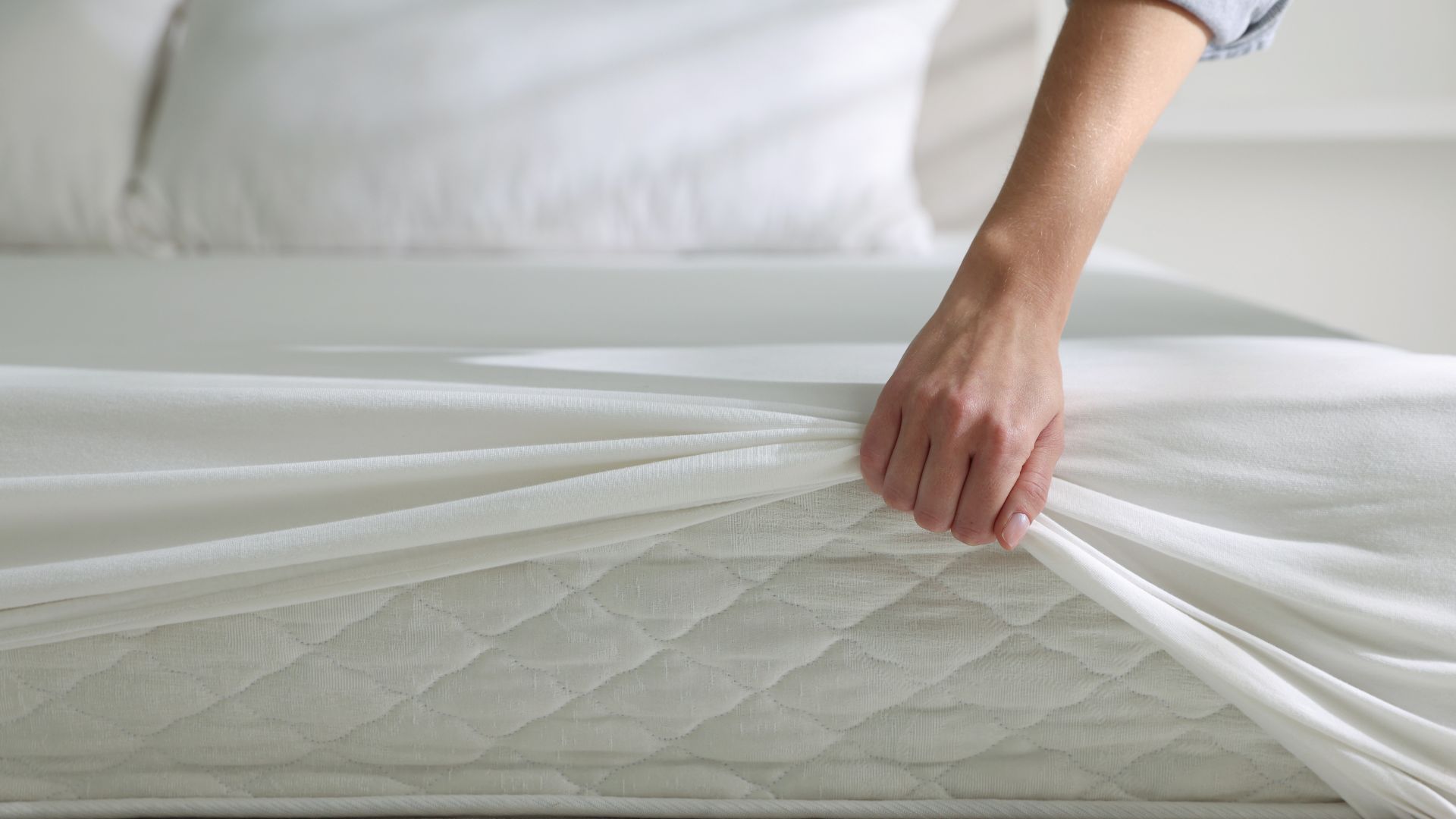
Part of the confusion comes from the word “silky,” which describes a feel but does not mean the fabric contains silk. Silk is the actual fiber, while satin is a type of weave. Satin can be made from silk, polyester, or another fiber. Sateen belongs to the same general family of smooth weaves and is usually made from cotton.
A listing for “silky satin sheets” may contain no silk at all. Polyester satin can still be exactly what someone wants if they like a slick, low-friction surface and do not want to pay silk prices, but it is a very different purchase from silk satin. On the sateen side, “cotton sateen” tells you both what the sheet is made from and how it is woven, while “sateen” by itself still leaves the fiber unanswered.
Once I started looking at those details separately, product descriptions became easier to read. Words like soft, cooling, hotel-like, or luxurious can sound convincing, but they do not tell me nearly as much about what I am ordering as the fiber and weave do.
What Sateen Sheets Usually Feel Like
Cotton sateen is smooth, but it still feels like cotton. The fabric usually drapes closer to the body than a crisper cotton sheet, and the surface catches light with more of a soft luster than a glossy shine. It also tends to look a little less rumpled, which is nice if you like a smoother-looking bed but have no interest in making sheet care more complicated than it needs to be.
There can be a temperature tradeoff because sateen is generally a denser weave and can restrict more airflow than a crisper, more open cotton weave. Not every sateen sheet is going to feel warm, since the cotton itself, fabric weight, and everything else layered on the bed also affect how it feels overnight, but it is something I would keep in mind if you already get too hot at night.
What the Sateen Label Doesn’t Tell You
The weave name only tells you part of what you are buying. Miracle Made Luxe is one example of cotton sateen. It uses 100% cotton in a 300-thread-count sateen weave, so the smoother surface comes from the way the cotton is woven. Its silver finish is a separate freshness feature rather than something inherent to sateen, which is a good reminder that fiber, weave, and added treatments are three different pieces of information even when a bedding description puts them all in one sentence.

Even within cotton sateen, there can be a lot of variation. Yarn quality, fabric weight, and finishing affect the final feel and how well a set wears, so the word sateen alone does not guarantee softness or longevity. A lighter sateen can feel more relaxed and breathable, while a heavier one may feel more enveloping even though both use the same basic weave.
Softness and slipperiness also get lumped together more often than they should. A sateen sheet can feel very soft while still having enough grip to feel like regular cotton bedding, which is much closer to what I want on our bed. I want to know whether the sheet feels like softened cotton or whether it has that more obvious glide that comes to mind when I think of satin.
How Satin Feels Depends on the Fiber
There is a lot of room between the cheap satin I accidentally bought and a good silk satin. Silk can have the smooth, low-friction surface people want from satin while behaving differently with heat and moisture, and it usually costs more and may need gentler care. Polyester satin is easier to find at lower prices and can be machine washable, but the feel varies a lot depending on how the fabric is made.
Plenty of people specifically want that slicker surface, especially in a pillowcase. Hair moves across satin with less friction, which can help with frizz, tangling, and breakage, and the smoother surface can also leave fewer temporary sleep creases on your face. And some people simply like the more fluid feeling against their skin. Across an entire bed, though, I found it to be too much. If I am buying sheets, I want the fabric to fade into the background once I am settled in instead of constantly reminding me what it is made from.
Appearance varies just as much as feel. A good silk satin can have a softer, more fluid sheen, while a bargain synthetic satin may look much glossier or more obviously shiny in person. That difference is not always easy to see online, especially when both are photographed under flattering lighting and described with the same words like smooth, silky, and shiny.
The Shine Can Be Hard to Judge Online
Sateen can reflect light, but cotton sateen usually has a softer luster than a glossy satin. That distinction can be hard to see in a styled product photo, where the bedding is pulled tight, steamed, and photographed under lighting meant to show off the surface.
Those photos also don’t accurately show how the fabric moves, whether it feels clingy, or what the sheen looks like after the sheets have actually been slept in. Close-up fabric photos are more helpful to me than the perfectly made bed, and the material description tells me more than either one.
My old set looked fairly understated online, but in person the sheen was more noticeable, and the fabric felt much slicker than I expected. The photos had made it look closer to the smooth cotton finish I had in mind, so the actual look and feel caught me off guard.
Cooling and Breathability: Sateen vs Satin
“Satin feels cool” and “sateen sleeps warm” are both too broad to be very helpful because the fiber changes so much of the temperature story. A smooth surface can feel cool when you first touch it, but those first few seconds in bed are different than being under the covers for a while. Polyester satin and silk satin can both feel slick in your hand and still handle heat very differently overnight. Silk satin is generally more breathable and can absorb some moisture, while polyester satin tends to hold onto more heat and does not absorb as much moisture.
Cotton sateen has its own range too. A heavier, tightly woven set can hold more warmth around you than a lighter one. If overheating is the main problem, I would probably also look at a lightweight cotton percale, because its more open construction allows more airflow, rather than assuming satin is automatically the cooler choice.

For the way I sleep, I care more about what happens after I warm the bed up. I keep our bedroom cold and use an electric blanket year-round because I like climbing into a warm bed. Once I settle in, I want that extra heat to dissipate. A sheet feeling cold against my leg for ten seconds does not tell me much about whether I will be comfortable at 2 a.m.
Moisture complicates the comparison too because cotton, silk, polyester, and other fibers do not absorb and release moisture the same way. Cotton readily absorbs moisture into the fabric, silk can absorb some moisture while still feeling relatively smooth and light, and polyester absorbs very little, so sweat is more likely to stay near the surface unless the fabric is specifically designed to wick it away. Someone who regularly wakes up damp should pay close attention to the fiber itself rather than treating satin or sateen as a shortcut for temperature.
Sheets are only one layer of the bed anyway, and a heat-retaining mattress, waterproof protector, thick topper, or heavy comforter can easily have more influence on the night than switching between two sheet weaves.
Snagging Is Not Just a Satin Problem
I have had one satin set show some wear over time, including a few snags and some pilling, but that is not something I would blame on satin alone. Both satin and sateen use longer floats that leave more yarn exposed at the surface, so either weave can catch on rough toenails, zippers, pet claws, or other sharp edges. How easily that happens can also depend on the fiber itself, the quality of the yarn, and how tightly the fabric is woven.
Pilling has its own set of variables. Shorter or weaker fibers are more likely to work loose with friction and washing, while stronger yarns can hold up much better even in the same general weave. That is why two satin sets, or two sateen sets, can wear very differently even though the label sounds nearly identical.
What I Look for in Long-Term Reviews
Pilling depends on fiber length, yarn quality, friction, and laundry habits too. A cheap set that starts with weaker yarns can look tired much faster than another sheet with the same weave label, which is why I pay more attention to reviews from people who have washed the sheets several times than to first-night reactions. Those early reviews can tell you whether a set feels soft out of the package, but they cannot tell you much about how the surface will look later.

Longer-term reviews are also where I look for the boring complaints that are easy to miss when everyone is talking about softness: pills around the foot of the bed, pulls near the edge, fitted sheets that start looking rough, or fabric that changes after repeated drying. Those details tell me more about whether I will still like the set in a few months. This is also where a longer trial period can help. Miracle Made, for example, gives you 100 nights to sleep on and wash the sheets before deciding whether to keep them, which gives you a better chance of seeing how the fabric behaves beyond the first few nights.
Laundry and Care Depend on the Fiber
Cotton sateen is usually pretty straightforward to own, and many sets can go through a normal machine wash and tumble dry as long as the care label allows it. The smoother surface also tends to look less rumpled than some other cotton weaves, which I appreciate because I have absolutely no intention of ironing my sheets.
Satin can require more attention depending on the fiber. Polyester satin may be machine washable, while silk satin can call for a gentler cycle, hand washing, a different detergent, or air drying depending on the manufacturer. Those differences are significant enough that I would check the care instructions before deciding whether I actually want to live with the fabric.
I would not put too much weight on thread count either. A bigger number can look impressive on the listing, but it does not tell me whether the yarn is high quality or whether I am actually going to like sleeping on it. And whatever material I do buy, I want it to handle ordinary washing because sheets that require a special routine every week are a hard sell for me.
Which One Would I Buy?
For our main bed, I would buy cotton sateen. I like that it feels smoother and has a little more drape, but it still feels like cotton. The satin set I bought was much slicker than I wanted for an entire bed. If that slippery, lower-friction feel is what you like, satin may be exactly what you are looking for, especially if you are shopping for silk rather than an inexpensive synthetic set. I have just learned that when I want smooth sheets, sateen is much closer to the feel I actually prefer.