

- Best Organic Mattress: What the Certifications Actually Mean and Which Mattresses Earn Them - September 7, 2026
- Best Firm Mattress: A Buyer’s Guide to the Firm End of the Market - August 28, 2026
- Should You Buy a Cooling Cover or a New Mattress? - July 18, 2026
The organic mattress category has a real greenwashing problem. Here’s how to read certification claims accurately and what they do and do not cover, and which mattresses hold up under scrutiny.
If you’ve been shopping for an organic or non-toxic mattress, you’ve probably hit a wall of acronyms, “ natural” language, and eco-branding that’s hard to evaluate. The core problem is simple: the word “organic” on a mattress has no legal definition in the United States. Any brand can use it. What separates a certified organic mattress from one that has been marketed as natural is whether the claims behind it are backed by independent third-party standards and whether those standards cover what the brand says they cover.
This piece is organized around those certifications. By the time you reach the mattress recommendations, you’ll have a framework to evaluate any organic mattress claims on its own terms, not just the ones in this article.
The Certifications That Matter
There are four certifications worth knowing when you’re shopping for an organic or low-toxicity mattress. Two of these certify organic sources of raw materials. The other two certify emissions and chemical safety of the finished product. They cover different things, and a certified organic mattress should hold more than one.
GOLS: The Global Organic Latex Standard
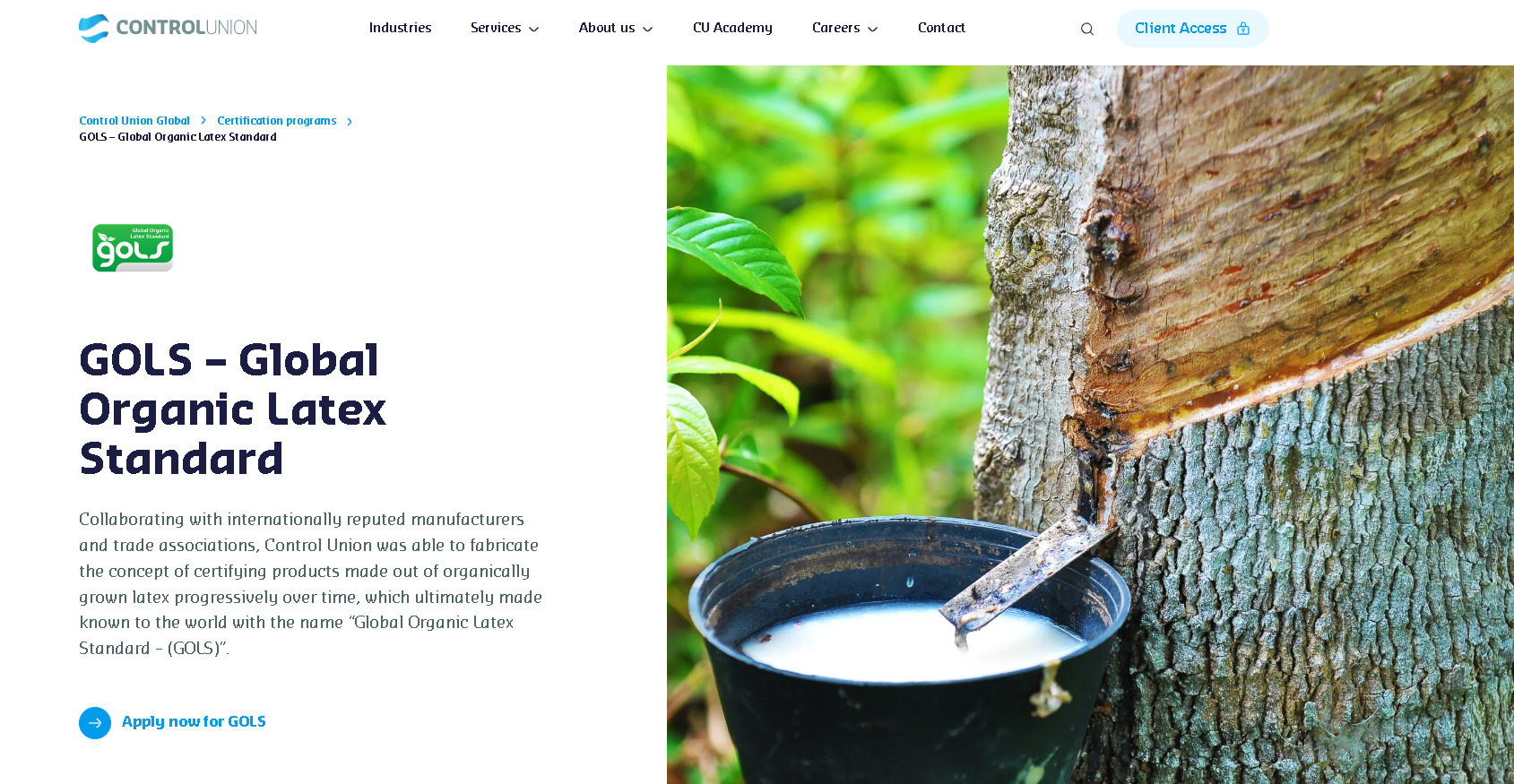
This is the certification that matters most if you’re buying a latex mattress. It certifies that the latex used in the mattress was produced from an organically grown rubber and meets strict standards for harmful substance limits. For GOLS certification, a latex layer must consist of at least 95% natural rubber latex. What it doesn’t cover is the textile materials. The cover and the batting are both outside GOLS’s scope.
GOTS: The Global Organic Textile Standard
This is the certification that fills that gap. It certifies the textile components of a mattress which are the cover, the fire barrier, and any fabric elements. Cotton and wool are often used for these layers. The full GOTS “organic” label requires 95% certified organic fibers. There is a secondary grade which is called “Made with Organic” for products at 70% or above. GOTS is one of the harder certifications to achieve and is administered by an independent third party with no financial stake in the products it certifies. For a mattress to be considered fully certified organic, you need GOLS on the latex and GOTS on the textiles. One or the other is not enough to certify something to be organic.
GREENGUARD Gold:
This is a different kind from GOLS and GOTS. It doesn’t certify what’s inside the mattress but instead certifies what comes out of it. Specifically, it tests the finished mattress with volatile organic compound (VOC) emissions in conditions designed to simulate a real bedroom environment. GREENGUARD Gold applies the strictest limits in the GREENGUARD program, with formaldehyde restrictions much tighter than basic GREENGUARD certification and stricter than outdoor air in many urban areas. It’s the certification most directly relevant to indoor air quality and chemical sensitivity concerns.
CertiPUR-US

CertiPUR-US is worth understanding because it’s frequently misrepresented in organic mattress marketing. It is a legitimate certification and it tests for polyurethane foam for emissions and restricts certain harmful chemicals. However, it certifies synthetic foam and has nothing to do with organic materials. If a brand is leading with CertiPUR-US when marketing an “organic” mattress, the mattress contains polyurethane foam, and the organic language doesn’t apply to the core material. CertiPUR-US is also administered by an industry trade group rather than an independent third party, which is a structural difference from GOLS, GOTS, and GREENGUARD Gold .
How to Spot Greenwashing
The organic mattress category has a well-documented greenwashing problem, and the patterns are enough to be worth naming directly.
The most common one is using “organic,” “natural,” or “eco-friendly” as adjectives without citing any specific third-party standard behind them. Those words have no standardized meaning in the mattress market and can appear on a mattress with a conventional synthetic foam core. If a brand can’t name the certification and the certifying body, treat the claim as marketing language rather than a verified fact.
A close second is applying a partial certification to a whole product. “GOTS certified cotton cover” becomes “GOTS certified mattress” in a lot of marketing copy. Those are not the same thing. The GOTS certification applies to the cover. The rest of the mattress which includes the foam layers, the coils, and whatever fire barrier the brand has used may have no organic certification at all. The most credible brands are specific; they tell you which certification applies to which component, because they have nothing to hide.
CertiPUR-US listed as an organic credential is another thing to watch out for. It means the mattress contains synthetic foam and that’s not necessarily a problem. There are well made mattresses with that certified foam, but it means that you’re not looking at an organic mattress regardless of what the marketing says.
Finally, certifications that can’t be verified are worth treating skeptically. Every legitimate certification maintains a searchable public database where you can confirm a manufacturer certification status. If you can’t find a brand in that database the claim deserves scrutiny before you would ever rely on it.
Who Should Prioritize an Organic Mattress
An organic mattress makes most sense for a specific set of buyers. If you follow one of these categories, the certification picture matters more than it does for the average shopper.
If you have chemical sensitivities or react to VOCs, GREENGUARD Gold on the finished product is the certification most directly relevant to you. It measures what the mattress is emitting into your bedroom air, which is the exposure you’re actually trying to reduce. Most conventional mattresses off-gas VOCs most heavily in the first few days after unwrapping, but some people are sensitive to lower levels over longer periods.
If you’re buying for a child’s room, GREENGUARD Gold carries more practical weight than it does for an adult bed in a well-ventilated space. Children breathe at a lower height, spend more time in their rooms, and are more vulnerable to chemical exposures. The certification limits are calibrated for exactly that environment.
If avoiding petroleum-derived synthetic materials is your priority whether that is for environmental reasons, health reasons or both, the material level of certifications matter the most for you. Natural latex is derived from rubber trees, organic cotton and wool are agricultural products, and pocketed steel coils are inert. A mattress made from those materials contains no synthetic foam at all, and GOLS plus GOTS confirms that the materials were produced to organic standards .
And if you run hot at night, organic latex hybrids tend to sleep cooler than conventional mattresses as a natural result of their construction. Natural latex, organic wool, and organic cotton all breathe more effectively than synthetic foam alternatives. The coil core in a hybrid adds further airflow. This isn’t unique to organic mattresses, but it is a performance benefit that overlaps with the organic category.
The Best Organic Mattresses in 2026
The picks below were selected on the strength of their certification picture, construction transparency, and performance across independent review sources. Verify current pricing, trial periods, and any specific specs before purchasing .
Birch Natural Mattress: Best Organic Hybrid, Best for Combination Sleepers
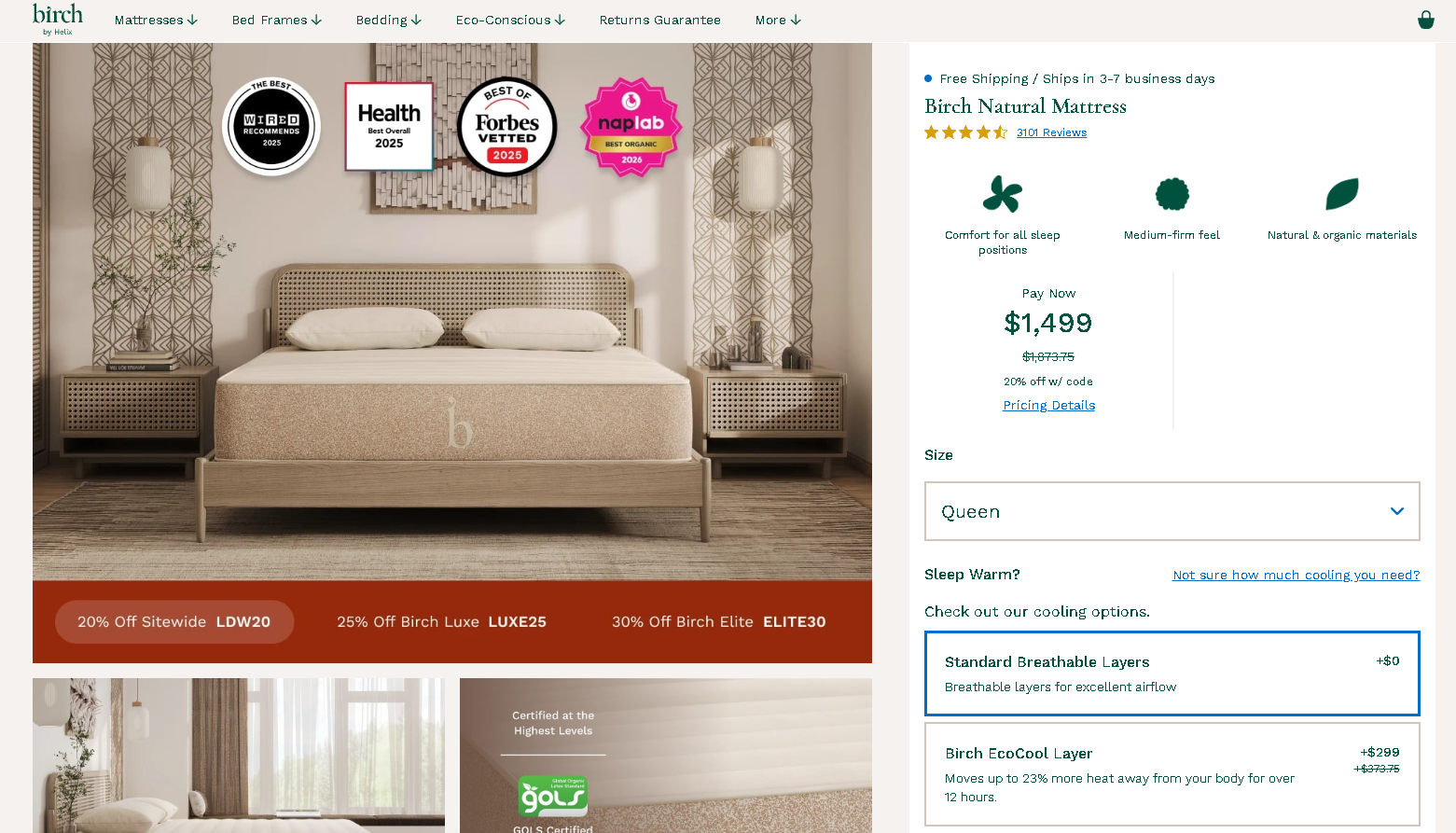
The Birch natural mattress holds the certification set that defines an organic hybrid: GOLS- certified organic latex, a GOTS-certified organic cotton cover, and GREENGUARD Gold on the finished mattress. The construction is free of polyurethane foams, fiberglass, formaldehyde, and pesticides. The organic wool batting serves as a natural fire barrier which is how the mattress avoids synthetic flame retardants while still meeting safety standards.
The layers are as follows: organic cotton cover over organic wool, over the natural latex for pressure relief and bounce, over a pocketed steel coil support core. This combination of latex over coils rather than synthetic foam over coils is what makes the organic credentials possible throughout the mattress rather than just the cover. The latex gives the Birch a more responsive, bouncier feel than a conventional memory foam hybrid, which makes it easier to move on and cooler to sleep on. Independent testing has found it performs well for side sleepers over 130 lbs and delivers reliable results for back sleepers across body weights.
What makes Birch particularly worth mentioning in this category is that it comes at a lower price point than most fully certified organic competitors while holding the same core certifications. You’re not paying a significant premium just for the organic credentials. The trial period runs 100 nights. If you want a certified organic hybrid at a mid-range price, this is the clearest recommendation in the current field.
Avocado Green Mattress: Best Overall, Most Thoroughly Certified

The Avocado Green is the most cited organic mattress across independent review sources, and the certification stack justifies that position. It holds GOLS on the latex, GOTS on the organic wool and cotton, GREENGUARD Gold on the finished mattress and MADE SAFE. MADE SAFE is a certification that screens for chemicals linked to cancer, reproductive harm and organ damages, which goes beyond what GREENGUARD Gold covers. The standard model uses GOLS-certified Dunlop latex over pocketed coils with organic cotton and wools throughout, and up to 1,379 individually wrapped coils in seven ergonomic zones.
Compared to Birch, Avocado offers more configuration options. There is a standard model of pillow top with additional latex layers for softer surface feel, and a box top version. Each step up adds latex and height. The pillow top reaches 13 in and the box top 15.5 compared to the standard 11-inch profile, which matters for your sheet sizing. Avocado also comes with a 365 night trial, which is significantly more generous than the other brands in this category.
Avocado commands a higher price than Birch. Whether it’s justified depends on how much the expanded certification stack and configuration flexibility matter to you. For buyers who want the most thoroughly verified organic mattress available and have the budget for it, Avocado earns its reputation.
Saatva Zenhaven: Best Luxury Organic, Best for Motion Isolation
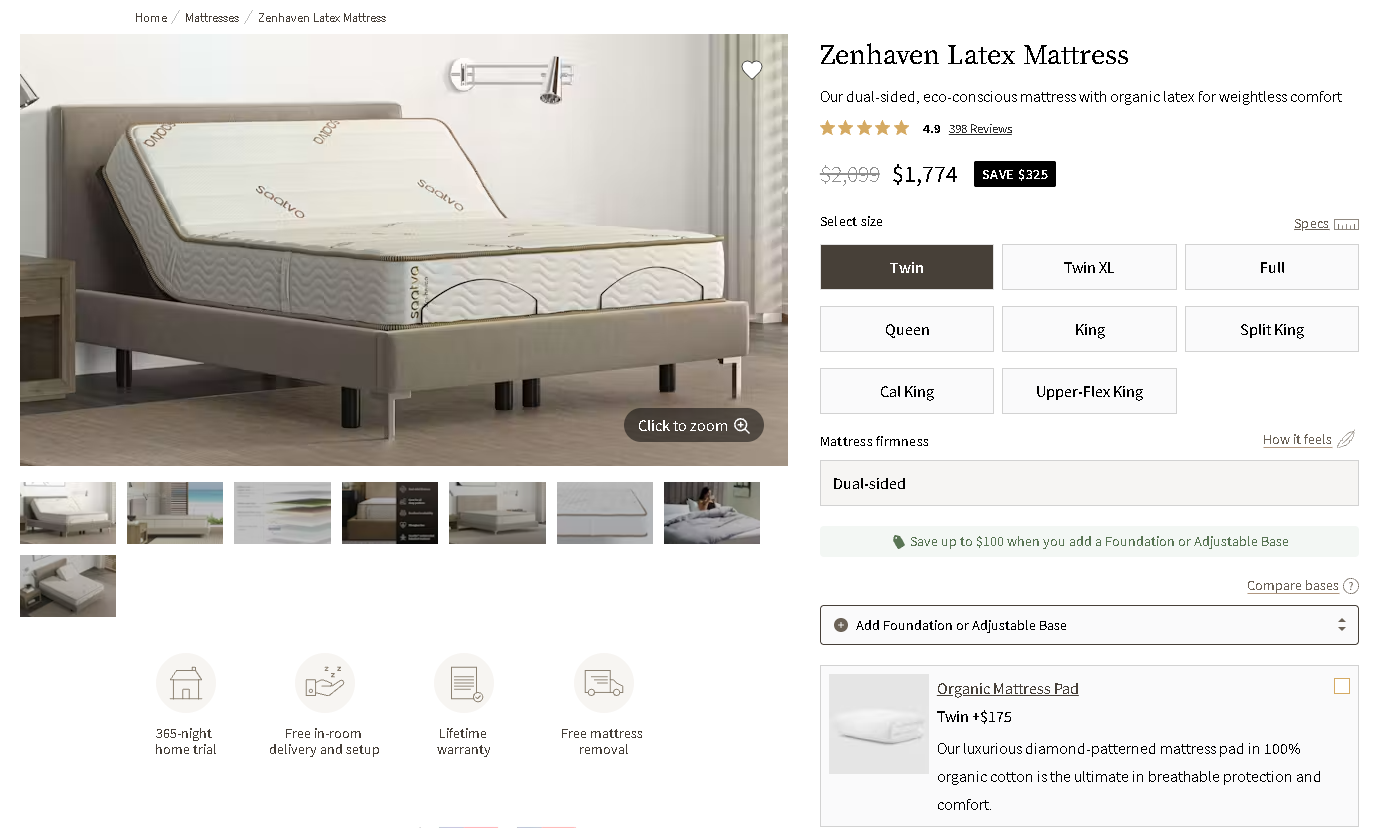
The Zenhaven occupies a different part of the category. It is an all latex mattress with no coil core and it’s flippable. It also has a luxury plush side and a gentle firm side in one mattress. The five Zone latex design provides targeted Lumbar support, and the GOTS certified organic cotton and wool run throughout. The all-latex construction is what makes the Zenhaven useful for couples who prioritize motion isolation because the latex absorbs movement exceptionally well without the slow response contouring of memory foam.
The Zenhaven uses Talalay latex, which is worth distinguishing from the Dunlop latex in the Avocado and Birch. Talalay processing produces a more consistent, airy foam with a softer and more responsive feel. Dunlop is a denser and more durable foam. Neither is categorically better but they suit different preferences and if you slept on one type before, that experience is probably more informative than any written description.
Saatva Includes White Glove delivery and old mattress removal for the Zenhaven, which is a real differentiator at the price it commands. But they also charge a return fee if you decide to send it back, which is different from the free returns most online brands offer, so make sure that you know that going in.
How to Choose
Start with your primary reason for shopping organic. If chemical emissions are the main concern, prioritize the GREENGUARD Gold certification on the finished product.
If organic sourcing is the priority and you want no synthetic foam in construction, the GOLS and the GOTS on the relevant components are what confirm that. A mattress can carry GREENGUARD Gold and still contain polyurethane foam; it just means the synthetic foam emits at low levels. The certification serves different purposes.
If budget is a real constraint, the Birch Natural Mattress holds the core certifications and at a more accessible price than most fully certified alternatives. You’re not getting Avocado’s expanded configuration options or Zenhaven’s all-latex construction, but the fundamental organic credentials are in place and the construction is still solid.
If you’re buying for a child’s room specifically, GREENGUARD Gold should be non-negotiable. The Birch, Avocado, and Zenhaven all carry it and it’s the standard calibrated for the environment.
If you’re trying to verify any Brands organic claims on your own, GOLS and GOTS both maintain searchable public databases where you can look up a manufacturer certification status. It takes two minutes and is more reliable than taking marketing language at face value.
Organic mattress shopping is easier once you know what the certifications actually cover. Focus on the standards that apply to the components that matter most to you, verify the claims in the public databases, and use the trial period to confirm the mattress works for your body. The label on the outside is a starting point, not the whole answer.