



- Copper vs Silver Pillowcase: Is One Actually Better? - July 17, 2026
- How To Help Your Partner Stop Snoring (Without a Fight) - July 8, 2026
- Eight Sleep vs Fitbit for Sleep Tracking: Which One Tells You More? - June 12, 2026
Chronic snoring doesn’t just affect the person snoring. It also affects the people sharing the bed and, in some cases, the entire house. You might have tried everything, from gently nudging them awake to buying different types of earplugs, without much success.
Luckily, there are ways to help your partner, or yourself, stop snoring using real, well-researched solutions. Finding the right one just depends on what’s actually causing the snoring in the first place.
Let’s talk about how to help your partner, or yourself, get a little more rest every night.
Starting the Conversation Without Starting a Fight
Bringing up snoring can feel awkward. No one wants to hear that their sleep noises are becoming a problem, and it’s easy for the person snoring to hear, “You’re keeping me up,” or “You’re the problem.”
To help the conversation go as smoothly as possible, here are a few tips.

Pick The Right Moment
Don’t bring it up in the middle of the night or immediately after a rough night’s sleep.
In the moment, emotions are usually running high, and the conversation can come across harsher than you intended.
Instead, wait for a calm moment, like while you’re having breakfast or coffee together.
The words you choose matter.
Instead of saying, “You’re keeping me up all night,” try something like, “I’ve been waking up exhausted, and I think it’s affecting both of us. Can we figure this out together?”
It can also help to mention your partner’s health. Snoring can sometimes be a sign of a deeper issue, so saying something like, “I want to make sure you’re sleeping well too,” shifts the conversation from a complaint to concern.
Avoid Blame and Focus on Solutions
Try to avoid words like “always” or “every single night,” since they can quickly put people on the defensive.
Instead, keep the focus on finding a solution together. Ask questions like, “What can we try?” or “Who could we ask for help?”
Approaching snoring as a shared problem to solve, rather than a fault to assign, can make the conversation much more productive and supportive.
What Actually Causes Snoring?

Snoring can happen when air can’t move freely through your nose and throat during sleep. The surrounding tissues vibrate, and that vibration is the sound you hear.
There are several things that can narrow those airways or make the tissues more likely to rattle:
- Nasal congestion. Allergies, colds, or a deviated septum can block airflow through the nose.
- Sleep position. Sleeping on your back lets the tongue and soft tissue fall toward the throat, narrowing the airway.
- Weight. Extra tissue around the neck can press on the airway.
- Alcohol and sedatives. These relax throat muscles, making them more likely to collapse and vibrate.
- Age and anatomy. A longer soft palate, large tonsils, or a naturally narrow throat can all play a role.
Remember that not all snoring is harmless. If your partner snores loudly and you’ve noticed them fasting, choking, or pausing their breathing, that can be a sign of obstructive sleep apnea (OSA).
This condition is where your airway repeatedly closes during sleep. The problem is not just the noise but the negative health consequences it can have. So, if any of this sounds familiar, it’s important you and your partner talk with a healthcare professional to get some guidance.
Why There’s No Single “Best” Snoring Solution
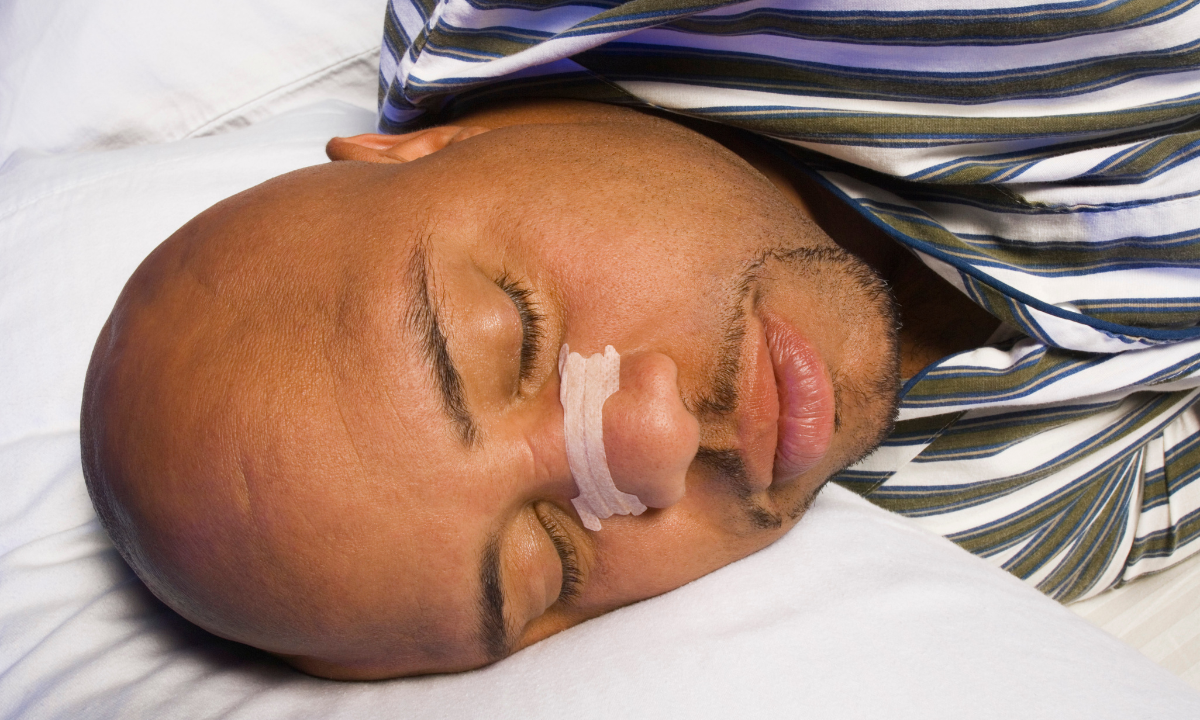
Nowadays, there are countless snoring solutions. You can walk into a pharmacy and see all the anti-snoring products, each promising a silent night.
The problem is that, as we’ve seen, snoring isn’t one thing with one fix. It can result from different causes, and the right approach is going to depend on the cause and how severe it is.
If congestion is the issue, a nasal strip or saline spray might do the trick. But if your partner only snores on their back, a positional aid could be enough. Now, if the snoring comes from the tongue or jaw position, those simpler fixes won’t do it.
As you can see, it’s not as simple as buying just one thing to make it go away.
Why Nighttime Mouthpieces Aren’t Always the Easy Fix People Expect
Mouthpieces, also called oral appliances, are among the most effective at-home options, but they’re also the hardest for many people to get used to.
There are two main types: mandibular advancement devices (MADs) and tongue-stabilizing devices. MADs gently push the lower jaw forward, which opens up the space at the back of the throat. The tongue stabilizers hold the tongue in place, so it can’t fall back and block the airway.
When they work, they do a fine job. However, it all comes down to tolerance. A lot of people find mouthpieces uncomfortable, and there are a few common complaints that prevent people from using them long-term:
- Jaw soreness from holding the jaw in a new position.
- Excess saliva or dry mouth, especially in the first couple of weeks.
- A general feeling of having something bulky in your mouth all night.
- Tooth or gum discomfort if the fit isn’t right.
If mouthpieces are not the way to go, some might consider using a CPAP machine. While they can be an effective option for some people, for others, it might not be. The mask, the noise, the tubing, and the discomfort of sleeping with hardware strapped to your face every night can make it challenging to sleep.
What About Daytime Therapies?
If nighttime devices are not your thing, there are some daylight therapies that are worth considering. In fact, some of the most lasting improvements come from changes you make on the day.
- Managing weight. Even modest weight loss can reduce tissue around the airway.
- Cutting back on alcohol. Especially in the few hours before bed, since it keeps the throat muscles from over-relaxing.
- Adjusting sleep position. Side sleeping often quiets snoring all on its own.
Keep in mind that these aren’t quick fixes; they can help address root causes rather than just masking symptoms.
Another approach worth considering is Spring Sleep, a device using what’s called eXciteOSA. This daytime therapy is designed for adults dealing with snoring and mild obstructive sleep apnea. It’s a medical-grade silicone mouthpiece that sits around the tongue for a 20-minute session, once a day, delivering gentle electrical pulses that stimulate the tongue muscles.
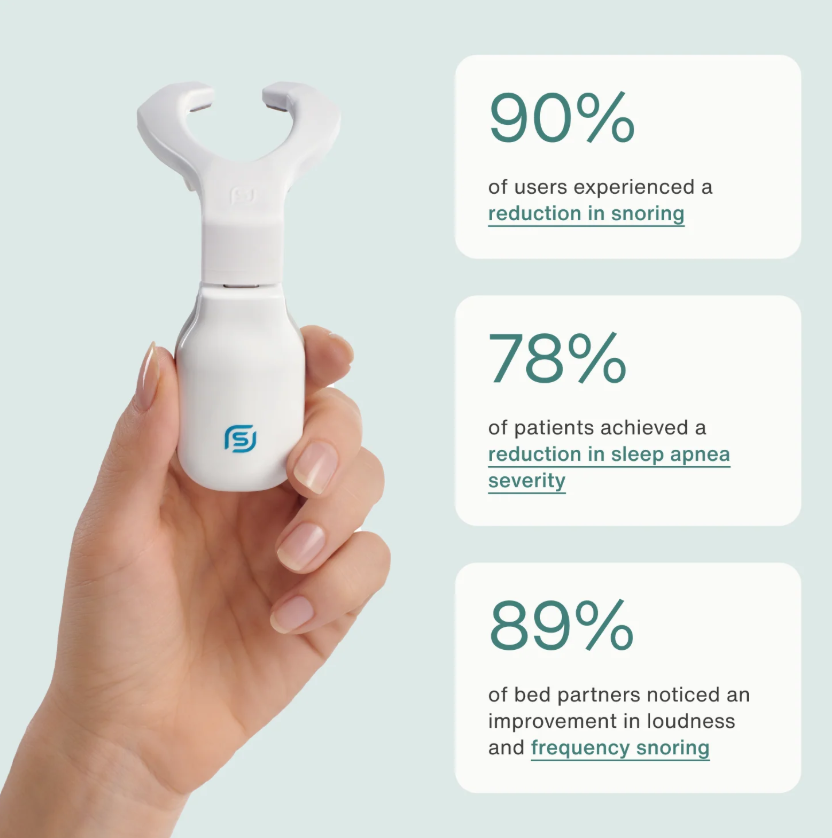
Over time, this is designed to improve muscle endurance in the tongue, so it’s less likely to collapse backward and obstruct the airway during sleep. There are a couple of things that make this therapy stand out:
- It’s a daytime routine, not a nighttime device. The 20-minute session happens while you’re up. You can do it while watching TV, reading, or doing daily tasks. So, it’s less likely to disrupt your sleep.
- Results build over weeks, not bedtimes. After about 6 weeks of daily use, many people have good results with just one session a week.
- It’s backed by clinical research. In a peer-reviewed trial, 90% of patients had some reduction in objective snoring time, and bed partners noticed a difference as well, with 89% of them reporting improvement in their partner’s snoring.
Now, keep in mind that this is intended for snoring and mild obstructive sleep apnea. Those with a more severe form of this condition might not benefit from this device. While it’s an FDA-cleared product, it’s not meant to be a replacement for a CPAP machine. However, some people find it useful to use it along with their CPAP at night.
Why a Medical Professional Should Be Part of the Plan
It can be tempting to try all the possible solutions available without talking with a doctor first. For mild, occasional snoring, that’s often fine. But, there’s a point where guessing isn’t good enough.
A healthcare provider can help figure out what’s actually driving the snoring, whether it’s simple snoring or something else worth looking into. Treating the wrong problem not only is a waste of time (and money), but it can also carry real health risks.
This doesn’t need to be a big, formal deal. It can be as simple as mentioning it at an annual physical or scheduling a quick visit to talk through the symptoms. Make sure you bring notes, like when the snoring happens, how loud, whether there are pauses, and how tired your partner feels during the day.
The more specific you can be, the easier it will be for the provider to point you both in the right direction.
You Don’t Have to Just Live With It
Snoring can feel like a background noise in a relationship, something you adapt rather than address. But repeated sleep disruption is a real deal, for both partners, and it’s not something you’re obligated to just accept.
The first step starts with an honest, kind conversation, and it continues with a conversation with a doctor. From there, it’s going to depend on what’s actually causing the snoring and how severe it is.
For adults dealing with snoring or mild OSA who’ve struggled with the discomfort of nighttime device options like Spring Sleep, a daytime therapy device may be worth bringing up in an appointment.