

- Sateen Sheets vs Satin Sheets: What’s Actually the Difference? - September 7, 2026
- Miracle Made Sheets vs Mellow Sheets: Which Cooling Sheets Are Better? - September 2, 2026
- Best Bed Warming Systems for Winter: What I’d Choose for a Cold Bed - August 26, 2026
I am embarrassingly picky about bedding. I have chronic migraines and neck pain, so pillows are already a whole research project in my house. Too high, too flat, too soft, too warm, and I usually know within minutes if I’ve made the wrong choice.
Comforters get a little more leeway, but I still notice when one traps heat or feels heavy across my shoulders. Silver-treated bedding caught my attention because comforters are bulky and annoying to wash, so anything that helps them stay fresher between regular wash days has some appeal.
That freshness benefit is separate from cooling, though. Silver can help control odor-causing bacteria on the fabric, while temperature depends more on the shell, fill, weight, and moisture handling. I compared the main options based on those differences, along with materials, price, care, and who each comforter is best suited for.
The Miracle Made Cooling Comforter is my first choice for a consistently hot sleeper, while the 3-Temperature-Zone model, Silvery, and Rest Evercool each make more sense for narrower needs. Below, let’s run through what silver treatment actually does in a comforter, as well as some of the main considerations when it comes to choosing a silver-infused comforter that’s right for you.
At a Glance: Best Silver-Infused Comforter Options
| Comforter | Best for | Price | Key feature |
| Miracle Made Cooling | Hot sleepers | $215–$231 | Cool-touch shell plus silver treatment |
| Miracle Made 3-Temperature-Zone | Uneven warmth and cotton lovers | $289–$299 | Zoned fill with a cotton shell |
| Silvery Restcool | Lower budgets | About $120–$140 on sale | Silver-infused cooling option |
| Rest Evercool | Cooling without silver | Starts at $139 on sale | Cooling shell with Qmax testing |
What Silver Treatment Is Actually Doing
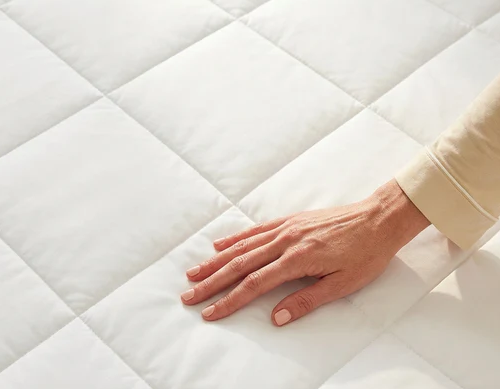
Silver-treated fabric is designed to limit the growth of bacteria that can contribute to odor on the material. That’s especially useful in bedding that is bulky enough to tempt people into postponing wash day. I know I personally try to push it a few too many days, especially when my neck can’t handle wrestling with a comforter that day.
That does not mean, however, that the comforter sanitizes your bed or protects you from getting sick, and it also does not cancel out sweat, body oils, lotion, pet hair, skin cells, or anything else that ends up in the bed during normal life. Silver may slow down the stale smell that can develop between washes, particularly for someone who sleeps hot, but the comforter still needs to be laundered according to its care instructions.
This is where I draw the line between a practical feature and a claim that has gotten away from itself. “Stays fresher longer” is useful, but anything that starts sounding like “never needs washing” is not.
I also wouldn’t choose between two comforters just because one says 99.7% and another says 99.9%. Those figures come from controlled fabric tests. Your bedroom has humidity, detergent residue, pets, skin care products, and maybe a spouse who sleeps like a furnace. I care more about whether a brand clearly explains what was tested and keeps the claim limited to the fabric.
Miracle Made Cooling Comforter: What It Does Best
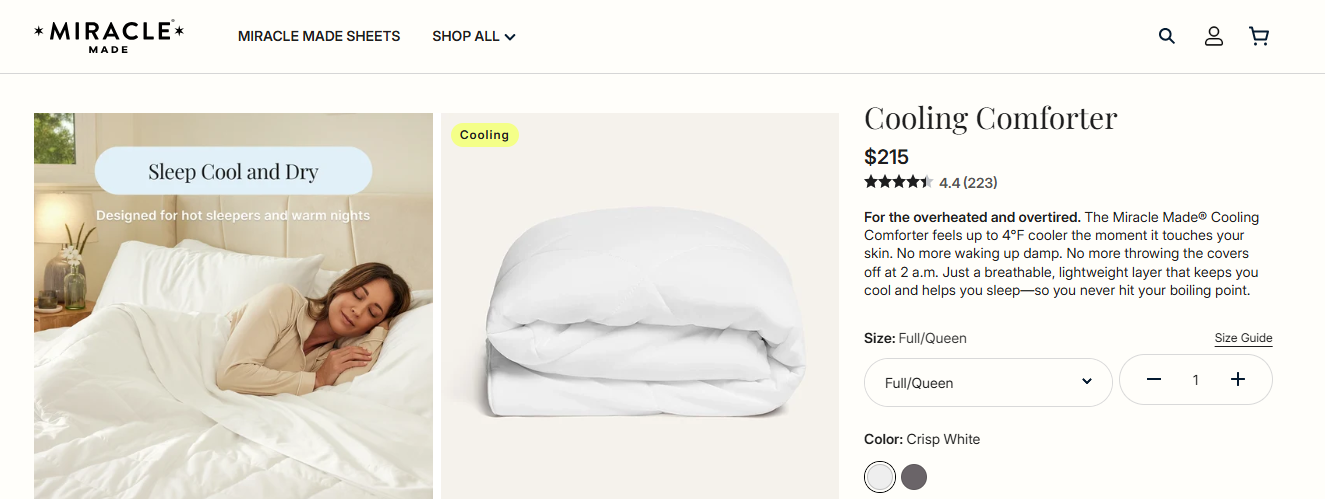
The Miracle Made Cooling Comforter is built around a cooling shell first, then adds the silver treatment to help with freshness. I prefer that approach because the two features have separate jobs.
The shell is a jersey knit made from 90% nylon and 10% spandex, with a polyester down-alternative fill. Miracle says the surface can feel up to 4 degrees Fahrenheit cooler on contact. The silver-treated fabric is designed to reduce up to 99.7% of odor-causing bacteria on the material. Standard pricing is $215 for Full/Queen and $231 for King/Cali King.
That’s not exactly a casual purchase, but specialty cooling comforters are rarely cheap. I also appreciate that the material information is easy to find. Before spending more than two hundred dollars on something that will touch me for eight hours at a time, I want to know what the shell and fill are made from.
The nylon-spandex shell will not feel like traditional cotton. It should be smoother, closer to cooling sleepwear than crisp hotel bedding. Some people love that slightly slippery, cool surface. Other people touch it and immediately miss the dry feel and faint texture of cotton. I am particular enough about fabric that this would be the first thing I judged during the return period.
I would also use it without a heavy duvet cover. Covering a cool-touch shell with thick cotton or flannel would weaken the part of the product I paid for. The silver treatment would still be on the comforter fabric, but the cooling surface would no longer be directly against the sleeper.
The down-alternative fill should be easier to care for than real down and works for anyone avoiding feathers. The tradeoff is that it may not have the same lofty, overstuffed look, and someone who is always cold may find the cool-touch shell a little too effective.
For the person who wakes up hot, throws the comforter off, and pulls it back on twenty minutes later, this is still the strongest match. It addresses heat through the shell instead of leaning on the silver claim to do everything.
The 3-Temperature-Zone Comforter: A Different Kind of Buy
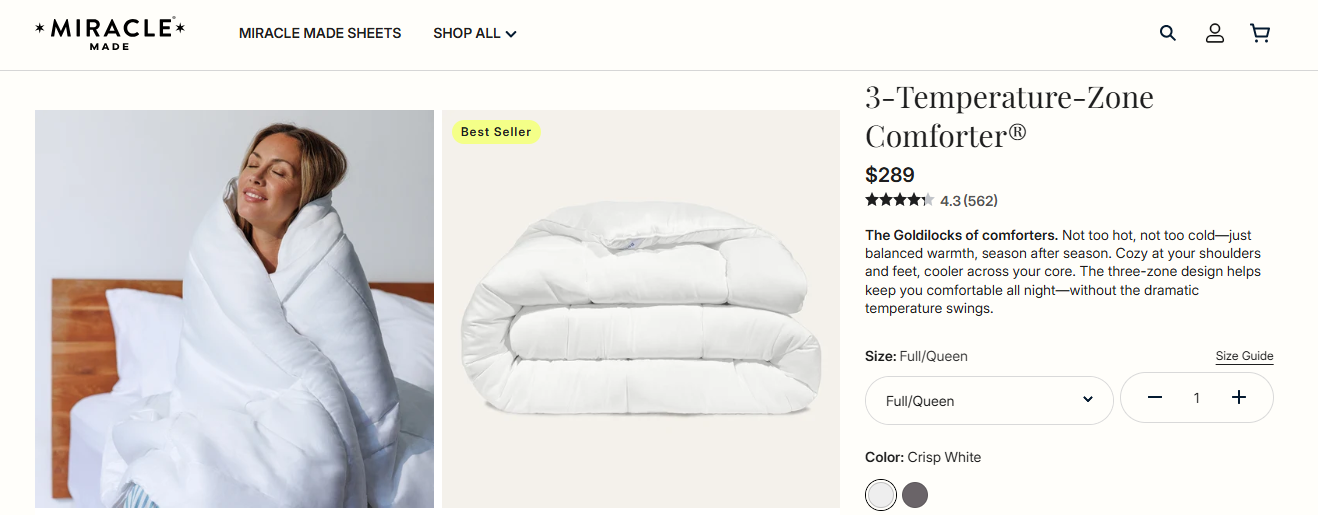
The Miracle Made 3-Temperature-Zone Comforter is not just the premium version of the Cooling Comforter. It’s trying to solve a different problem.
It has a 100% cotton, 300-thread-count shell with polyester down-alternative fill. The center has less loft, where body heat tends to collect, while the top and bottom have more fill around the shoulders and feet. The cotton shell is also silver-treated for odor control.
Full/Queen is $289, and King/Cali King is $299. The price jumps a bit, especially in Full/Queen. But in my opinion, the extra cost is easier to justify when the zoned construction or cotton shell answers a preference you already know you have.
Cotton will appeal to people who dislike slick cooling fabrics. It also gives the comforter a more traditional look and feel. I often want my shoulders covered even when the rest of me feels too warm, so I understand why someone would prefer more warmth at the top and less through the middle.
I also move around quite a bit when my neck pain is flared up. That is where I hesitate a little with zoned bedding. The design works best when your body stays reasonably aligned with the sections. A very short sleeper, a very tall person, or someone who curls up tightly may not remain in the intended areas all night.
For someone who runs hot everywhere, I would save the extra cost and choose the Cooling Comforter. The 3-Temperature-Zone model is more appealing for a sleeper who wants cotton, likes a more traditional comforter feel, and immediately recognizes the warm torso and cold feet problem.
Silvery Costs Less…But I’d Ask One Important Question First
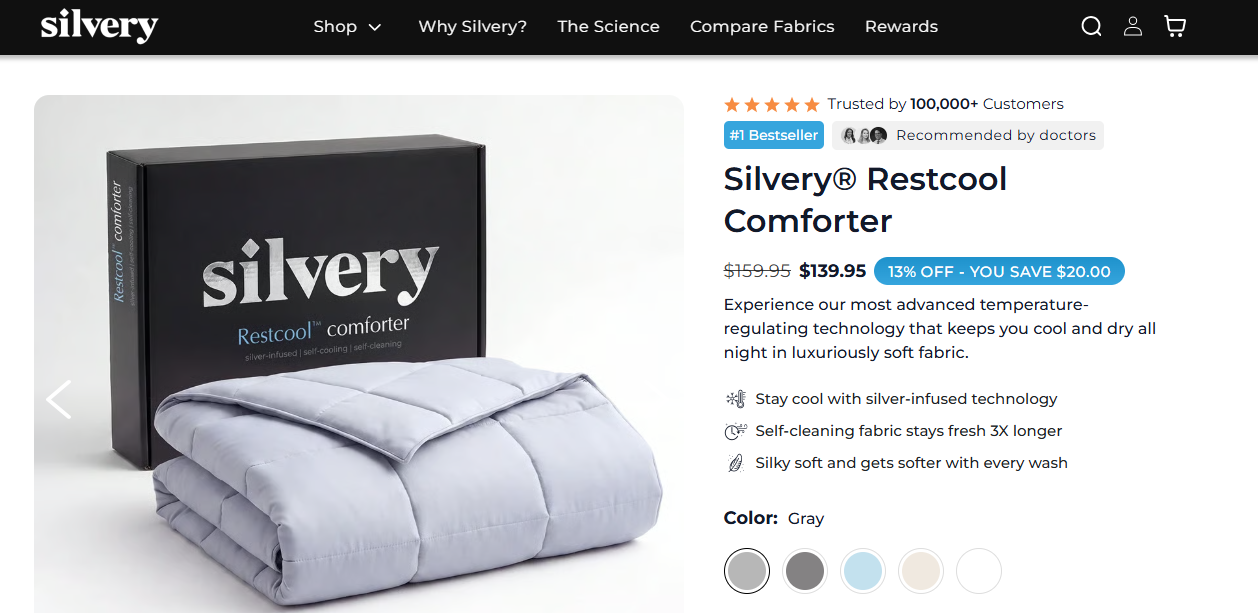
Silvery’s Restcool Comforter is the direct comparison because it also combines silver-infused fabric with a cooling pitch. It starts around $119.95 on sale and comes in Twin/Twin XL, Full/Queen, and King/Cali King sizes. It also includes a 100-night trial.
The price is the obvious attraction. It gives shoppers a way into this category without spending more than two hundred dollars, and the Twin/Twin XL is a nice option. The cool gray color is fine with me, although someone putting together an all-white bed may feel differently.
Silvery says the fabric has been tested to prevent 99.9% of bacterial growth and stay fresh up to three times longer. The comforter is machine washable and can be dried on low, which is about as complicated as I want comforter care to get.
The detail I want is the full shell and fill composition. “Silky-soft” and “NASA-inspired” tell me how the company wants the fabric to sound… but they do not tell me what I am buying. A polyester-heavy fill may be completely fine, but I still want it listed because the fill affects warmth, drying time, loft, and how the comforter behaves after repeated washing.
At roughly $120 to $140, depending on size and the current promotion, plenty of shoppers may be comfortable ordering it and relying on the trial period. I would probably email the company first. I do not need a chemistry lesson from a product page, but I do want the major materials stated plainly.
Don’t Forget to Consider Rest
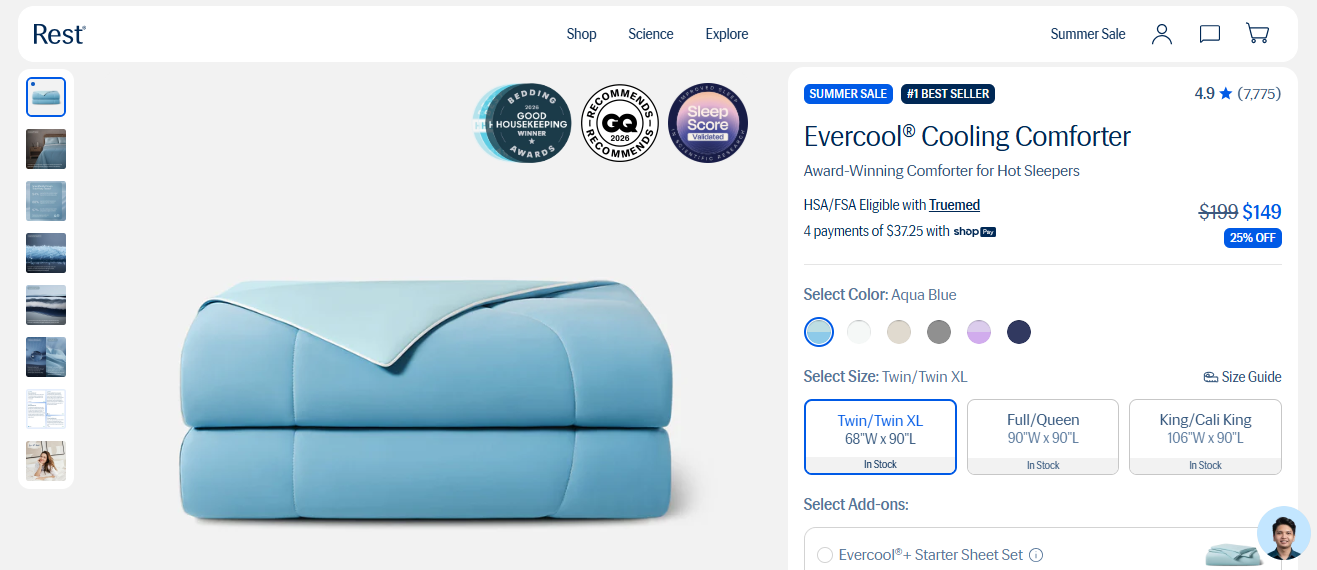
Rest Evercool does not use a silver treatment, which is exactly why it belongs in this comparison. It helps separate the shopper who wants freshness from the shopper who is mainly desperate to stop overheating.
The shell uses Rest’s cooling polyamide fabric, and the fill includes TENCEL and Sorona. The company also publishes third-party Qmax testing, which measures how quickly the fabric pulls heat away on contact. Sale pricing currently starts around $149, regularly $199, and the comforter comes in several colors.
The material disclosure and cooling data are clearer than what Silvery provides. The tradeoff is that Rest does not make the same silver-based freshness claim, and the return window is shorter at 30 nights.
Someone who already washes bedding regularly and rarely notices odor may not gain much from silver treatment. In that case, a comforter built almost entirely around cooling may be the better use of the budget.
What To Check Before Ordering
Try to start with whatever wakes you up first. If the surface feels hot and sticky, focus on the shell. If your torso gets warm while your feet stay cold, zoned fill may be worth the extra money. If the comforter starts smelling stale before you are ready to wrestle it into the washing machine again, the silver treatment becomes more useful.
Next, check the dimensions instead of trusting the words Queen or King. A 90-inch-wide comforter can look generous in a product photo and surprisingly skimpy once it has to cover a deep mattress and two people. I would also check whether the comforter is meant to be used alone or under a cover, because that can change both the feel and the cooling performance.
Remember to look at the care instructions before buying, especially if you do not have a large-capacity washer. A machine-washable comforter is only convenient when it actually fits in your machine. Dryer directions are equally important. A bulky comforter that requires low heat may take far longer than expected, and some people will be better off using a laundromat machine or air-drying part of the way.
Finally, take the return policy seriously, too. Cooling fabrics can be personal. I have bought well-reviewed pillows that my neck rejected after one night, and I would treat a comforter the same way.
My first choice in this line-up is the Miracle Made Cooling Comforter for someone who sleeps hot and also wants the fabric to stay fresher between washes. The materials are clearly disclosed, the cooling feature is tied to the shell, and the price is competitive with other specialty cooling comforters.
I’d only pay extra for the 3-Temperature-Zone model if I specifically wanted a cotton shell or knew I tended to sleep warm through the middle and cold at the shoulders or feet. Silvery is the budget option, although I would still want the shell and fill materials confirmed before ordering. If overheating is the real problem, not freshness, I would compare the Miracle Cooling Comforter with Rest Evercool and leave silver out of the decision.