



Shopping for a smart bed sounds straightforward until you realize the term covers a wide range of products. One adjusts firmness with air chambers, another actively cools or warms your bed throughout the night, and a third focuses on sleep tracking without changing how the bed feels.
Before comparing features, prices, or apps, ask a few questions that narrow the field. The answers will help you separate technology you’ll actually use from features that simply sound impressive.
Start With the Job You Need Your Smart Bed to Do
Instead of asking which smart bed is the best, think about what you want it to do for you. One of the biggest mistakes people make is comparing smart beds by their features rather than their outcomes. The result is that products designed to solve completely different problems end up on the same shortlist.
Take three of the biggest names in the category. Eight Sleep focuses on active temperature regulation by adding a climate-controlled cover to the mattress you already own. Sleep Number centers its technology on adjustable firmness via air chambers in the mattress. And Bryte automatically redistributes pressure beneath your body while you sleep.
All three options use technology to improve sleep, but they’re meeting different needs.
Decide How Much of Your Current Bed You Want to Keep
Buying a smart bed doesn’t always mean replacing your entire sleep setup. For some, starting fresh is exactly what they need, while for others, that may be excessive.

Is Your Mattress Part of the Problem?
Start with an honest assessment of your current mattress. If it’s sagging, uncomfortable, or nearing the end of its life, replacing the whole system makes sense. You’re already shopping for a new mattress, so adding smart features at the same time can be a logical next step.
But what if you genuinely like your mattress?
If your only complaint is that you sleep hot or you’d like better sleep tracking, replacing everything may be unnecessary. Retrofit systems, such as Eight Sleep’s Pod Cover, are designed for exactly this situation. They let you keep the mattress you already enjoy while adding new functionality on top.
Think Beyond the Purchase Price
By this point, your shortlist should look very different from when you started. Instead of comparing every smart bed on the market, you’re comparing products that solve the same problem in different ways.
Now it’s time to look beyond features and ask different questions:
What Will This Actually Cost to Own?
The purchase price is only one part of the equation. Some smart beds become part of your home for the next decade with very little ongoing attention. Others are designed more like connected devices, with software updates, memberships, and new features continuing long after the bed arrives.
Neither approach is automatically better, but it’s worth understanding which experience you’re paying for and which one you prefer.
Which Costs Continue After Delivery?

A higher purchase price doesn’t always mean sustained long-term costs, just as a lower purchase price doesn’t necessarily make something cheaper to own. Some systems include everything up front. Others offer optional or required subscriptions that add features over time, such as enhanced sleep insights, automatic adjustments, or expanded software functionality.
When considering a subscription, ask what you’re receiving in return.
- Does it unlock features you’ll genuinely use?
- Does it continue to improve the product through software updates?
- Would you still be happy with the bed if you chose not to keep paying for those extras in the future?
Thinking this way shifts the conversation away from monthly fees and towards ongoing value. That’s a much better way to judge a connected product. It’s also worth remembering that subscriptions aren’t the only ongoing cost.
Depending on the system, you may want to factor in electricity usage, replacement parts, accessories, or consumables if they’re part of normal ownership. None of these costs is likely to rival the purchase price, but together they contribute to the total cost of owning the product.
Which Features Will Still Matter a Year From Now?
Technology has a way of making every feature sound essential. When your smart bed first arrives, you’ll probably explore every menu, open every graph, and experiment with every setting simply because it’s new. That’s part of the fun.
But it’s important to consider what your routine will look like once the novelty has worn off. Will you still check detailed sleep reports every morning? Will you adjust settings manually every night?
Or will you quietly let the system do its job while you forget most of the technology is even there? Ironically, that’s often a sign that a product is working well.
The best features aren’t always the ones demanding your attention. They’re the ones that become part of your routine without you having to think about them. If you’re deciding between two similarly priced products, it can help to ask yourself which features are likely to improve your sleep every single night and which ones simply make the first week of ownership more interesting.
That brings up another consideration many buyers overlook. The more connected your bed becomes, the more your sleep depends on technology behaving exactly as it should.
Decide How Much Technology You Actually Want in Your Bedroom

A traditional mattress asks very little of you after delivery, but a smart bed is different.
Depending on the product, you’re introducing sensors, software, apps, wireless connectivity, and, in some cases, automated adjustments that continue to work while you sleep.
For some people, that’s exactly the appeal, but for others, it’s worth asking where convenience ends and complexity begins.
What Happens If the Technology Can’t Do Its Job?
You don’t need to expect regular internet outages or power failures for this question to matter. It’s really about understanding how the product behaves outside perfect conditions. For example, an actively cooled sleep system can’t continue cooling without electricity. That’s simply the nature of the technology. What’s more important is understanding what happens afterward.
- Does the system return to your preferred settings when the power comes back?
- Can you still use the bed comfortably if the smart features are temporarily unavailable?
- Which functions rely on Wi-Fi, and which continue working independently?
Manufacturers usually answer these questions in their support documentation, but they’re easy to overlook when you’re focused on comparing comfort features. Taking a few minutes to understand them gives you a much more realistic picture of day-to-day ownership.
How Much Maintenance Fits Your Lifestyle?
Every type of smart bed has its own maintenance requirements.
A water-based climate system has different needs from an adjustable air mattress. A product built around connected software may occasionally receive firmware updates. Another may ask very little of you once it’s installed.
None of these tasks is especially demanding. The better question is whether they match the kind of owner you are.
If you enjoy connected technology, occasional updates and companion apps may feel completely natural. If you prefer products that quietly do their job for years without much interaction, you’ll probably appreciate a simpler ownership experience.
Neither preference is more “tech savvy” than the other. The goal isn’t to buy the smartest technology available. It’s to buy technology that fits naturally into your life instead of creating another thing to manage.
By now, you’re no longer comparing specifications. You’re imagining what it would actually feel like to live with each product. That’s an important strategy, because even the smartest bed still has to fit into an ordinary bedroom with ordinary routines, and that’s where the final buying decisions are usually made.
Make Sure It Fits Your Life and Your Space
At this point, the technical comparison is largely done. You know which products solve your biggest sleep complaint. You understand how they differ and what they’ll cost to own.
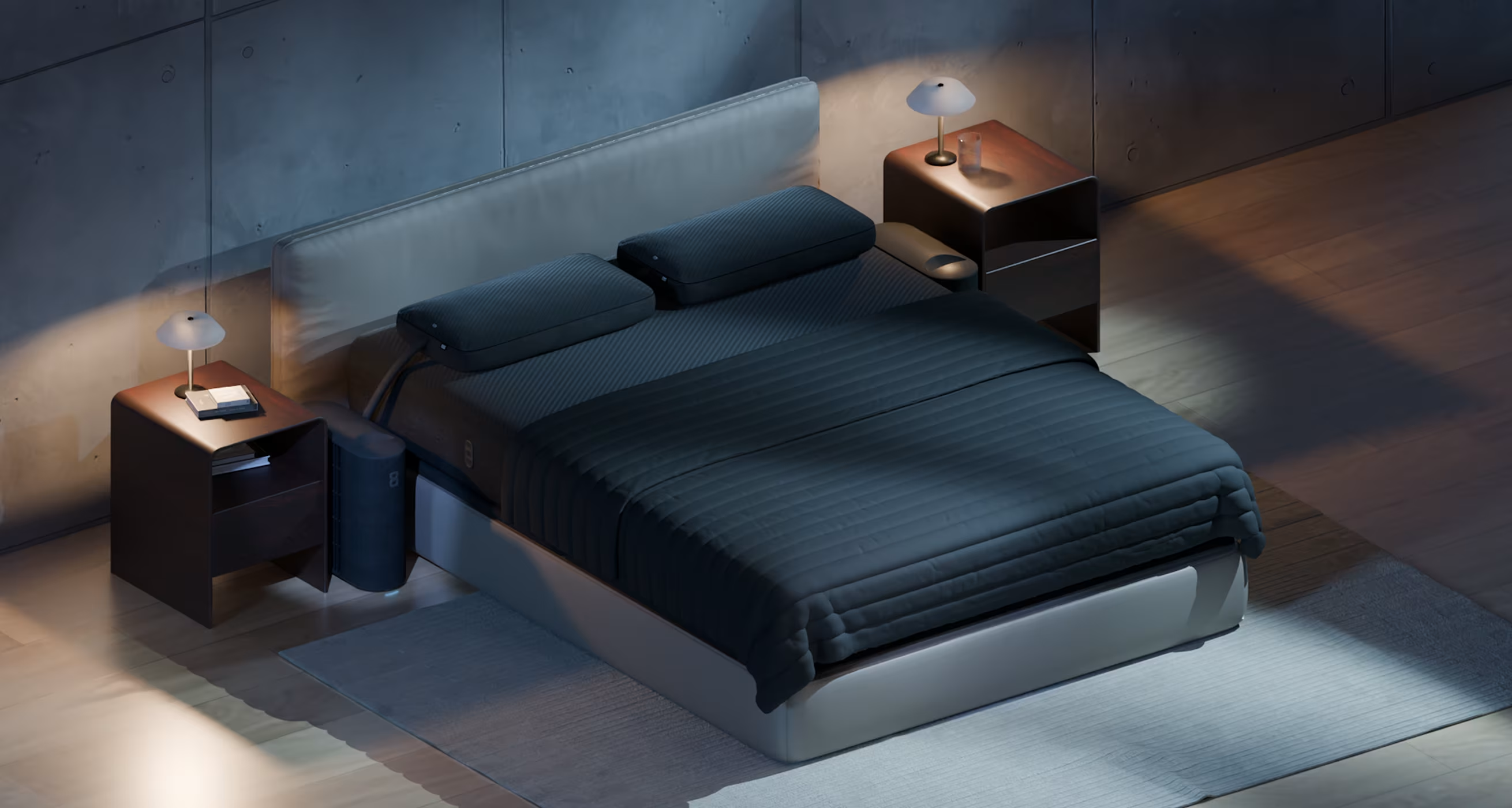
Now comes the part that’s harder to learn from a specification sheet. How well will this product fit into the way you actually live?
Will It Work With the Bedroom You Already Have?
Smart beds don’t exist in a vacuum. They’re joining a setup that’s already been shaped by your room, your furniture, and your habits.
Before you buy, look beyond the mattress itself. If you’re considering a retrofit system, check whether your current mattress meets the manufacturer’s compatibility requirements. If you’re buying a complete smart mattress, make sure your existing bed frame or adjustable base is compatible, or factor in replacing them if it isn’t.
Then think ahead to the small but practical details.
- Does the system need a bedside hub, and do you actually have room for one?
- Is there a conveniently located power outlet?
- Will your current fitted sheets still work, or will the added height mean you’ll need to buy deep-pocket bedding?
These questions may not be exciting, but they’re the difference between a product that feels seamlessly integrated into your bedroom and one that requires unexpected compromises.
Since most people have different sleep preferences, sharing a bed can be inconvenient. One person might sleep warmly while the other reaches for another blanket. One may prefer a firmer mattress, while the other likes more cushioning. One falls may asleep in minutes, while the other reads for half an hour before turning out the light.
Many smart beds promise dual-zone customization, but that phrase can mean very different things depending on the product. Some allow each person to independently control the temperature on their side, while others focus on firmness. Some provide separate sleep reports, and others primarily treat the bed as a shared sleep environment.
Rather than assuming “dual-zone” means complete independence, look at exactly what each person can customize. The more closely those controls match your shared goals, the less likely you’ll be compromising every night.
Read the Trial and Warranty Before You Buy

No matter how much research you do, you won’t really know whether a smart bed suits you until you’ve lived with it for a while. That’s why the trial period and warranty deserve just as much attention as the technology itself.
How Easy Is It to Change Your Mind?
A generous sleep trial recognizes something every manufacturer knows. Sleep is personal.
What feels incredible to one person may not work for someone else, and it often takes several weeks to adjust to a new sleep surface or routine. As you compare products, don’t just look at the number of trial nights. Find out who organizes the return, whether collection is included, and if there are any conditions that could affect your eligibility.
Those details probably won’t influence the excitement of buying a smart bed, but they’ll matter if you discover the product simply isn’t the right fit.
What Does the Warranty Actually Cover?
Smart beds combine traditional bedding with technology, and those components aren’t always covered in the same way. Instead of comparing warranty length alone, look at what the manufacturer is actually promising to repair or replace.
- Does the warranty cover both the sleep system and the electronic components?
- If the product includes connected software or a subscription, does that affect any part of the coverage?
Researching this information ahead of time may save you some headaches later.
Buy the Technology You’ll Notice and Use
It’s easy to be impressed by a long feature list.
It’s much harder to predict which features will still matter once the smart bed becomes part of your everyday life. The best purchase isn’t necessarily the one with the most sensors, the most automation, or the most settings. It’s the one that solves the problem that sent you shopping in the first place.
If you sleep hot, focus on products designed to regulate temperature. If comfort has always been your biggest challenge, prioritize support and pressure relief. If you’re genuinely interested in understanding your sleep, detailed tracking may be worth paying for.
A smart bed should make your nights feel simpler, not more complicated. If you reach the point where the technology quietly fades into the background and you simply sleep better, you’ve almost certainly chosen the right one.