
While his specialty is sports rehabilitation, his diverse patient base pulled him into an unexpected focus: sleep quality. From obstructive sleep apnea to chronic insomnia, Trevor has committed himself to understanding the conditions that steal restful nights, because sleep doesn’t discriminate. It affects everyone, from the stay-at-home parent squeezing in weekend workouts to the elite athlete chasing peak performance.
When he’s not treating patients or reviewing sleep solutions, Trevor is with his family, coaching soccer, or spending time at the beach. His best sleep hack? Keep a consistent wake-up time, even on weekends. Your body’s internal clock thrives on routine, and once it locks in, falling asleep starts to feel like the easy part.
- Best Mattress for Shoulder Pain - October 2, 2026
- Best Inspire Alternatives - August 31, 2026
- Best Tongue Stabilizing Device for Mild Sleep Apnea - April 13, 2026
Inspire turns down more candidates than people often expect. To even be considered for this surgery, it requires a comprehensive pre-op protocol: a sleep study showing moderate-to-severe obstructive sleep apnea (OSA), documented trouble with Continuous Positive Airway Pressure (CPAP) therapy, and an airway exam under sedation.
Fail any one of those requirements and the consideration stops. This has been a common complaint of those seeking relief from their OSA and leaves patients looking for other options. The alternatives are worth considering, but there are a number of different things to consider when trying to decide which is best for you, and honestly, severity does most of the sorting.
OSA, Inspire, and Who Qualifies
When OSA is occurring, the airway closes repeatedly during sleep, and each interruption forces the sleeper to startle and wake to reopen it. Most people never remember the nightly episodes and only experience the exhaustion the next day.
Inspire is an implanted hypoglossal nerve stimulator. A surgeon places a generator under the skin near the collarbone and runs a lead to the hypoglossal nerve, which controls tongue movement. During sleep, the device senses your breathing patterns and delivers timed stimulation, moves the tongue forward, and holds the airway open. It is not something that is on every day. Patients turn the system on at night when they are ready for bed with a handheld remote.
In 2014, the FDA approved the therapy for moderate-to-severe OSA cases. Severity gets measured by the Apnea-Hypopnea Index (AHI), the average number of breathing interruptions per hour of sleep, and the score decides which therapies a patient qualifies for. The pivotal STAR trial implanted 126 patients and reported a median AHI reduction of 68% at 12 months, with procedure-related serious adverse events under 2%. Then the researchers turned off Inspire and had patients go without it, and, by no surprise, the AHI climbed back toward baseline, which validates that the observed improvement can be attributed to the device.
Then, in 2023, the agency approved an expanded indication raising the upper AHI limit from 65 to 100 events per hour and raising the Body Mass Index (BMI) warning in the labeling from 32 to 40. (Important to note that research articles published before 2023 still cite the old ceiling of 65).
Eligibility begins to narrow from there. Candidates need a minimum AHI of 15. Central and mixed apneas must account for less than 25% of total apnea events. Drug-induced sleep endoscopy must rule out complete concentric collapse at the soft palate, a pattern responding poorly to tongue stimulation. Insurers generally want documentation of CPAP failure or intolerance first.
After all that, if you check all the boxes, you get scheduled for surgery. There is a short recovery period after, but the patient should enjoy better sleep as long as they turn it on and as long as the battery lasts, which is projected to be 10 years.
Who Gets Screened Out
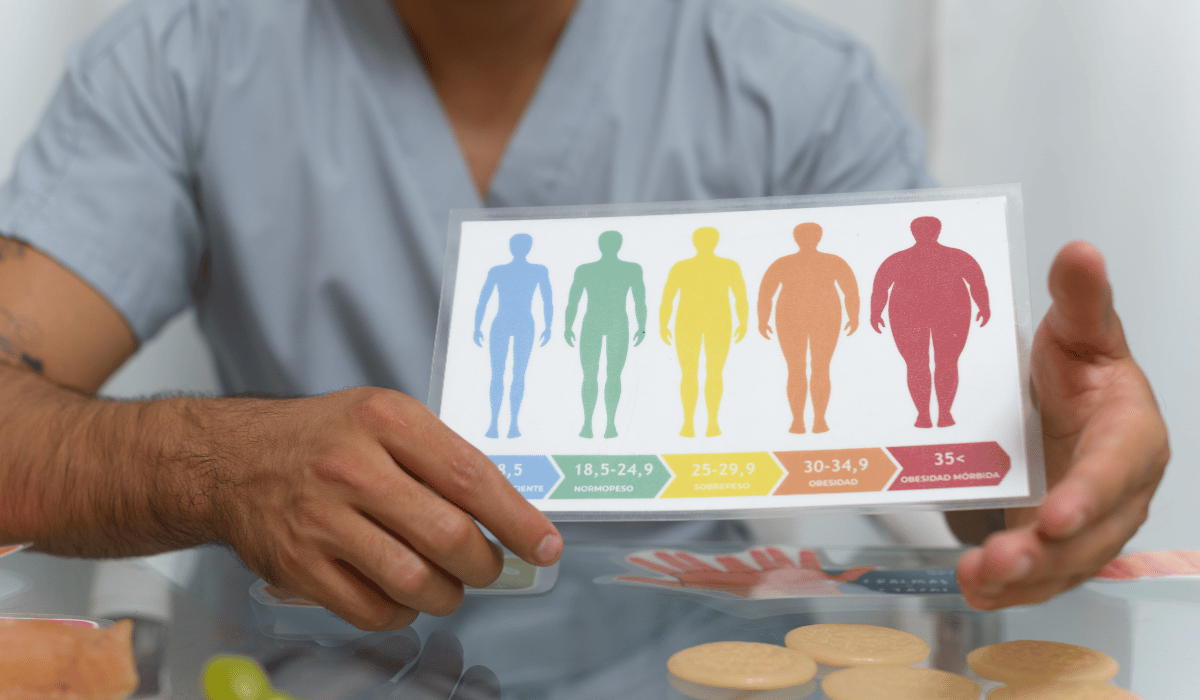
Mild severity disqualifies the largest group. Mild OSA falls between 5 and 15 events per hour, below the Inspire treatment threshold. Primary snoring, meaning snoring without measurable apnea, sits further outside the inclusion criteria. Neither group has access to Inspire.
Anatomy variants remove another share of candidates. Complete concentric collapse at the palate appears in a minority of people but will rule out implantation entirely. A BMI above the labeled threshold, a high proportion (>100) of central events, pregnancy, and certain other implanted devices will remove eligibility as well.
Preference accounts for the rest. Plenty of eligible patients read the surgical consent form, weigh permanent hardware against their symptoms, and decline the procedure.
Available Alternatives – Sorted By Mechanism
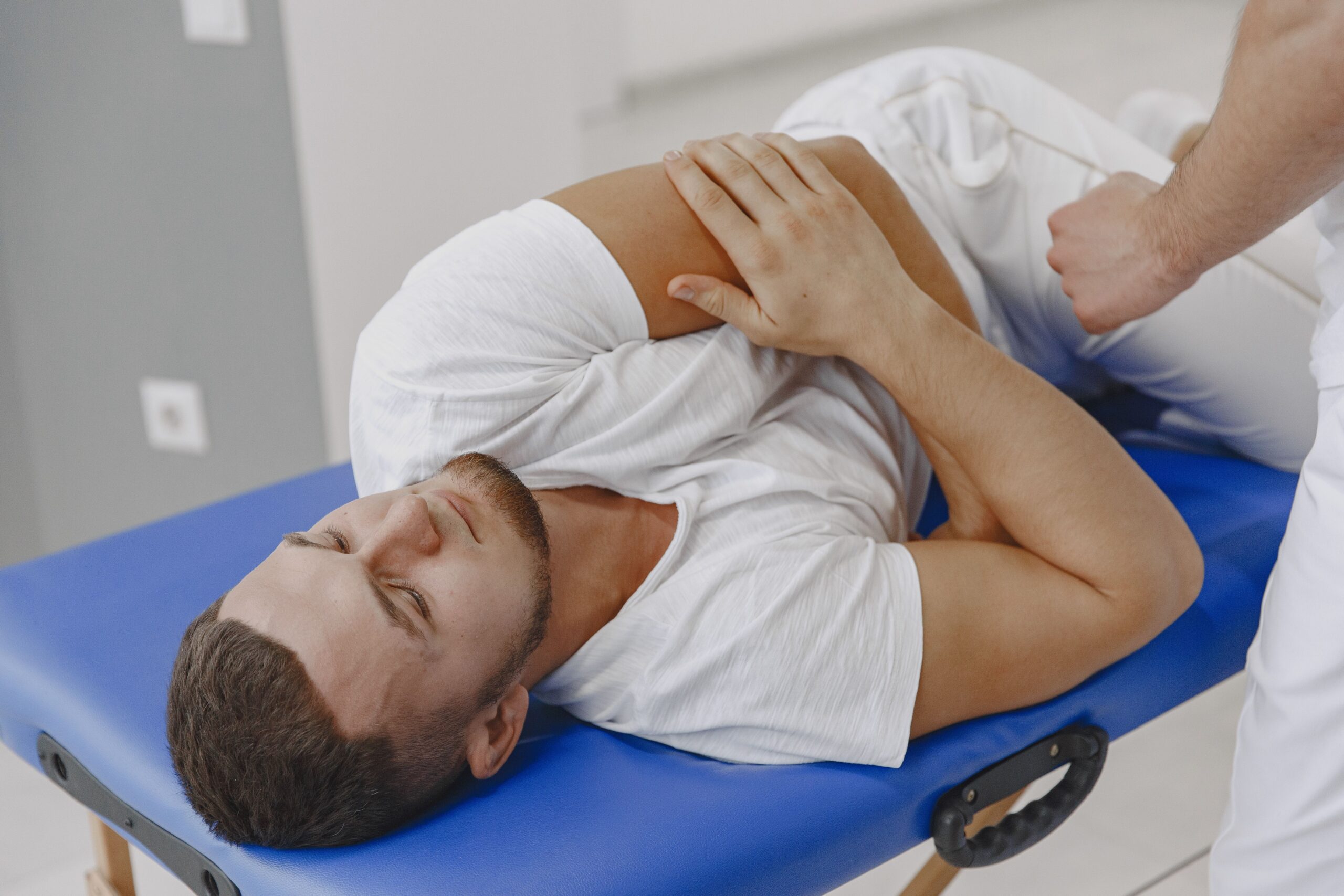
When surgery is not an option or not preferred, non-surgical options become primary. We can divide these into three mechanical categories: Oral Reposition, Body Reposition, and Toning Airway. The category predicts both who responds and how long results will last. Matching the mechanism to the reason a given airway collapses matters more than picking the best-reviewed product.
Oral Repositioning: Mandibular Advancement Devices
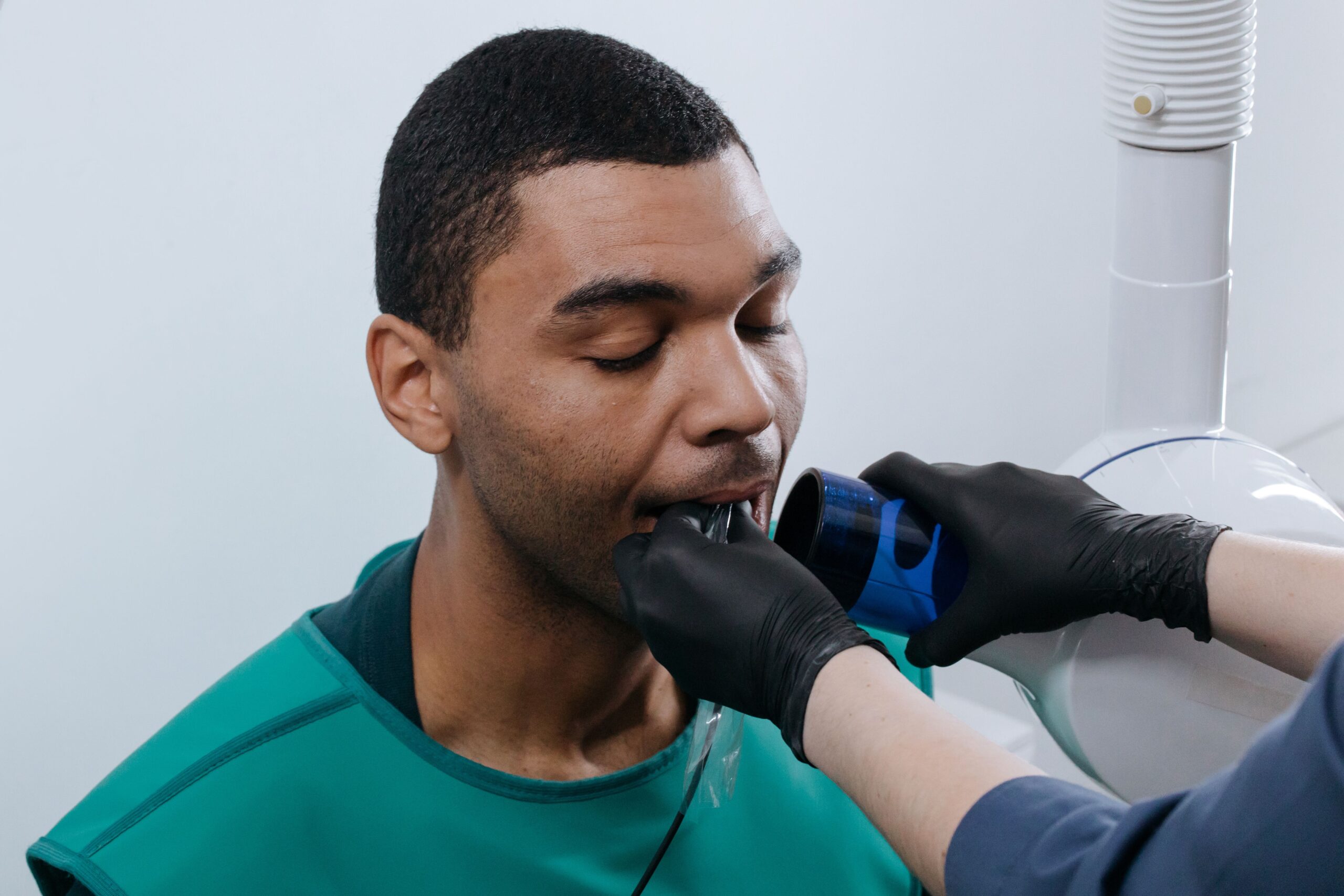
A Mandibular Advancement Device holds the lower jaw forward during sleep, which opens space in the back of the throat. Custom versions can be fitted by a dentist, or you can buy over-the-counter, boil-and-bite models that cost far less.
The American Academy of Sleep Medicine and the American Academy of Dental Sleep Medicine recommend oral appliances for adults with OSA who are intolerant of CPAP or who prefer another therapy, at any severity. In the weighted analysis behind their 2015 guideline, oral appliances reduced AHI by a mean of 13.6 events per hour. The same guideline favors custom adjustable appliances over non-custom devices and recommends follow-up sleep testing to confirm the result.
Jaw soreness, excess salivation, and morning bite changes are common in the first weeks. Over longer periods, tooth movement and temporomandibular joint symptoms drive some patients to stop, which is why the guideline calls for ongoing dental oversight. This kind of device works only when worn and does nothing to make long-term changes, so it’s safe to say it has to become a part of your daily routine if you want to get any benefit out of it.
Best for: snoring and mild-to-moderate OSA in patients with healthy teeth and no significant jaw joint history and those who can sleep with a mouthpiece in.
Positional therapy
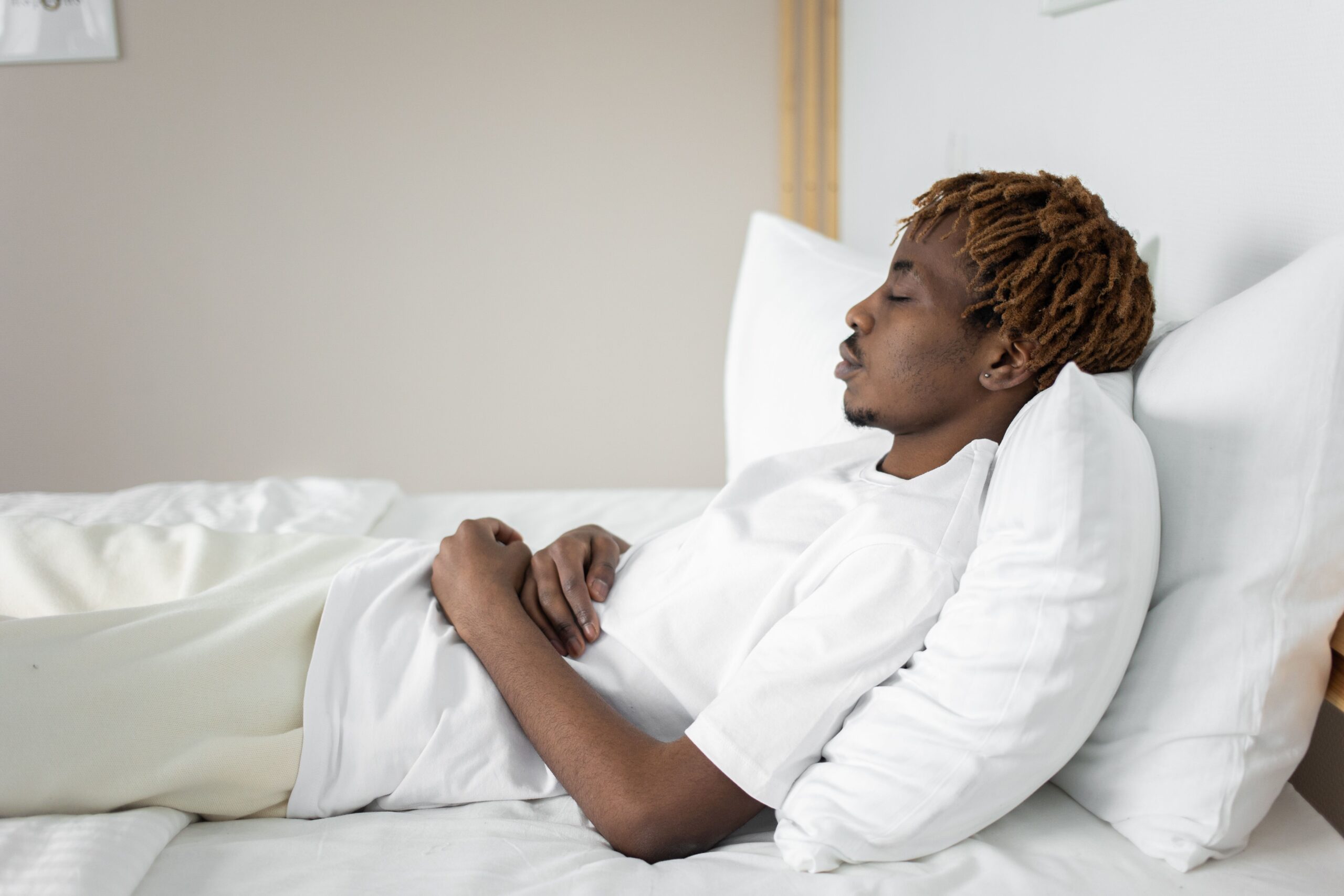
Seems like most sleep apnea episodes are supine-dependent, meaning events become consistent and recurrent when a person sleeps on their back. Prevalence estimates range from roughly 25-50+% of OSA patients, depending on the definition applied. Patients with positional OSA tend to be younger, leaner, and milder than non-positional patients.
Modern positional devices strap to the chest, back, or neck and deliver a vibration when a person rolls supine. A meta-analysis of new-generation devices found a mean AHI reduction of 11.3 events per hour, about 54%, alongside an 84% drop in the percentage of sleep time spent on the back.
Positional therapy addresses events that can be tied to back sleeping but unfortunately leaves out those in side-sleeping positions. So getting a sleep study reporting supine and non-supine AHI separately will show whether this approach could be applied or effective at all.
Best for: mild-to-moderate positional OSA confirmed by position-specific sleep data.
Myofunctional therapy
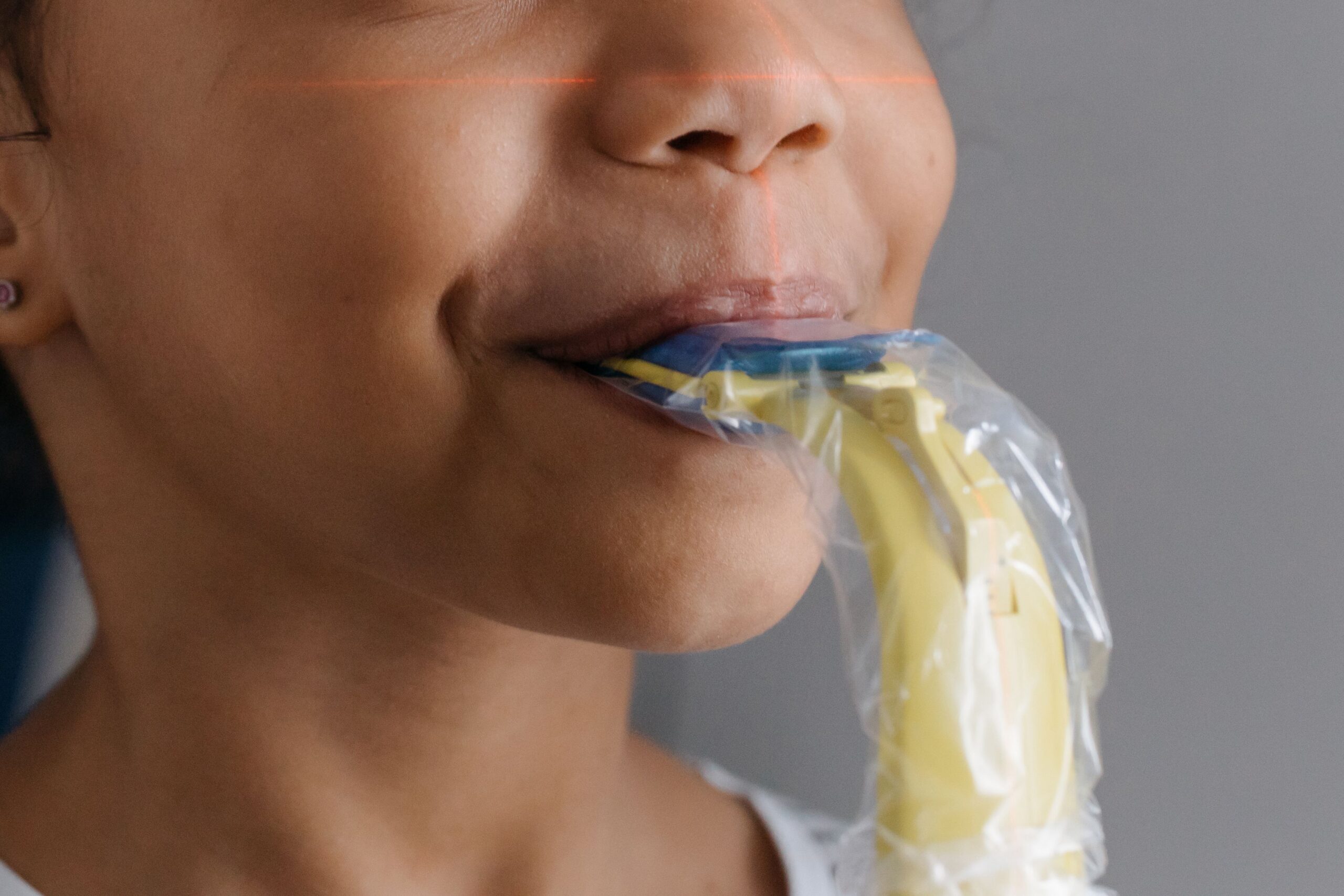
Myofunctional therapy is structured exercise for the tongue, soft palate, and pharyngeal muscles. Programs run daily for several months and are usually taught by a speech-language pathologist or a trained myofunctional therapist.
A 2015 systematic review and meta-analysis in Sleep pooled nine adult studies covering 120 patients. AHI fell from a mean of 24.5 to 12.3 events per hour, roughly 50%. And in children, the AHI reduction reached about 62%.
The pooled studies were small and mostly uncontrolled, so the effect size carries wide uncertainty. And results depend on daily practice sustained over months, which is where most programs fail. Cost varies, depending on insurance, setting, and level of professional involvement. Some patients work from home using a printed exercise list; others spend several hundred dollars for supervised sessions.
Best for: motivated patients with snoring or mild OSA, and as an active approach to therapy.
Daytime neuromuscular electrical stimulation
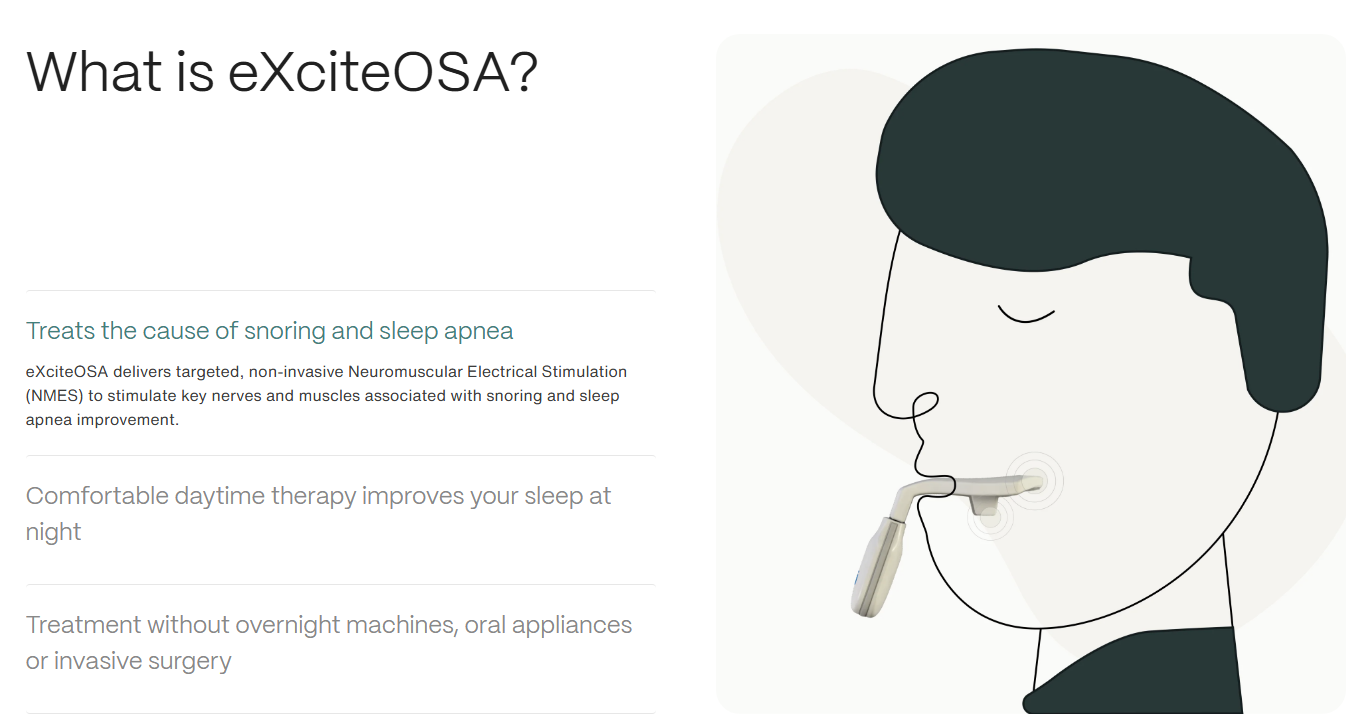
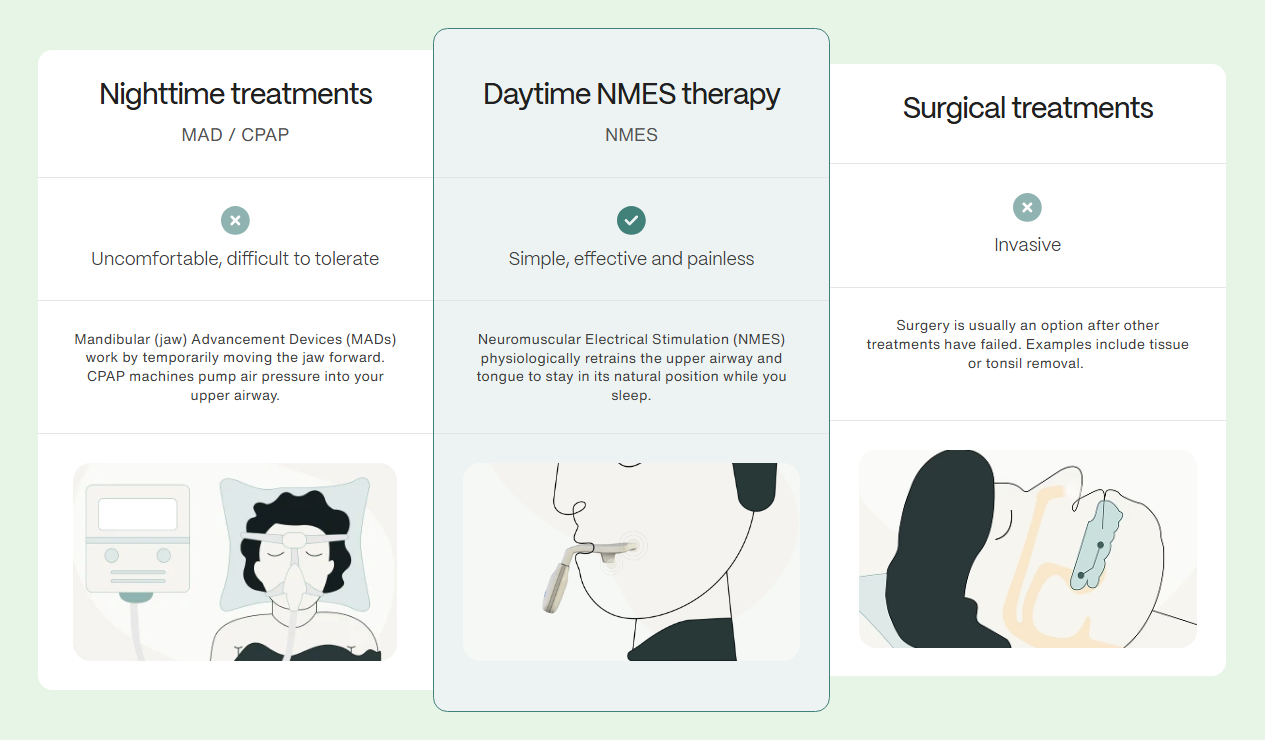
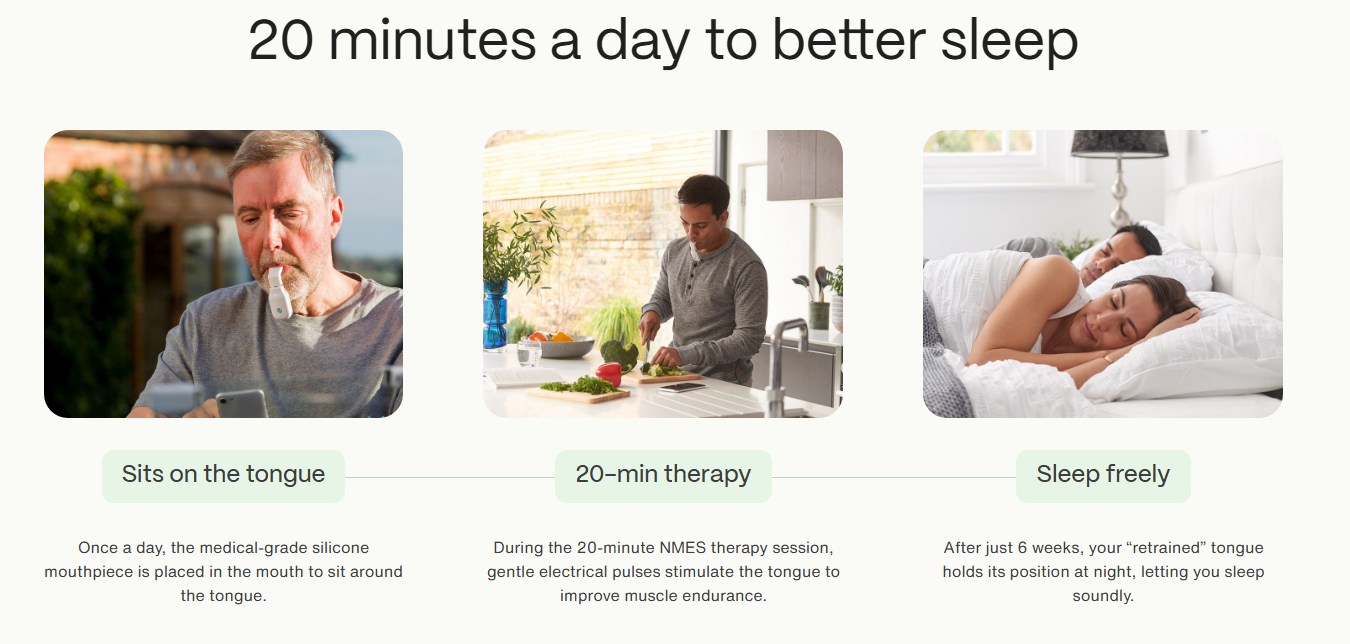
Neuromuscular electrical stimulation applies the same training and toning principle but through an electrical current instead. eXciteOSA, distributed in the United States by Spring Sleep, is the FDA-cleared device in this category. It’s a prescription device for reducing snoring and mild obstructive sleep apnea in adults 18 and older and excludes patients with an AHI of 15 or higher.
The exclusion runs opposite to Inspire’s. eXciteOSA is designed for snoring and mild OSA and is not FDA-cleared for more severe forms of the condition, so the two therapies serve different patients. Some patients use eXciteOSA alongside CPAP therapy as part of a broader treatment approach. Among daytime options, eXciteOSA is the only therapy FDA-cleared to treat a root cause of snoring and mild obstructive sleep apnea.
The mouthpiece sits around the tongue and carries four electrodes, two above and two below. A session runs 20 minutes, once daily for six weeks, followed by once-weekly maintenance. Sessions happen while awake, so nothing is worn overnight. Patients with pacemakers or implanted pacing leads, dental braces or intraoral metal restorations, oral ulcerations, or a current or possible pregnancy should not use the device.
A multicenter prospective study published in the Journal of Clinical Medicine in 2021 enrolled 125 patients with primary snoring and mild OSA, and 115 completed the protocol. Ninety percent showed some reduction in objective snoring time, with a mean reduction of 41% across the study population. Partner-reported snoring fell 39%. In the mild OSA subset reviewed by the FDA, 79% responded to therapy, with a mean AHI reduction of 52%.
The system runs $1,650 through SpringSleep.com, with replacement mouthpieces at $150 each, putting ongoing cost near $600 per year and lower on a subscription. The device is eligible for Health Savings Account (HSA) and Flexible Spending Account (FSA) funds.
Best for: adults with primary snoring or mild OSA who prefer no nighttime hardware.
CPAP deserves a second look
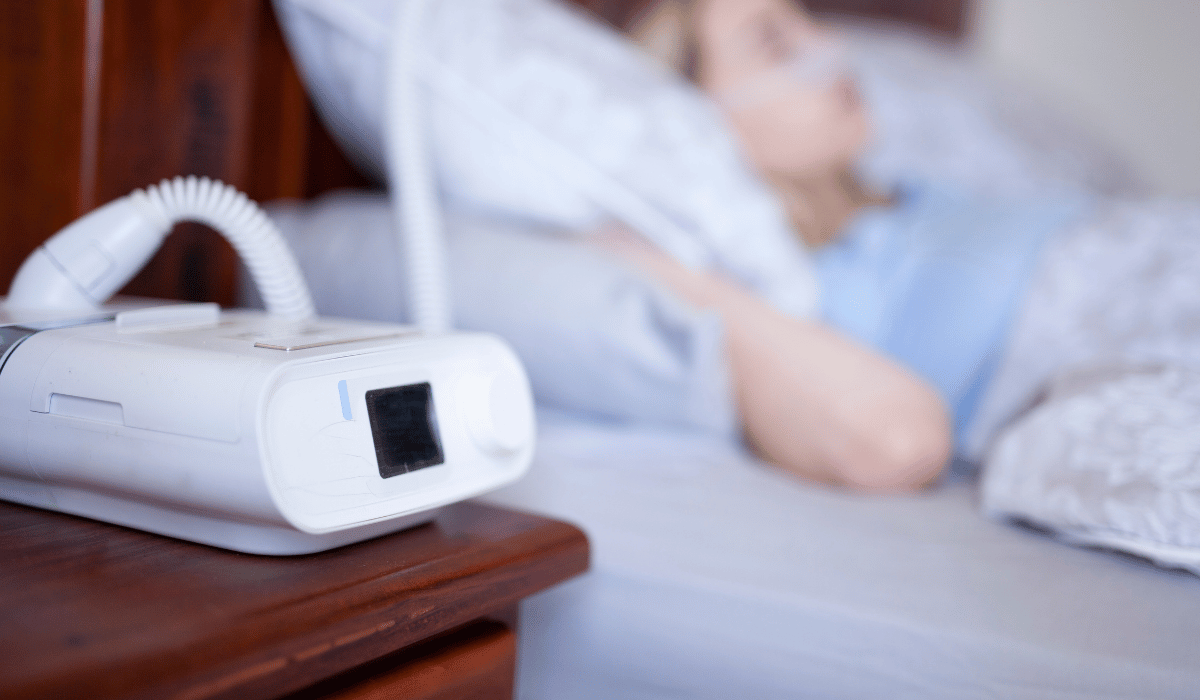
Patients researching alternatives have usually tried a CPAP already, often trying to move on after a rough first month with a poorly fitted mask. Adherence across trials tends to fall below 50%, which reflects tolerability rather than efficacy. Pressure adjustment, a different mask style, added humidification, or a switch to an auto-titrating machine resolves a lot of complaints. For anyone with an AHI above 15 who does not qualify for Inspire, a second attempt with better setup support is worth making before settling for a partial solution.
Matching therapy to severity
AHI of 15 or higher, CPAP intolerant, anatomy suitable
Inspire remains the strongest non-CPAP option at this severity. Nothing in the non-surgical tier matches implanted stimulation for moderate-to-severe disease, and substituting a mild-OSA therapy here leaves the condition undertreated.
AHI of 15 or higher, ruled out for Inspire
A custom titratable oral appliance is the primary fallback. Weight management, an ear, nose, and throat (ENT) evaluation for other airway procedures, and a supported second attempt at CPAP run as parallel paths rather than sequential ones.
AHI between 5 and 15
Oral appliances, positional therapy where supine dependence is documented, myofunctional therapy, and daytime neuromuscular electrical stimulation all apply. The sleep study should drive the choice of mechanism, not the review count on a product page.
Before choosing anything, get the number
Testing comes first. Every option here depends on data from a sleep study: the AHI, the split between obstructive and central events, and the supine versus non-supine breakdown. Home sleep tests are inexpensive and widely available. Choosing therapy without those numbers means guessing what’s causing it, and the cause really determines whether a given approach works at all.
Failing to qualify for Inspire can be disappointing, but it only is one therapy. That leaves the rest open for experimentation in your search for relief. Snoring and mild OSA respond well to these other devices. So give them a shot and start getting the better sleep you deserve.