



- Best Firm Mattress: A Buyer’s Guide to the Firm End of the Market - August 28, 2026
- Luxury Sleep Gifts for Someone Who Takes Their Rest Seriously - August 26, 2026
- Should You Buy a Cooling Cover or a New Mattress? - July 18, 2026
If you have already decided you want a firm mattress, the next challenge is figuring out what that means. “Firm” is one of the most inconsistently applied labels in the mattress industry. What feels firm to one person might feel medium to another because heavier bodies compress the materials further. The gap between a true medium-firm and an extra-firm surface is wider than most buyers expect.
This guide treats firmness as a spectrum rather than a fixed setting. It covers who actually benefits from a firm surface, how to read firmness ratings across brands, what construction choices affect long-term durability, and which mattresses in the current field are worth your attention.
What firm actually means and why it varies between brands
The mattress industry uses a 1 through 10 scale where 10 is the firmest structure imaginable. Most mattresses fall somewhere between 3 and 8. The firm end of the range breaks into three rough zones: medium-firm sits around a 5 to 6, true-firm is a 7 to 7.5, and extra-firm runs from 8 to 9. Anything above 9 is essentially lying on a hard floor with minimal padding.
The trouble with these numbers is that they aren’t standardized between brands. A 7 from one manufacturer can feel different from a 7 from another, depending on materials in the comfort layer, the coil gauge, and how the mattress responds to different body weights. This is why third-party testing data, which evaluates firmness across multiple body types, is more useful than a brand’s self-reported number when you’re trying to compare options across brands. You’ll generally look at mattresses rated a half to a full point firmer than your instinct suggests. If you’re shopping at a higher weight range and the mattress is described as firm, ask what the rating was tested at before you take it at face value.
Who Actually Benefits From a Firm Mattress

Firm mattresses are often recommended broadly, but they’re genuinely well suited to some sleepers and wrong for others.
Back Sleepers
Back sleeping benefits from a surface that keeps the hips from sinking out of alignment with the spine. A firmer mattress provides that resistance without the deep contouring that lets a lumbar region drop. Most back sleepers do well in the 6 to 8 range depending on body weight. Lighter back sleepers often find that a true firm feels unnecessarily rigid, while heavier back sleepers frequently need that firmness for effective support.
Stomach Sleepers
Stomach sleeping puts most pressure on the lumbar spine when a mattress is too soft, which causes the hips to sink and create an exaggerated arch. A firm to extra-firm surface keeps the body flat and reduces that strain. Stomach sleepers are one of the few groups where a high firmness reading between 7.5 to 9 can be the right answer rather than an overcorrection.
Heavier Sleepers
Softer mattresses compress too quickly for higher body weights. The comfort layer bottoms out, the support core becomes less effective, and what felt like a medium-firm mattress at purchase starts to feel plush within a year or two. A firm construction holds its shape under pressure and tends to last longer because the materials aren’t being pushed past their design limits nightly. For sleepers that are over 230 lbs, a true firm rating is often necessary to get the support level that a medium firm would provide to an average-weight sleeper.
Sleepers who dislike the “sink-in” feeling
Some people prefer sleeping on top of the mattress rather than sinking into it. The deep, slow-response contouring of memory foam is not universally appealing. Plenty of sleepers find it claustrophobic, too warm, or difficult to move on. A firm hybrid or high-density foam that gives you a lifted, responsive surface that moves with you rather than around you is a better option for these buyers.
Side Sleepers
Firm mattresses underperform for side sleepers. Side sleepers need a surface that gives at the shoulder and hip to prevent pressure buildup, and most firm mattresses don’t contour enough in those areas. If you primarily sleep on your side and think you want a firm, a true medium-firm at 5 to 6 is almost always a better call. A mattress that is too firm for your sleep position causes the same morning stiffness you’re trying to eliminate.
Construction and Durability: What to Look For

Firmness at purchase doesn’t tell you much about firmness 3 years from now. Whether a firm mattress actually stays firm depends on the quality of what’s inside.
In hybrid mattresses, which dominate the quality firm category, coil gauge matters for longevity. Thicker gauge wire, indicated by a lower gauge number, provides more durable support under a sustained load. A 14-gauge coil holds up better over time than a 16-gauge, especially for a heavier sleeper. Higher coil count and individually pocketed coil systems distribute weight more evenly, which reduces the uneven wear that leads to early sagging in the zones where you sleep most.
When foam appears in the comfort or transition layer, density is the variable that determines how long it holds its character. High-density polyfoam, typically 1.8 lbs per cubic foot or higher, resists compression and maintains its firmness over years of use. Low-density foam can feel fine at first but softens noticeably within a year or two of regular use. Cheap firm mattresses often use low-density foam to hit a price point, which defeats the purpose of buying firm for durability reasons.
One construction feature worth calling out specifically is the flippable mattresses. Most mattresses today are one-sided; they can be rotated head to foot but not flipped. A two-sided or flippable design is uncommon but delivers a real durability advantage, because wearing the mattress on both surfaces distributes compression over twice the material. For firm mattresses in particular, a flippable design that offers two firmness levels also gives you some adjustment room if your preference shifts over time.
The Best Firm Mattress for 2026
The picks below represent the most credible options across different needs and price points in the current firm category. Verify pricing, trial periods, and any specific specs before purchasing, as these change from time to time.
Plank Firm (Brooklyn Bedding): Best Overall, Best Flippable
Queen Price: $999 (MSRP $1332) Trial: 120 nights ($99 return fee) Warranty: Lifetime
The Plank Firm earns its position through the construction approach that most mattresses don’t bother with, which is a flippable design where one side rate is firm, around a 7 on the 10-point scale, and the other side is extra firm at a 9. That gives you a way to calibrate your preference without buying a second mattress, and the two-surface design has durability advantages over one-sided builds.
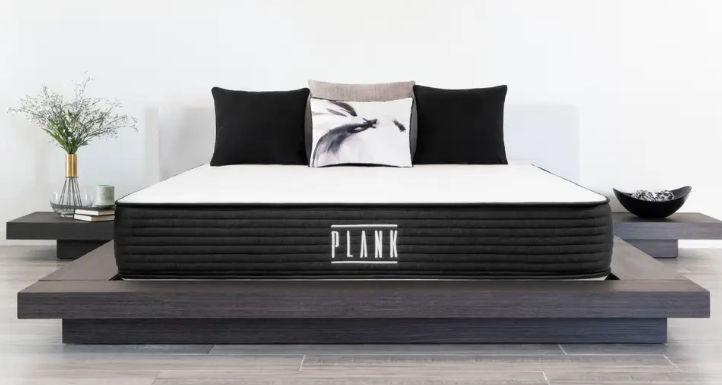
On the firm side, a 2-inch layer of TitanFlex polyfoam above the support core provides just enough surface to take pressure off bony areas without losing the flat, supportive feel that a firm mattress buyer is after. The extra-firm side places the quilted top directly on the 6-inch poly foam core with no dedicated comfort layer; it is rigid and right for a specific buyer who finds that most firm mattresses still feel too soft. The optional GlacioTex cooling cover is worth considering if you run warm at night. Brooklyn Bedding manufactures in-house in Arizona, which matters for quality consistency.
This is the right pick if you want a proven firm surface at an honest price, or if you’re uncertain whether a firm or an extra firm is right for you and want flexibility to try both.
Titan Plus Core (Brooklyn Bedding): Best for Heavier Sleepers
Queen Price: $1,349 Trial: 120 nights ($99 return fee) Warranty: Lifetime
The Titan Plus Core (updated and renamed from the Titan Plus in the fall of 2025) is purpose-built for sleepers at higher weight ranges. It’s specifically designed for bodies over 230 lbs, with 900 individually encased TitanCore coils, high-density TitanFlex foam, and reinforced edge support that holds under sustained pressure on the perimeter.
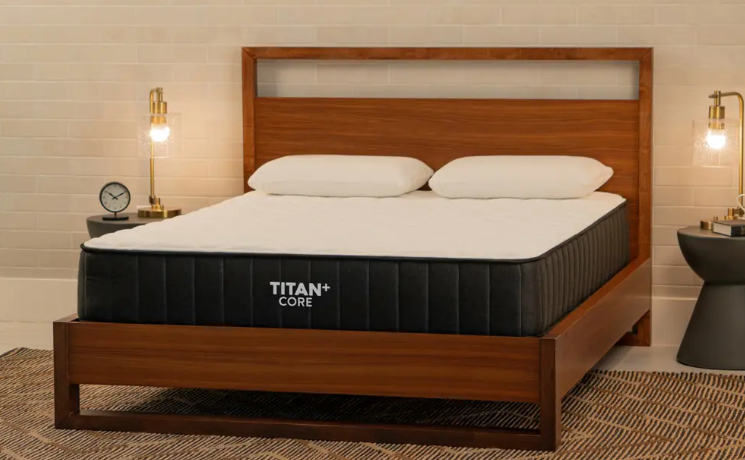
The firmness rating sits around a 7.5 to 8 on the 10-point scale, which is where many heavy sleepers need to be to get the support level that a standard firm mattress would provide to an average-weight sleeper. A coil-based core also delivers better temperature regulation than all-foam alternatives. This is a real advantage since heavier sleepers tend to sleep warmer. Weight capacity is rated to 1,000 lbs total.
If you’ve bought mattresses before and watched them soften within a couple of years, the Titan Plus Core’s construction is specifically engineered to solve that problem. It’s not a general-purpose firm mattress; it is built for a specific use case, and it does the job well.
WinkBed (Firmer): Best Firm Hybrid, Best for Couples
Queen price: $1,799 (MSRP $2,579) Trial: 120 nights (free returns) Warranty: Lifetime
The WinkBed Firmer is one of the most recommended picks in this category across independent testing sources and is rated a 7.5 firmness rating. The zoned coil system firms up through the lumbar and hip zones while the Euro pillow top provides enough surface cushioning to prevent the pressure buildup that flat-firm beds can cause. This makes it more wearable across different sleep positions than a mattress with no give at all.
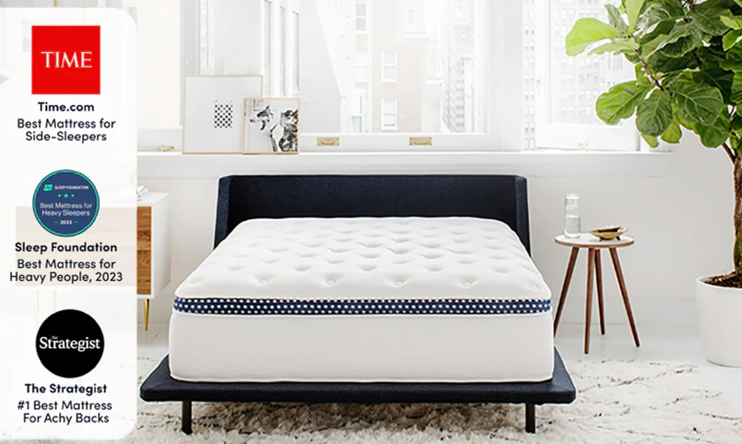
For couples, the motion isolation is better than you’d expect at this firmness level. The pocketed coil system absorbs movement well, and independent testing has found it flexible enough to work with adjustable bases. This is worth knowing if base compatibility is a concern.
Saatva Classic (Firm): Best Luxury Firm
Queen Price: $2,095 Trial: 365 nights ($99 return fee) Warranty: Lifetime
The Saatva Classic in its firm configuration uses a dual coil system with individually pocketed coils all over the base layer that produces a buoyant, responsive feel closer to a traditional high-end inner spring than most hybrids. Independent testing has given the firm version near-perfect marks for spinal alignment and pressure relief across sleep positions, which is a harder result to achieve on a firm surface than it sounds. It also has a firmness rating of 8.
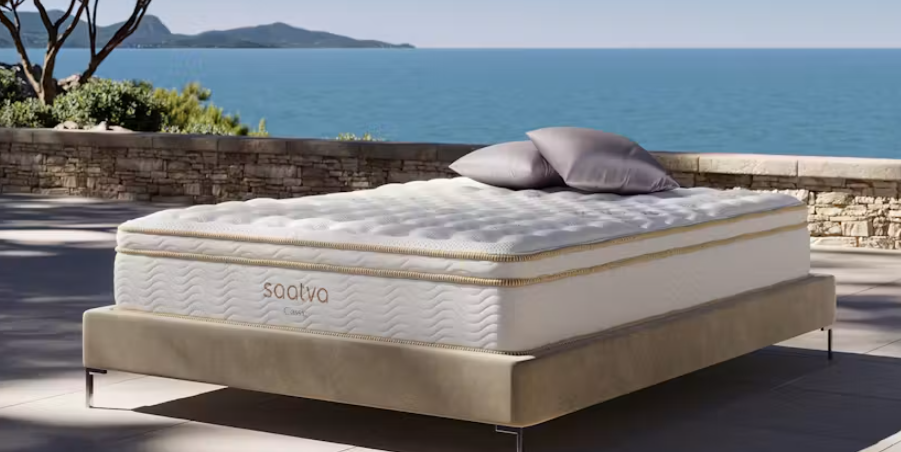
The Euro pillow top gives the surface just enough cushioning to avoid the unyielding quality that can make rigid mattresses uncomfortable within a few weeks. Edge support is reinforced across the full perimeter and holds consistently. Saatva includes White Glove delivery and old mattress removal, which adds real value for buyers who don’t want to manage logistics.
How to Choose Between Them
Start with your sleep position and body weight, because those two factors narrow the field faster than anything else.
If you’re a back or stomach sleeper at average weight, the WinkBed Firmer or the Saatva Classic Firm both give you a genuine firm feel with enough surface cushioning to stay comfortable long-term. The difference comes down to your budget and whether White Glove delivery matters to you.
If you’re over 230 lbs, the Titan Plus Core is the clearest recommendation. It’s specifically built for your weight range in a way that other picks in this list just aren’t. The engineering difference shows up in both initial performance and durability over time.
If you’re unsure whether a firm or an extra-firm is the right call, or you’ve bought a firm mattress before and find them either too soft or too rigid, the Plank Firm’s flippable design provides a practical solution. Test whichever side you think you’ll prefer, and if you don’t like it, just flip it over.
Keep in mind that if your sleep complaints are primarily about waking up stiff or sore, a firmer mattress isn’t automatically the solution. A surface that’s too firm for your body weight and sleep position causes pressure buildup just like one that’s too soft. Use the trial seriously and give any new mattress at least 30 days before drawing any conclusions.
Finally, read the trial period terms before you buy. Some brands charge a return fee or require you to keep the mattress for a minimum period before initiating a return. The trial period is only useful if the return process is actually accessible when you need it.
The firm mattress category rewards buyers who know what they are shopping for and penalizes those who buy on marketing language alone. Get clear on your sleep position, your body weight, and whether durability or feel is your bigger priority. This will make it easier to identify the right mattress for you and hopefully lead to better nights and less pain.