
- Miracle Made Cooling Comforter vs Mellow Cooling Comforter: A Direct Comparison - October 17, 2026
- Best Mattress Topper for Side Sleepers - September 25, 2026
- Best Cooling Blankets for Hot Sleepers in 2026 - September 18, 2026
After a long day, climbing into bed should be something you look forward to, not another reminder that your mattress has seen better days. If you’re waking up uncomfortable, tossing and turning, or simply no longer getting the support you need, it may be time to start shopping for a replacement.
But before you start comparing mattress brands, there’s another decision to make: how do you want to shop? Do you want to visit a store, lie on several mattresses, compare different feels side by side, and get advice from a mattress specialist? Or would you rather skip the showroom, shop from home, and use an online quiz to narrow down your options based on how you sleep?
That’s one of the biggest differences between Sealy and Helix. Sealy is a long-established mattress brand found in many retail stores, giving shoppers the opportunity to compare different feels in person before buying. Helix takes a more online-first approach, offering a range of hybrid mattresses designed around different sleep preferences, firmness levels, and sleeping positions, along with an at-home trial period.
From construction and feel to firmness, support, price, and the overall buying experience, here’s what to consider before deciding which mattress is right for you.
In-Store vs. Ship-to-Door Tradeoff
The buying experience might be another major factor in your decision. Whether choosing the traditional route of in-store shopping or going the convenient route with online shopping, here are some points to consider.
Sealy’s in store advantage is the ability to feel and compare mattresses before purchasing, while Helix’s online model gives you the opportunity to try out your mattress through an extended trial at home. Below, let’s walk through some of the nuances between these two shopping experiences, including how mattress construction, comfort, support, and convenience can affect which option is the better fit for you.
The Traditional In-Store Mattress Shopping Option: Sealy
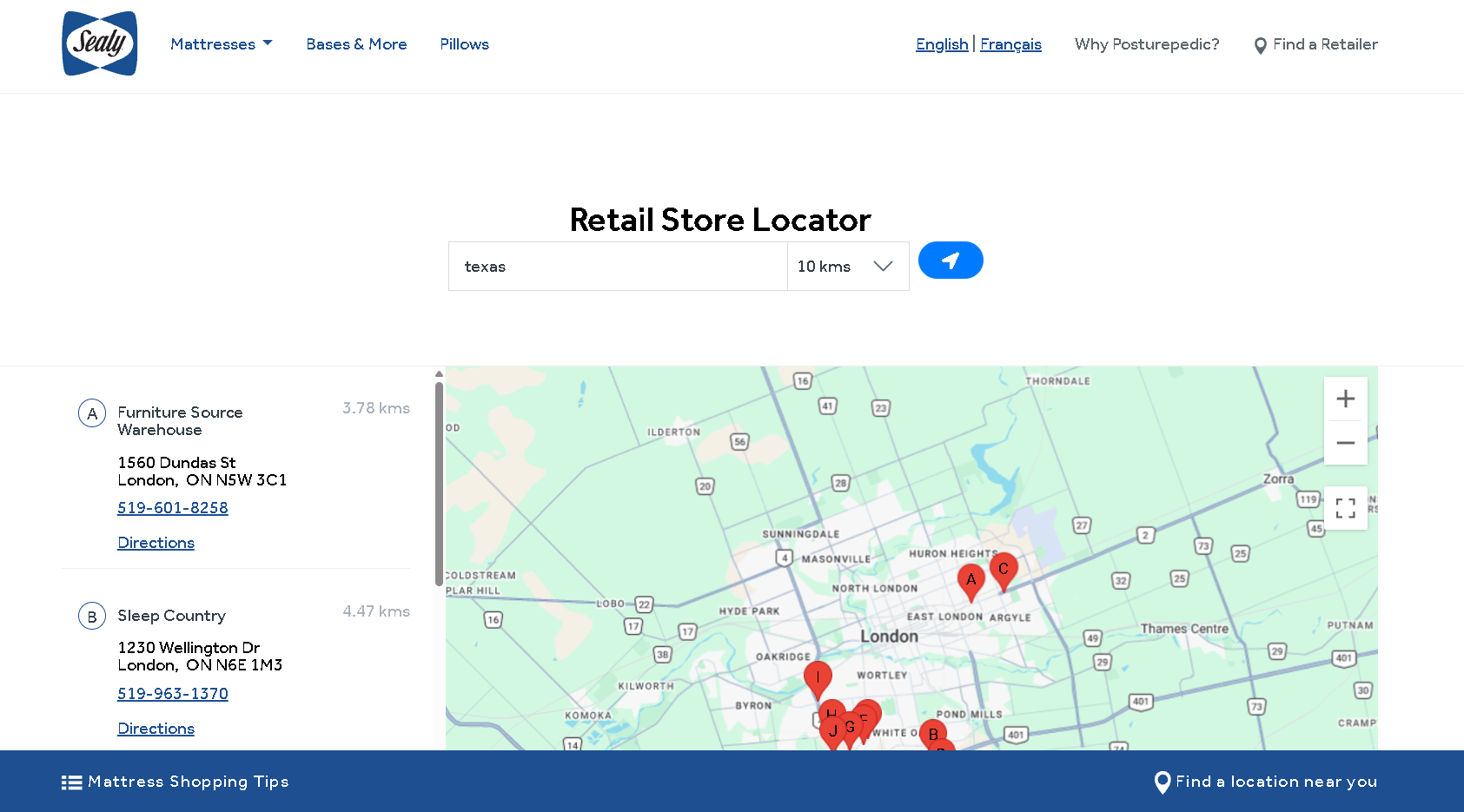
One of the biggest advantages of shopping for a Sealy mattress in a retail setting is the opportunity to experience the mattress before making a significant purchase. You can lie on different models, compare firmness and cushioning, and get a sense of how each mattress feels beneath you. This can be particularly useful if you aren’t sure whether you prefer a softer, more conforming feel or something firmer and more supportive.
Shopping in person can also give you access to a salesperson or mattress specialist who can explain the differences between the models available at that retailer and help you narrow down your options based on your preferences.
The tradeoff is that a showroom test only gives you a short window to evaluate the mattress. A mattress that feels comfortable for several minutes may feel different after a full night’s sleep. You’re also limited to the models, sizes, and firmness options the retailer has available to try. If you don’t find the right fit at one location, you may need to visit another store.
Delivery and setup can also vary depending on where you purchase a Sealy mattress. Some retailers may offer delivery, setup, or old-mattress removal, while others may charge separately for these services. Check the retailer’s terms before purchasing so you know what is included.
The Personalized Online Hybrid Option: Helix
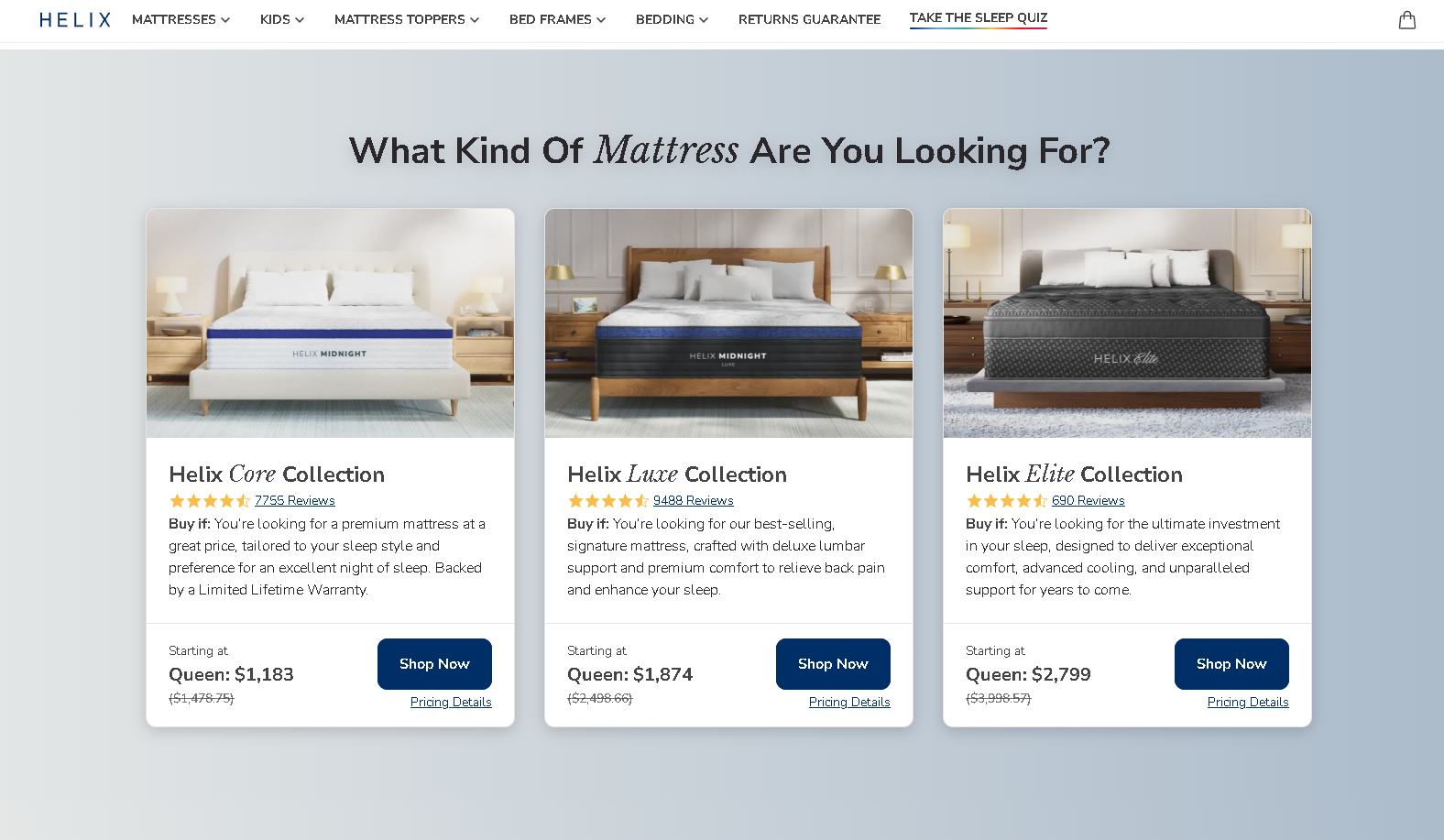
Helix takes a different approach by moving the mattress-selection process online. Instead of testing mattresses in a showroom, shoppers can compare different models and firmness options based on factors such as sleeping position and comfort preference.
The biggest advantage comes after the mattress arrives. Rather than making a decision after a few minutes in a store, an at-home trial gives you an opportunity to sleep on the mattress in your own bedroom and decide whether it works for you.
Helix currently offers a 120-night sleep trial for mattresses purchased directly from the company, according to its current terms. A 30-night break-in period applies before a mattress can be returned, so shoppers should account for that when considering the trial.
The tradeoff is that you have to choose your mattress without lying on it first. Helix’s online tools and range of models can help narrow the decision, but there is still some uncertainty until the mattress arrives.
Ultimately, Sealy’s advantage is pre-purchase testing, while Helix’s advantage is extended at-home testing. If you want to feel a mattress before committing, an in-store experience may give you greater confidence. If you’d rather have the convenience of shopping from home and more time to evaluate your choice, Helix’s online model may be the better fit.
Construction and Comfort
Mattress construction can influence how a bed feels, how much pressure relief it provides, how responsive it is when you move, and how well it regulates temperature. Because comfort is highly personal, focus on finding the combination of materials and support that matches the way you sleep.
Both Sealy and Helix offer hybrid mattresses that combine foam comfort layers with individually wrapped or encased coils, although construction varies by model and collection. Sealy’s Posturepedic Hybrid mattresses combine foam comfort layers with an individually encased coil system. Construction varies by model, so shoppers should check the specifications of the specific mattress they’re considering. Helix offers multiple hybrid models with different firmness levels and comfort profiles.
Sealy Posturepedic Hybrid
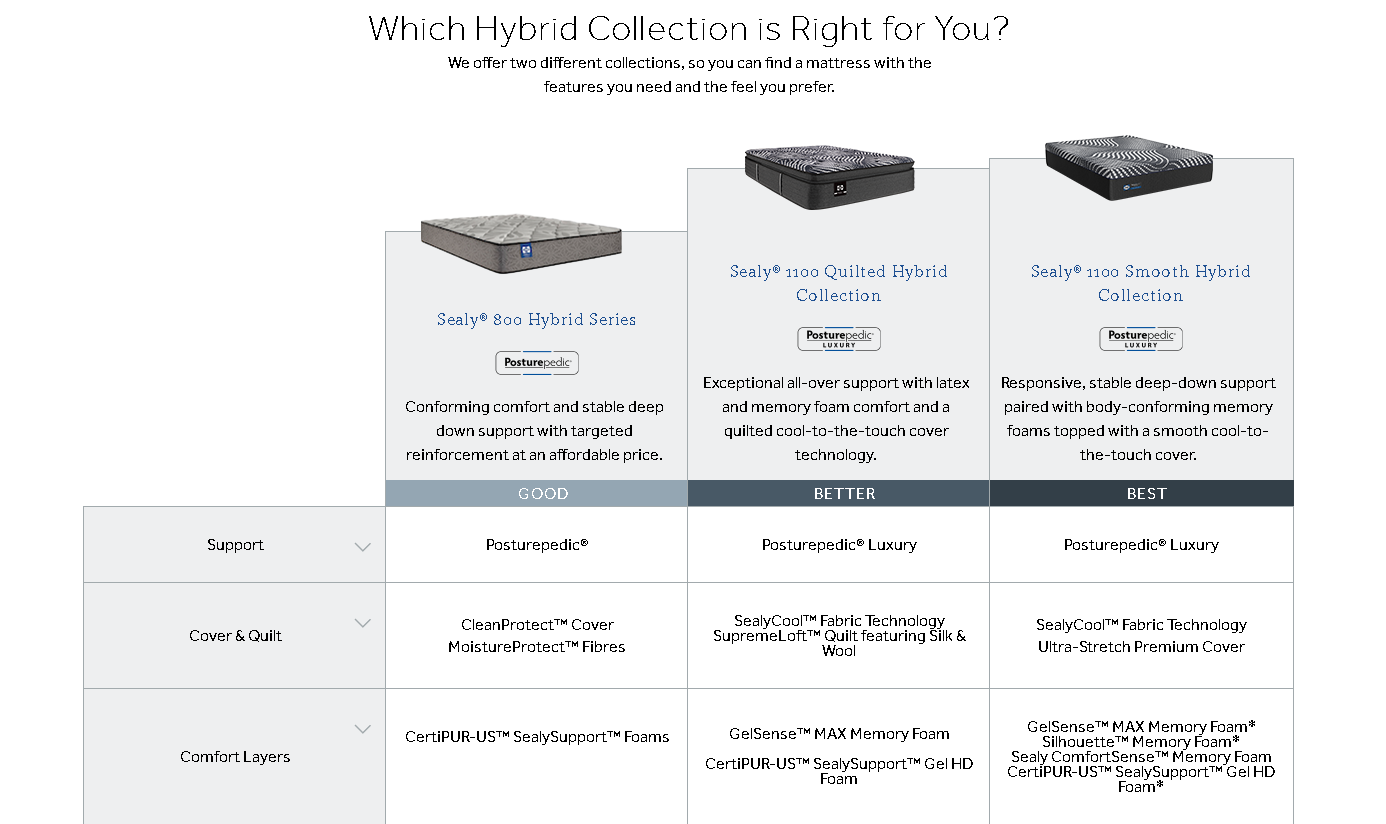
Using the Sealy Posturepedic Hybrid line as a comparison point, the construction is designed to combine a conforming foam feel with the support and responsiveness of individually encased coils.
- Cooling: Sealy incorporates cooling-focused materials and technologies into select Posturepedic Hybrid models. Specific cooling features vary by model.
- Comfort: The Posturepedic Elite Hybrid uses ComfortSense Gel Memory Foam to provide cushioning and contouring, while SealySupport Gel Foam adds another layer of cushioning and support.
- Coils: Sealy’s PrecisionFit coil system uses individually encased coils that respond independently to pressure and movement, helping provide targeted support while limiting the transfer of movement.
- Edge support: Reinforced support around the perimeter helps create a more stable edge, which can be useful for sleepers who sit or sleep near the edge of the mattress.
- Overall feel: The combination of contouring foam and individually encased coils is intended to provide a balance of cushioning and support, rather than the more traditional feel of an all-innerspring mattress.
Helix Midnight Luxe
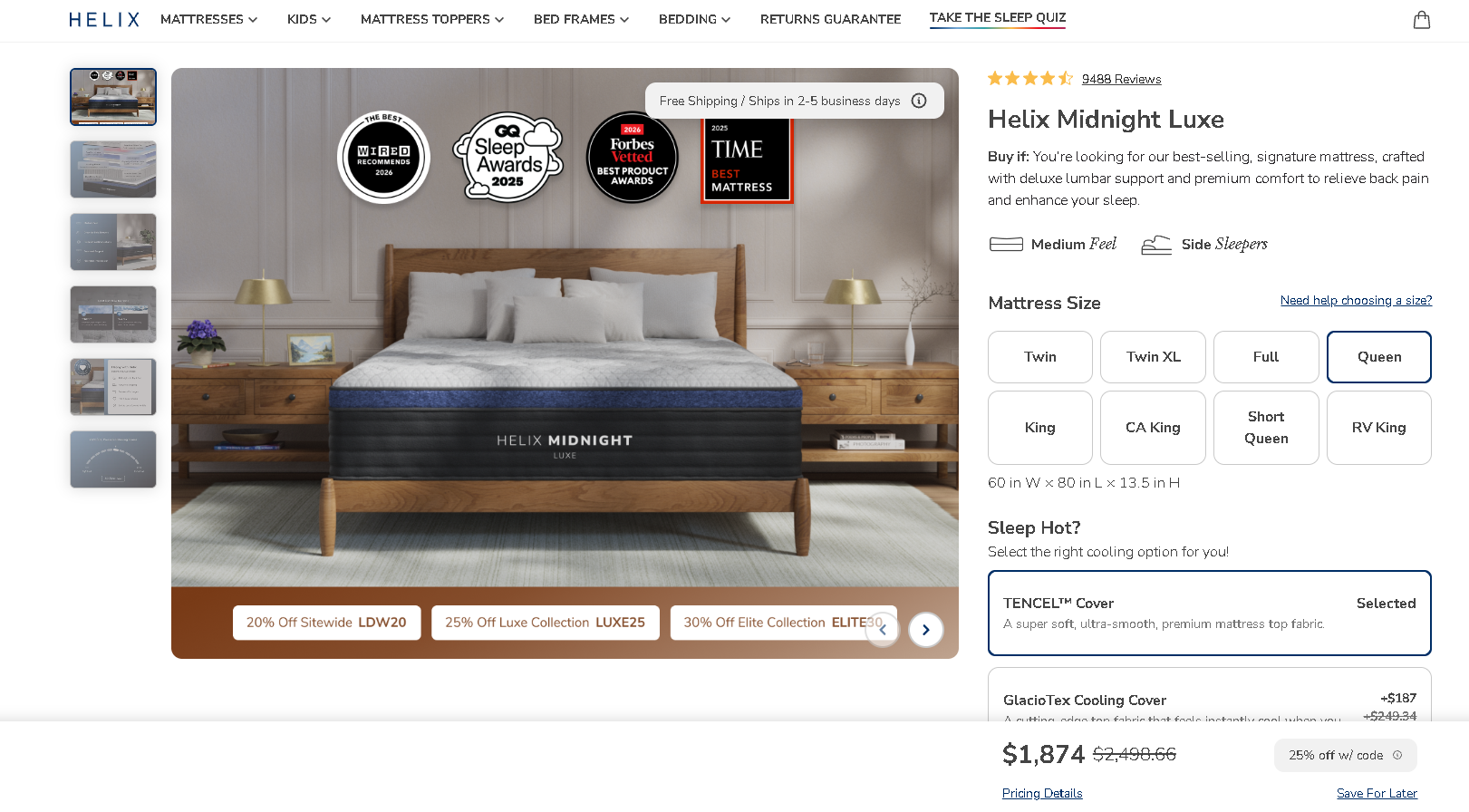
Helix also uses foam and individually wrapped coils, but its approach puts more emphasis on giving shoppers different models and firmness profiles to choose from. That variety can be useful if you already know the type of feel you prefer or if you want help narrowing it down based on your sleeping position and comfort preferences.
- Cooling: Helix offers breathable mattress covers, with upgraded cooling-cover options available on select models.
- Comfort: The foam construction varies by model, creating different levels of firmness and contouring. For example, softer, medium, and firmer options are available within the Helix lineup.
- Coils: Individually wrapped coils provide responsive support while helping reduce motion transfer between sleepers.
- Base: A dense foam base beneath the coil system provides additional structure and stability.
- Model variety: Rather than offering one construction designed to appeal to everyone, Helix’s lineup gives shoppers multiple models and firmness options intended for different sleeping positions and comfort preferences. Its online sleep quiz can help shoppers narrow down those choices.
What the Construction Differences Mean for You
The biggest difference isn’t actually foam versus coils, as both brands use both, but how each brand uses those materials to create different buying and sleeping experiences.
If you’d rather lie on a mattress and decide whether you like its combination of cushioning, responsiveness, and firmness, Sealy’s retail availability gives you an opportunity to evaluate that feel before buying. If you’d rather choose from several firmness and comfort profiles and have more time to evaluate the mattress at home, Helix’s model-based approach may be a better match.
For couples, both brands’ individually wrapped coil systems are designed to help reduce motion. Similarly, cooling and pressure relief depend on the specific construction, your body type, sleep position, and sleeping environment, not simply on the brand name.
Which Brand Should You Choose?
At the end of the day, when you’re ready to go to sleep, the right mattress should feel as though it was made just for you. Therefore, the best mattress choice will be the one that supports your overall well-being, comfort, and lifestyle.
Consider the feel and build difference, the ability to build your mattress tailored to you, the support and motion isolation the bed will offer, and the convenience of online shopping versus in-store shopping at multiple locations.
A mattress is an investment in your overall wellbeing. So choosing the right mattress that fits your individual needs will bring you back to that much needed place of restful and restorative sleep for years to come.
Choose Helix if: you want personalized online guidance, multiple firmness/model options, and an at-home trial.
Choose Sealy if: you value seeing and physically testing mattresses in a retail setting and want the ability to compare available models in person.