


- Helix vs Saatva: Which One Suits The Way You Sleep? - May 4, 2026
- Helix vs Nectar: Which Mattress Will Give You A Better Sleep? - April 28, 2026
As someone who genuinely loves to shop, I’ve finally accepted something important: popularity doesn’t automatically mean your purchase will be the right fit. A product can be highly rated, trending on TikTok, and still not work for your needs.
Sleep is one of those deeply personal areas where “best” is subjective. What ultimately matters is how a sleeping product adapts to your body, not how loudly it’s marketed. Mattresses are a perfect example.
We spend roughly one-third of our lives sleeping, so the mattress you choose actually matters (especially past a certain age when your body starts complaining). Still, many of us make our decision based on online reviews or what others say. Instead, we should be understanding how a mattress fits the way we sleep, because everyone’s sleeping habits are different.
This is what makes brands like Helix and Saatva interesting to compare. Both are established brands and produce high quality mattresses with premium materials. However, they approach comfort and support in different ways. One is designed around adaptability and body contouring, while the other is tailored to structure, alignment, and long-term support.
Neither is inherently better, and the decision comes down to which mattress suits your sleeping preferences and habits.
How Do You Make The Right Decision?

Back in the day, buying a mattress meant going to a store and testing it out in person. It usually went like this: you would lie down for a couple of minutes, bounce a little, and then decide if it felt good. There was usually a kid jumping on one of the beds, and a parent running over, extremely embarrassed, telling them to stop. And that was it.
Now it’s different. We’re shopping online, scrolling through social media, and doing research on what’s best. We compare layers, foam densities, coil systems, firmness, cooling tech and trial periods. Then we do Google Searches, and ask AI machines for advice. Because there’s an abundance of information out there, which makes it hard to decide.
For Helix, the decision-making process feels more streamlined and personalized. Think of it like a match making approach. Once you land on their website, the user journey is simplified; it doesn’t overwhelm you with dozens of options.
Helix guides and engages with users by telling them why they should be a particular mattress. Then there’s a sleep quiz. Saatva has one too, but Helix’s quiz leans toward more personal questions like your preferred sleep position, body type, weight, and height. This approach makes it feel like the sleeping experience focuses on personalization from the start. There’s less browsing, and instead customers are being directed towards a product that is especially designed for them.
Saatva takes a more traditional approach by laying out the majority of their mattress models on the home page, each categorized by its material and pricing. Your choice is driven based on what you understand about your needs.
They provide more of a structured overview of what each mattress offers, like you’re choosing from an array of options vs being guided toward one specific choice. Think of it as a classic retail experience, but online.
The Hybrid vs. Innerspring Design

Before thinking about comfort, it’s helpful to understand what you’re actually sleeping on. Helix has hybrid mattresses, and its memory foam has comfort layers combined with a coil support base. The foam handles pressure relief and contouring, while the coils give the bouncy feeling and airflow. There’s a responsive feel to it, and it adapts to movement.
Saatva’s design, on the other hand, uses traditional innerspring construction with a sprinkle of modernization. Its coil-on-coil system is paired with targeted lumbar support, which consequently holds your body instead of contouring to it.
Your Sleeping Position Actually Matters
On paper, both mattresses look like they can work for a lot of people, but your sleeping position actually matters more than you might think.
When people shop around for mattresses they usually focus on firmness, materials and reviews. However, you’ll want to also think about your sleeping position as it can be a contributing factor in how your body feels and moves during sleep.
This is where the two start to differentiate in how they support your body throughout the night.
For Side Sleepers
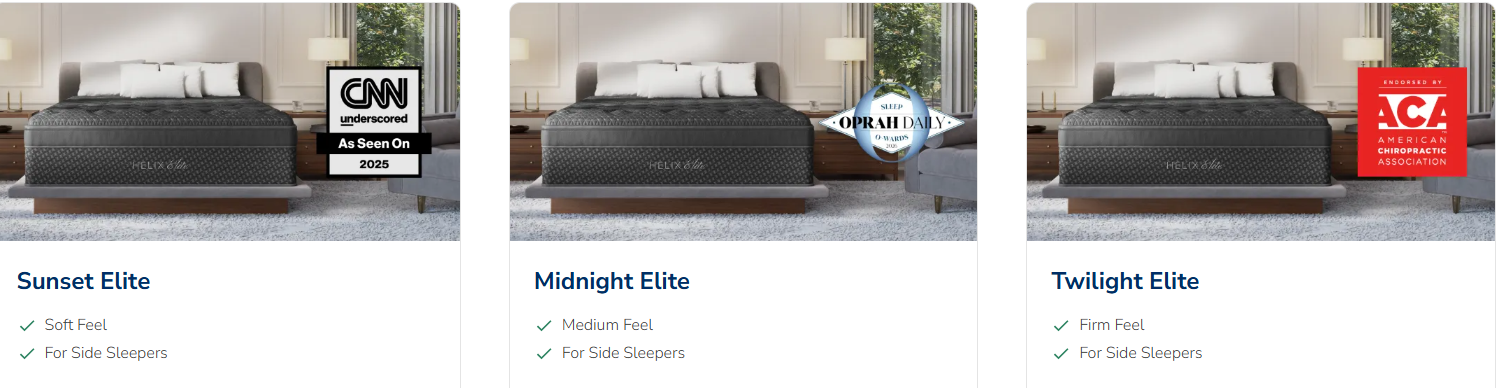
If you’re a side sleeper, you need to have a mattress that takes pressure off your shoulders and hips. If it doesn’t do that, your body feels it quickly. Without proper cushion, these body areas compress which leads to stiffness and discomfort.
Helix is built well for side sleepers. Its hybrid construction allows your shoulders and hips to sink in just enough so it is not carrying your entire body weight. And the rest of your body stays supported, while those pressure points get relief.
Saatva can still work for side sleepers, but the experience strongly relies on the model and firmness level. Even with a softer mattress, it still feels more structured, which for some people this translates into less contouring at pressure points.
For Back Sleepers
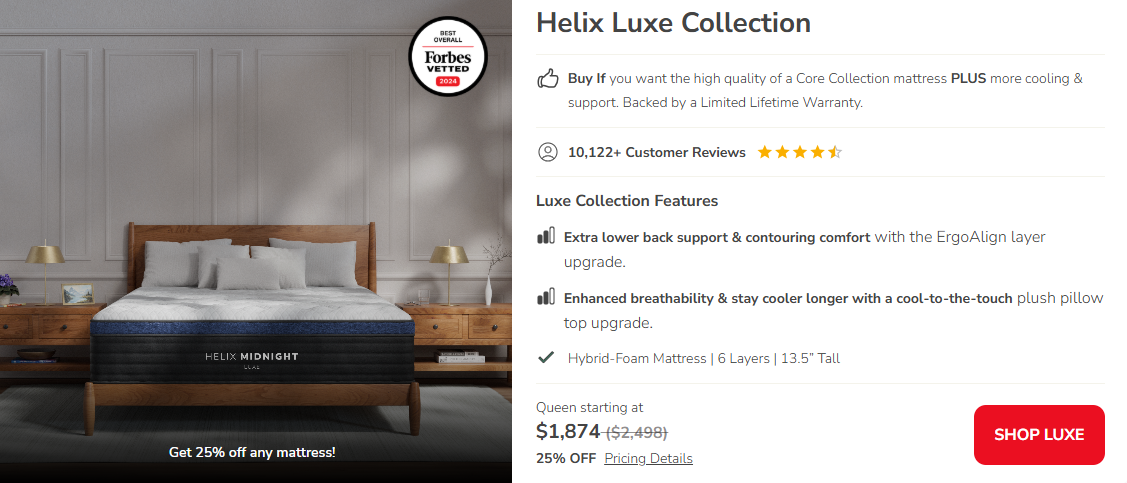
If you wake up in the morning and your lower back feels tight, this is not a softness issue; it’s a different kind of problem. The focus shifts to spinal alignment and lumbar support. Saatva is designed with this in mind.
Its innerspring construction and lumbar zone support system keeps your spine in a neutral position throughout the night. Your hips won’t sink in too far, which helps prevent lower back strain.
Rather than contouring to your body, it keeps you lifted and supported. For many back sleepers, this can help reduce stiffness and wake up more rested.
Helix can also work for back sleepers with its firmer models, but its natural tendency is more contouring than Saatva’s.
What Stops You From Sleeping?
You have to think about what’s actually disrupting your sleep. The moment you realize your mattress no longer works for you, it’s time to identify what is causing the pain.
For Pressure Relief and Motion Control
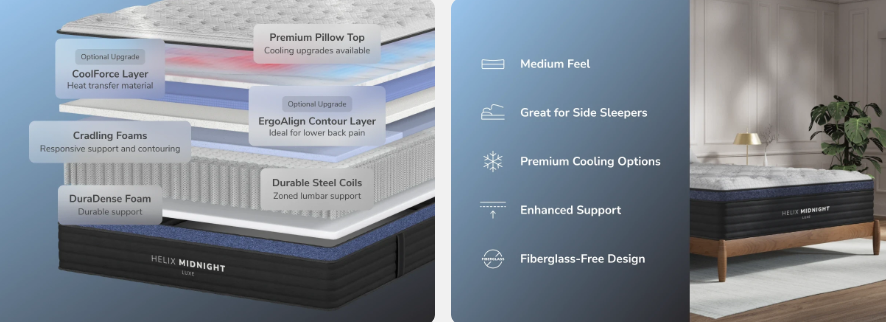
Helix is designed to reduce pressure and adapt to movement. The foam layers support your hips and shoulders just enough to relieve pressure without feeling misaligned.
I’m a side sleeper that’s always tossing and turning. If my shoulders feel stuck and hips feel sore in the morning, it means the mattress isn’t doing its job. With Helix, it’s possible to stay in one position longer, so my body would feel more supported throughout the night.
Helix also adapts well to movement, which is a great advantage for those who share a bed. That’s because movement feels more absorbed rather than transferred across the mattress. For couples, it helps minimize how much of that movement you feel, so your sleep is less likely to be disturbed.
Although my husband can sleep through almost anything, I wake up multiple times a night because of my newborn and four-year-old. I guess someone in our bed deserves an uninterrupted night’s sleep (and apparently it’s him…).
For Support and Structure
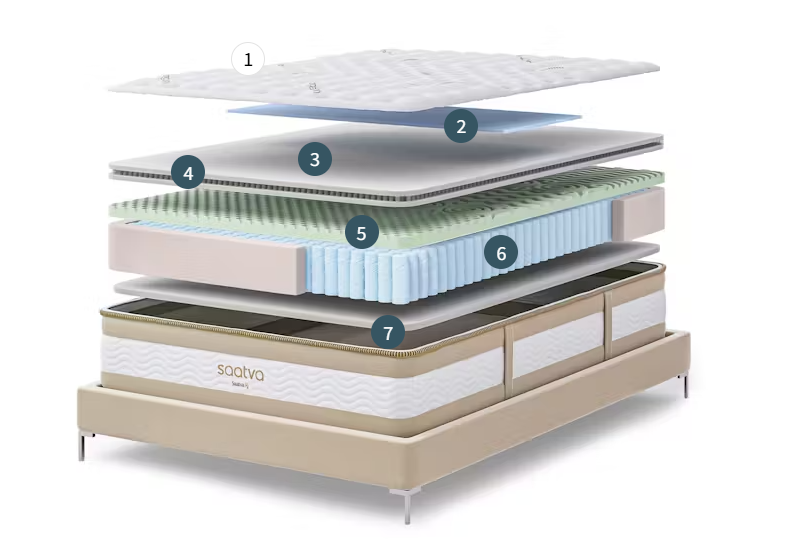
Saatva takes a different approach. Its innerspring system and lumbar zone technology are built to keep your spine in a more neutral position. Your back and body stays aligned and supported from underneath, instead of it being contoured.
Where Saatva also stands out is its edge support. The surface feels stable all across the mattress, when you sleep or sit near the sides. It’s more on the firm side, so there’s no “sink-in” type of feeling.
For Temperature Control and Breathability
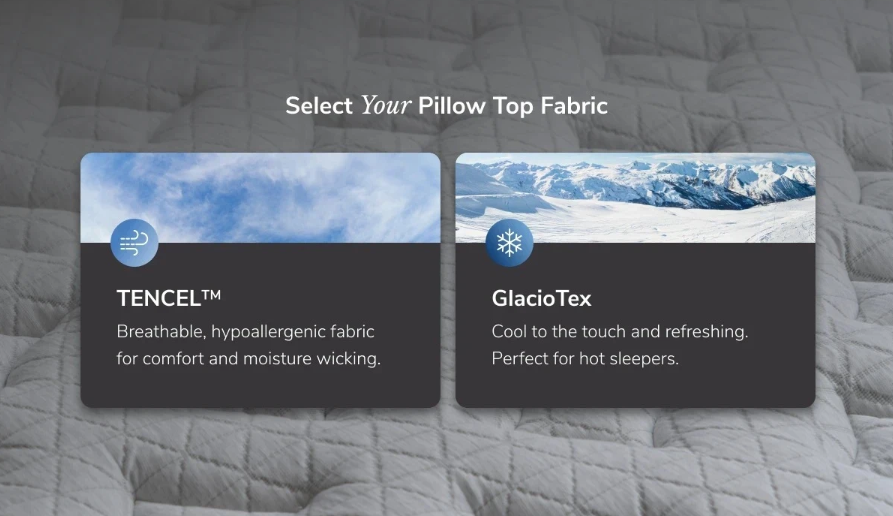
Heat can be a significant contributing factor to disrupted sleep, and it often gets ignored. Many people overheat in their sleep and, surprisingly, your mattress plays a bigger role in temperature control than you might expect.
With Helix’s coil system and breathable foam layers, temperature tends to regulate well. The air is able to flow through the mattress, instead of being trapped inside of it.
Saatva’s innerspring build allows even more airflow. Since there’s less foam density, it helps reduce heat retention and sleeps cooler. I tend to sleep warm, so having a mattress with less foam density could make a noticeable difference when it comes to temperature control.
For those of you who are overheaters, both mattress brands perform well. However, Saatva might be the preferred option here because of its composition, which makes it more breathable.
Delivery, Trial, and Overall Shopping Experience

Helix mattresses arrive in a compressed box. After unrolling the mattress, it generally takes between two to three hours to expand and become comfortable to sleep on. You’re looking at approximately 72 hours for it to gain its intended shape.
In contrast, Saatva includes white glove delivery. The setup is handled for you, there’s no box or need to wait for expansion. It arrives ready to sleep on and placed right in your room.
When it comes to trial periods, Saatva offers a 365-night trial period. This gives buyers an entire year to test it out. The trial period with Helix is shorter by about 50%, but it still gives you enough time to figure out if the mattress works well with your body.
A Decision Based On What Your Body Needs
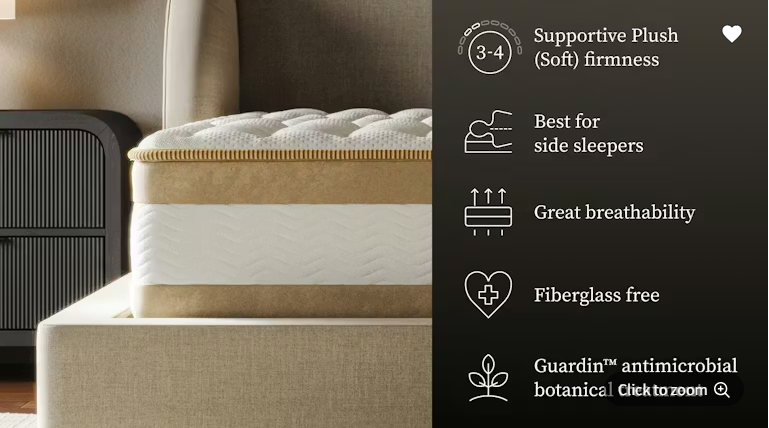
All things considered, it’s not about buying the “best” mattress out there. It’s about finding the one that fits the way you sleep. Both Helix and Saatva deliver well on quality, comfort and performance. Where they differ most is how they feel.
If at the end of the day you prefer a mattress that adapts to the body, minimizes movement and relieves pressure, Helix is the right choice. If you prefer a more structured surface, need more support and spinal alignment, Saatva will feel more natural.
My advice would be to pick the one that matches how you sleep, and not what everyone else says. Because your body doesn’t care about what’s trending on TikTok.