


- Titan vs Big Fig: Picking a Heavyweight Mattress Champion - September 18, 2026
- Eight Sleep vs. Molecule Mattress - May 19, 2026
- Eight Sleep vs. Serta iComfort - May 16, 2026
As a recovery-and-athletic-performance shopper, I recently started getting wind of Molecule’s marketing around airflow and recovery-focused materials. I was intrigued.
Of course, once you click on an ad, all your algorithms change, and then I started getting Eight Sleep ads with their focus on recovery through HRV data and temperature regulation.
So, I decided to evaluate what Molecule actually delivers on airflow and recovery claims, how that compares to active temperature regulation and HRV tracking, and how they stack up for recovery needs.
What I found was that Molecule works well as a mattress that provides airflow. But high-performance sleepers need more than just a fluffy mattress; they need data-and-feedback-loops, measurable info on recovery, and active management systems.
Performance Decision Matrix
Below is a table to help you make a decision about Molecule Mattress and Eight Sleep Pod based on key performance features:
| Feature | Molecule Mattress | Eight Sleep Pod |
| Cooling Method | Passive open-cell foam airflow | Active liquid-conduction thermal engine |
| Temp Ranges | Contingent on the ambient air temp in your room | 55°F to 110°F (13°C to 43°C) |
| Biometric Tracking | None | Continuous HRV, RHR, & Respiratory tracking |
| Real-time Automation | None | AI Autopilot dynamic adjustments |
| Primary Benefit | Pressure relief and spinal alignment | Deep/REM sleep extension & biometric data |
Basically, I found that Molecule and Eight Sleep work very differently. As it turns out, either can be used standalone, but the most realistic combination scenario is a Molecule mattress (with a Pod Cover) to cover all bases.
My Recovery Findings: Eight Sleep Pod vs. Molecule Mattress
If you’re optimizing for Deep Sleep, REM stages, and Heart Rate Variability (HRV), it’s important to understand there is a fundamental difference between the Eight Sleep Pod and the Molecule Mattress: Eight Sleep is an active system, based on data-driven climate control, and a Molecule mattress has a passive material design. Let’s dive into that a bit.
1. Passive Airflow vs. Active Thermal Regulation
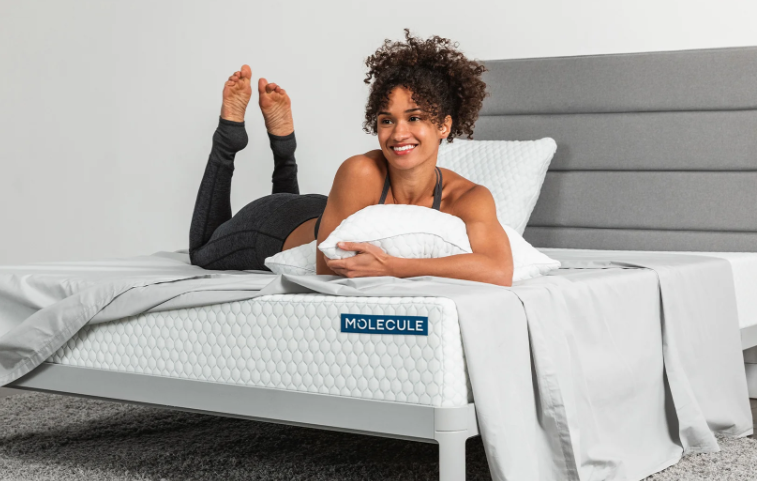
As mentioned, Molecule relies on passive cooling mechanics. It uses open-cell memory foam, matrix layers (called RestoreFLIGHT and AirTEC), combined with a heat-wicking cover to maximize airflow. Airflow just helps dissipate body heat, but it’s a passive system at best, which means it is highly contingent upon the ambient temperature in your space.
Let’s say, for example, that you don’t have a dedicated air conditioner in your home, and it’s 80°F in your bedroom. In that case, the passive system that this mattress has can only move so much, but the fact that your room is already hot means it won’t bring the temperature down tremendously.
This can be a severe problem for athletes, especially post-training, when your body temperature starts climbing, and you get that metabolic post-training heat.
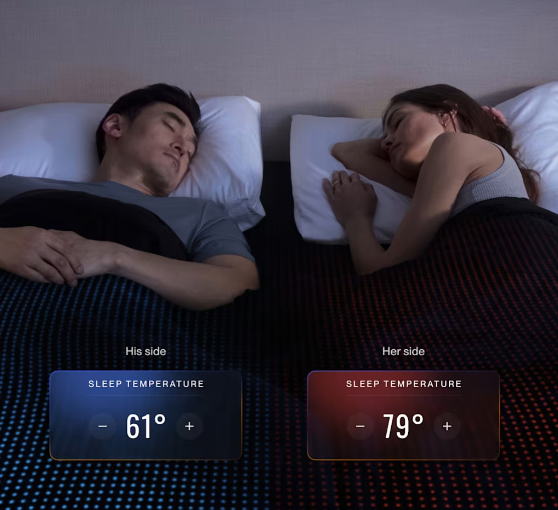
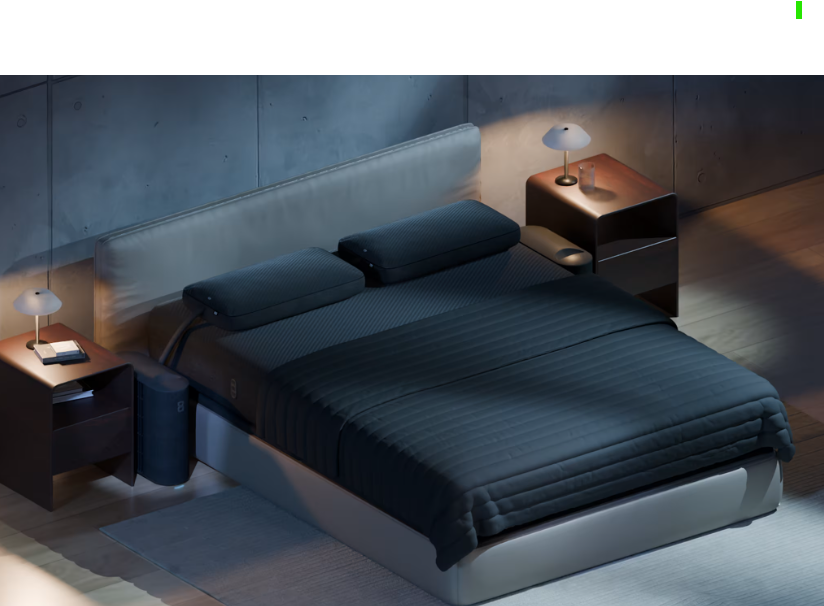
Then you get Eight Sleep, which operates with an active thermal design so the thermal regulation uses a grid of small tubes that I promise you won’t even feel, which are interconnected to a thermoelectric Hub. This Hub actively pumps water across the bed and the blanket, if you have that blanket, physically increasing the temperature or decreasing the temperature as needed. It can actually cool the surface down to 55°F (13°C) or heat it to 110°F (43°C), regardless of room conditions.
2. The Biometric Feedback Loop and HRV Tracking
So – now onto HRV tracking! One of the biggest claims of the molecule mattress is that it improves your recovery by keeping you in a deeper stage of sleep for a longer amount of time.
The problem here is that it doesn’t actually have a built-in mechanism to establish itself as an authority in that particular regard. If you want to verify that your mattress material is actually boosting your HRV or bringing your heart rate down, you’ll have to use a third-party device like Oura or WHOOP. And even then, those devices will only tell you what impact your mattress is having on your sleep compared to the sleep you had from a previous mattress, all other factors the same.
Eight Sleep actually has medical-grade biometric sensors that are built into the entire grid. These sensors track your:
- HRV
- Respiratory rate
- Resting heart rate
- Sleep phases
This is all done without having to sleep with a wearable, which is something that I greatly appreciate.
3. Static Materials vs. Dynamic Autopilot Intelligence
As you sleep, your core body temperature changes. So, staying comfortable is going to require very precise changes as well.
I, for example, notice that especially after a hard and lengthy workout, I tend to go to bed freezing. So I want extra blankets, and I’ll toss one or two thin blankets on top of myself to fall asleep. But within a few hours, I’m burning up. My body is suddenly hotter, and those blankets are killing me. If I’m lucky, I wake up enough to toss them off; if I’m unlucky, I toss and turn. Then, about an hour or two before my alarm disrupts me, I’m finally perfectly comfortable.
Okay, so this basically means that my recovery sleep is disrupted, and at best, I get a few good hours of sleep.
To fix that, Molecule offers a passive air flow rate all night that presumably keeps your temperature somewhat regulated, but realistically, this is structurally static. The air flow and support you get from this mattress is going to be exactly the same at 10:00 p.m. as 3:00 a.m.
By comparison, Eight Sleep has the autopilot function, which is a subscription that dynamically adjusts the surface temperature based on your sleep stages and your body temperature, so in my case, when I go to bed cold, it can heat things up, and as my body warms up, it cools them back down. This AI engine called Autopilot will automatically tweak the water temperature when it detects a shift from things like deep sleep to REM sleep or when it notices elevated heart rate from microwaking. This is an active, real-time intervention system that actually prevents those microwaking and increases your recovery window.
4. The Hybrid Solution: Combining Both Worlds
These two products are inherently different from one another, and they are not mutually exclusive, meaning you don’t have to choose just one. In fact, you can evaluate them as a high-leverage combination, investing in the molecule mattress as your new mattress, adding the Eight Sleep cover on top.
Eight Sleep is designed to work with an existing mattress, but honestly, if you’re investing in its technology (and let’s say the last time you bought a mattress was a decade ago, which is the case in my home), it might be worth considering a new mattress at the same time.
If you are considering Molecule, then you get the zoned, eco-friendly foam support that gives you better pressure points and spinal alignment with the Pod cover that increases the cooling and biometric tracking, basically picking up where Molecule leaves off.
Making the Right Choice
So how do you know which one is best for you? It comes down to things like:
- Your preferred sleep position (e.g., stomach, back, side)
- If you currently use any wearable trackers like WHOOP, Oura, or Garmin
- Whether your primary recovery issue is waking up hot or dealing with muscle/joint stiffness
Let’s look at a few examples
Priority: Side Sleeper
Let’s assume my biggest priority is having something to support me as a side sleeper.
Sleeping on my side means I need deeper support for my hip and my shoulders to keep my spine aligned, so in that case, molecules’ zoned foam layers are really great, especially the 5- Zone Matrix layout. It helps give me pressure relief while sleeping on my side without my hips sagging. The downside is it’s foam, so sleeping on my side means I’m going to sink into it and wake up hot.
Winner: Molecule
Priority: Stomach Sleeper
If you sleep on your stomach, the last thing you want is a soft memory foam because it means your hips sink into the bed, damaging the sway of your back and compressing your spine. So, the Molecule mattress can be a problem because the memory foam variance doesn’t support stomach sleepers. However, you can find the hybrid model or the firm configuration to support your midsection. Alternatively, the Eight Sleep pod cover gives extra material over your existing mattress that stays relatively taught so your back won’t sway or dip while you sleep. The downside is, Eight Sleep isn’t a mattress, so you need to find a firm mattress that supports stomach sleeping first.
Winner: Tie
Priority: Waking Up Hot
Now, let’s assume that my biggest priority is temperature regulation. I have to consider that waking up hot is a serious recovery killer, and it always slashes into my deep sleep because, of course, that tends to be exactly when I’m suddenly wide awake. So the foam insulation with the molecule mattress is never going to pull heat away from me, so I’m always going to be too hot, but the Eight Sleep Pod comes in clutch here with the active liquid cooling system that mechanically gets rid of that excess heat from my body and brings my core temperature down to keep me in that deep sleep.
Winner: Eight Sleep Pod
Priority: Muscle Stiffness
If muscle stiffness is your problem, your goal is to find good structural support while you sleep and temperature regulation to encourage blood flow. At the beginning of the night, you need support for the lower back, and throughout the middle of the night, you want something that boosts blood flow to your stiff muscles by changing the temperature.
A standalone mattress like molecule can only do static support; it can’t change the environment to help your muscles. Eight Sleep is an active solution with an autopilot subscription that can act as a heating pad early in the morning to increase circulation to your tight muscles and help do away with stiffness while also keeping super hot temperature fluctuations to a minimum.
Winner: Eight Sleep Pod
Priority: Boosting My Sleep Score
Now, let’s assume that I have a wearable device like WHOOP and I want to boost my sleep numbers. To do that, Eight Sleep AI uses nighttime biometrics, which actively lowers things like my bed temperature, especially on high-strain days. So, if I had a heavy workout, and my resting heart rate is elevated, I’m going to sleep hotter and that can be a huge drain on my recovery scores. But Eight Sleep actively detects those stress levels and temperature changes and helps bring my heart rate down and subsequently boosts that score, something Molecule can’t do.
Winner: Eight Sleep Pod
The Verdict
The best option is obviously based on what it is you are looking for, how you sleep, whether on your side or your stomach, whether you want to keep your existing mattress or invest in something new, and the type of active biometric tracking or temperature regulation that fits your needs.
All in, the biggest difference is that Molecule is a passive system at best with things like spinal support, but no type of biometric tracking or temperature regulation, while Eight Sleep is a more advanced tech system that is active in helping your recovery and your sleep.