


- Does Eight Sleep Help Snoring - September 19, 2026
- Brooklyn Bedding Brand Review: Is This Underrated Mattress Brand Worth It? - September 5, 2026
- Best Ways to Fix Your Sleep Schedule - July 22, 2026
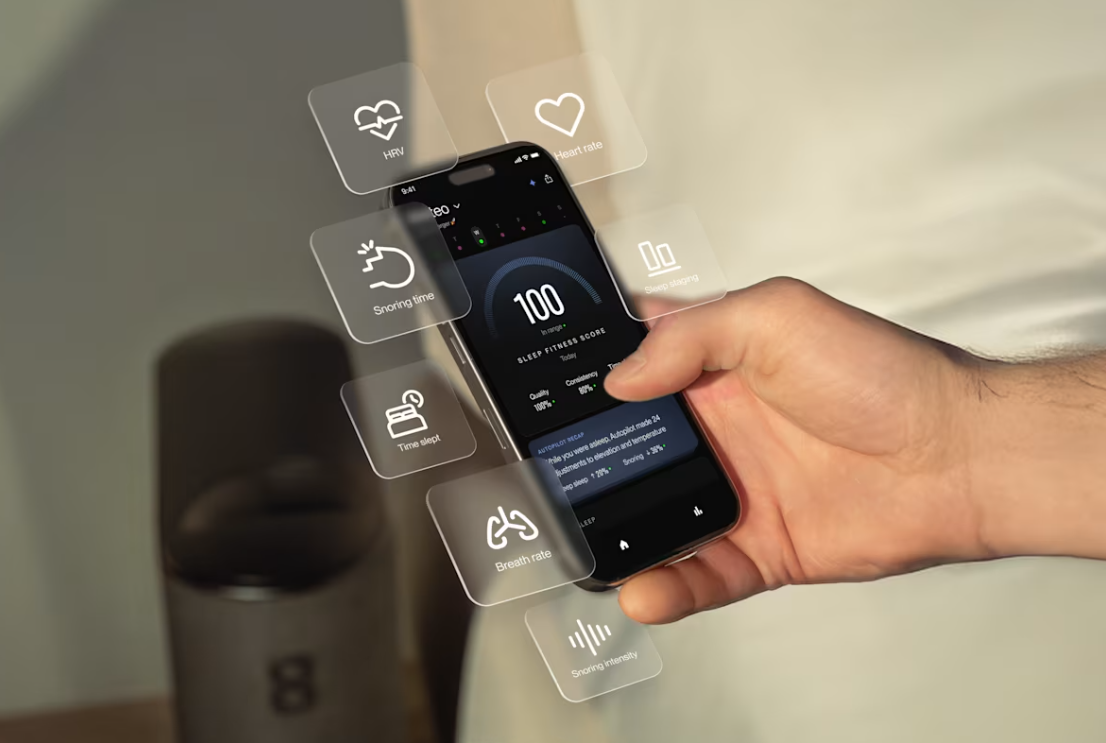
The first time I opened my Eight Sleep app and saw a snoring report, I was surprised for two reasons. First, I genuinely had no idea I snored, despite my husband saying he “sometimes” could hear me. Second, my Eight Sleep Pod 5 was apparently doing something about it while I slept.
Unlike traditional sleep tracking that simply tells you whether you snored, the Eight Sleep Pod 5 can actually respond to snoring as it happens. When the Pod detects snoring, the adjustable Base can automatically elevate your upper body in an attempt to reduce it, then lower again later.
So does Eight Sleep help with snoring? Potentially, but I wouldn’t consider it a snoring treatment, and I definitely wouldn’t buy the system solely for this feature.
What Causes Snoring?
Snoring happens when airflow causes tissues in the upper airway to vibrate during sleep. There isn’t one universal cause, though. Factors such as sleep position, nasal congestion, alcohol use, and the anatomy of your mouth and throat can all play a role. Snoring can also sometimes be associated with obstructive sleep apnea. (1)
It’s crucial to know this because the Pod isn’t diagnosing or treating the reason you snore. Its approach is much simpler: When it detects snoring, the Base changes your sleeping position by elevating your body.
How Does Eight Sleep Detect Snoring?
Eight Sleep doesn’t listen to snoring through a microphone, which was my first thought. Instead, sensors in the Pod Cover detect vibrations associated with snoring through the sleeper’s chest. According to Eight Sleep, those vibrations are analyzed by an algorithm trained using data from more than 2,500 known snorers. The system is designed to distinguish between the two people sharing the bed, which allows the app to attribute snoring to the appropriate sleeper. This last part has been particularly interesting during my testing.
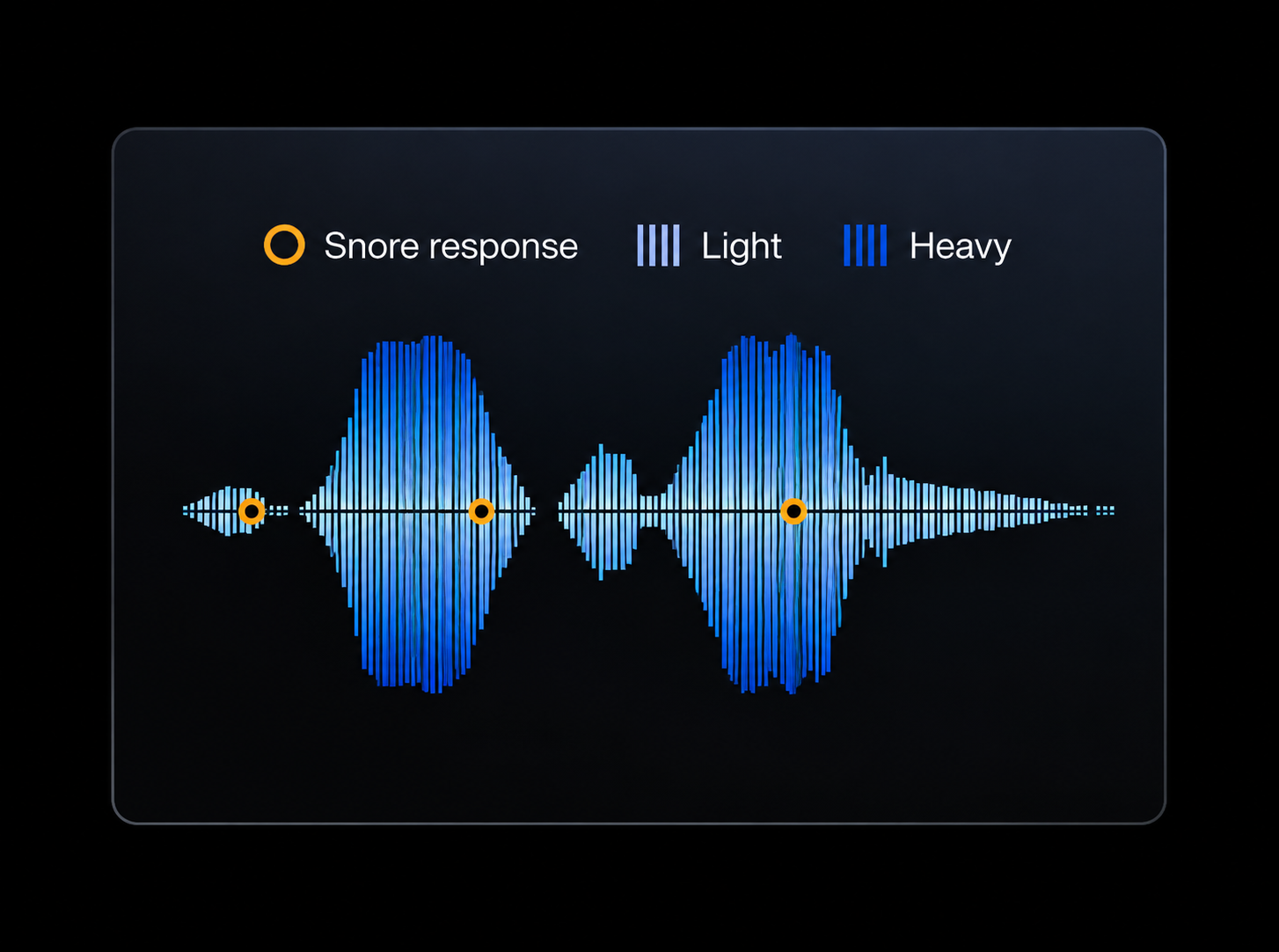
When my husband and I first started using the Pod, the app detected 11 minutes of snoring from him during our first night and reported making two automatic adjustments. Neither of us felt or heard the bed move.
After months of use, however, the system rarely detects him snoring. Apparently, I’m the snorer in our relationship. I currently average around 34 minutes per night, most of which Eight Sleep classifies as “light snoring.” Ironically, one of the most useful things Eight Sleep’s snoring feature has done for me is inform me that apparently I snore and I had no idea.
How Does Eight Sleep Respond to Snoring, and What Hardware Do You Need?
Detecting snoring and doing something about it are two different features, and this is where Eight Sleep’s different components matter. The standard Pod 5 includes the Hub and Pod Cover. The Cover contains the sensors that detect and track snoring, while the Hub powers the system. The adjustable Base is a separate piece of hardware, and you need it if you want Eight Sleep to physically respond to detected snoring.
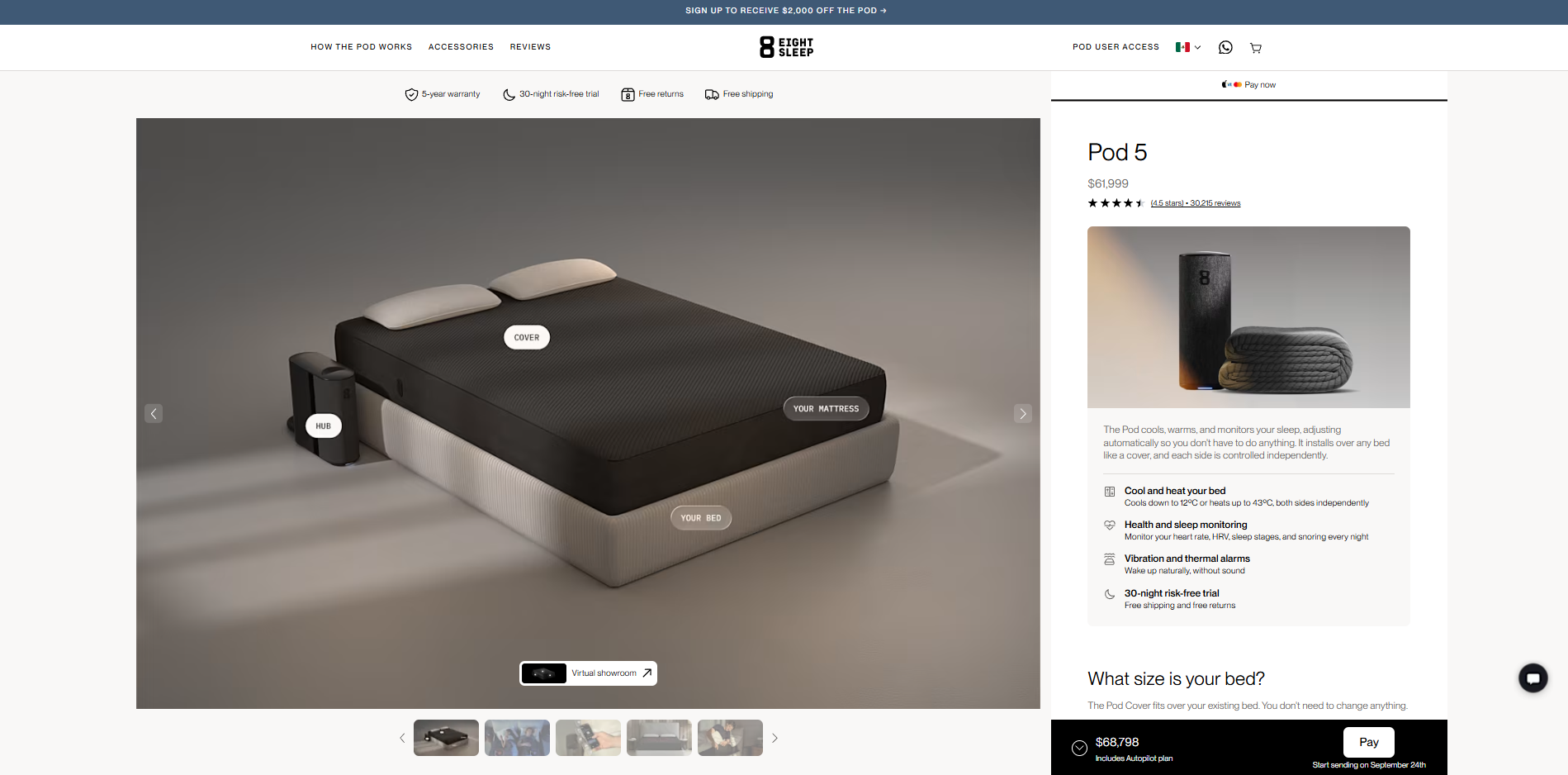
When snoring is detected, the Base gradually raises your upper body by a small amount. Eight Sleep says this elevation is intended to help open the airway and reduce snoring without waking the sleeper or their partner. The movement really is incredibly subtle in my experience. Most nights, I have absolutely no idea it happened.
For example, last night Eight Sleep detected 15 minutes of snoring and reported making two adjustments. I didn’t feel either one. I also don’t know why it only made two adjustments despite detecting 15 minutes of snoring, so a night containing multiple minutes of detected snoring doesn’t necessarily mean the Base was continuously adjusting throughout that entire period.
I do know that the Base is physically moving, though. One night I happened to wake up while it was lowering my head again, which honestly was a bizarre experience when I was half asleep.
One other thing couples should know is that my Base moved the bed as a unit. Although the Pod tracks us separately and knows that I’m the one snoring, my husband still gets elevated along with me when the Base responds. Thankfully, the adjustment is subtle enough that he doesn’t notice it either.
Eight Sleep currently lists snoring detection and mitigation as part of its Autopilot membership, so there are both hardware and membership costs to consider. If automatic snoring mitigation is one of the main reasons you’re considering Eight Sleep, make sure you’re looking at a setup that includes the adjustable Base rather than assuming the Pod 5 alone can physically respond to snoring.
Does Eight Sleep Actually Reduce Snoring?
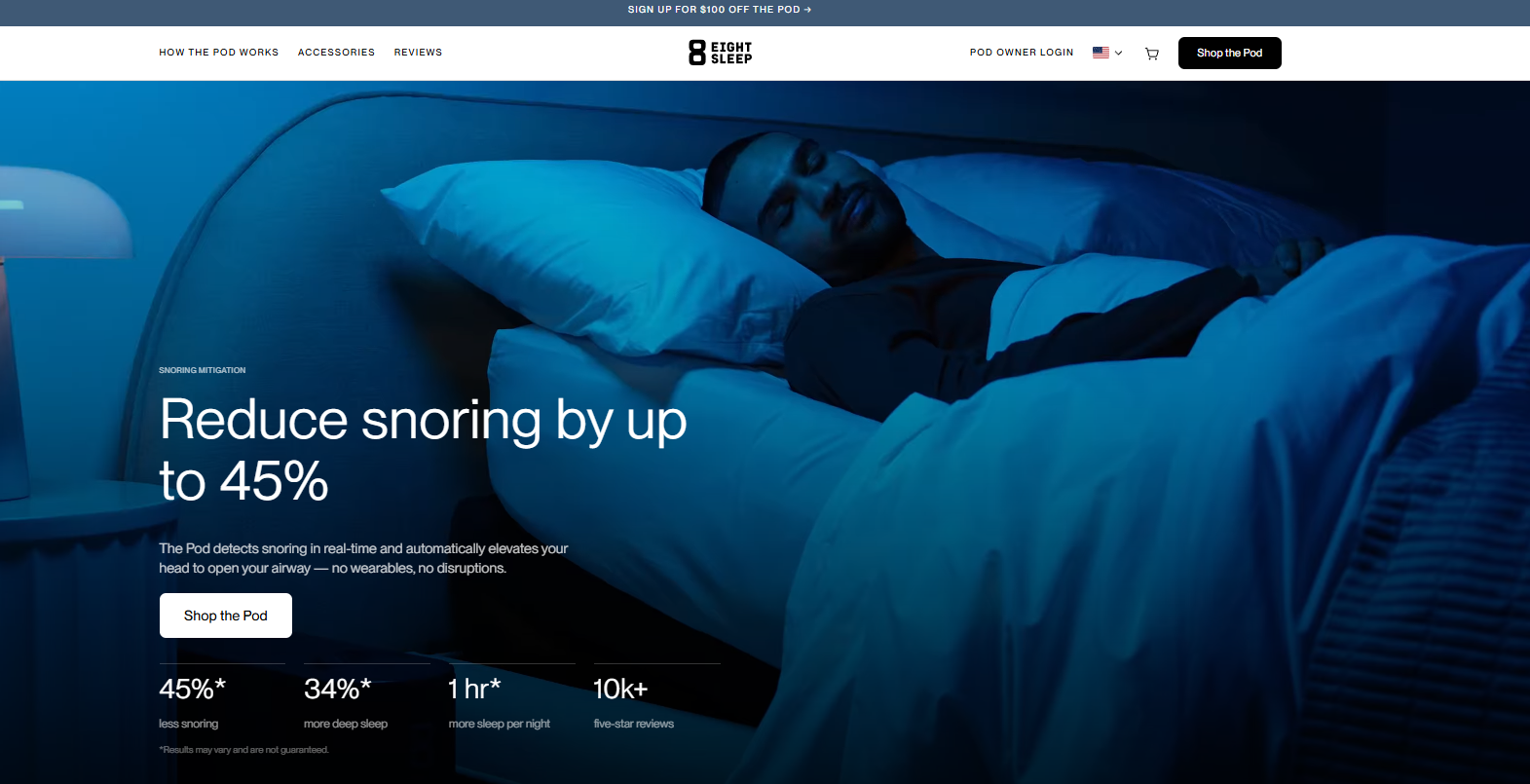
Eight Sleep says the Pod can reduce snoring by up to 45%. In the company’s clinical testing, which included more than 200 nights of data, participants experienced up to a 31% decrease in snoring when the head of the Base was elevated to 6 degrees and up to a 45% decrease at 15 degrees. Those are Eight Sleep’s results, though, and individual results can vary.
My own experience has been much less dramatic. After several months of sleeping on the Pod 5, I’m not noticeably snoring less. Some nights I snore more, while other nights I snore less. The Base regularly makes adjustments in response to detected snoring, but I haven’t seen a consistent downward trend that would make me say the system has treated snoring. That doesn’t necessarily mean the elevation isn’t helping individual snoring events. It’s possible that some adjustments stop or shorten an episode. I simply can’t confirm that from my own data.
This is also where Eight Sleep differs from other approaches to snoring. Its solution is essentially positional: it detects snoring and changes the angle of your upper body. Other approaches may address different factors associated with snoring, such as changing sleep position, addressing nasal congestion, using an oral appliance, or, when appropriate, being evaluated for sleep apnea. With the Pod, there’s nothing extra for me to remember to wear, insert, attach, or turn on before bed. I go to sleep normally, the Pod detects snoring, and the Base responds without requiring me to do anything.
And as I mentioned, it’s remarkably unobtrusive. But that convenience comes at a significant cost, especially if snoring is the primary problem you’re trying to solve. In my case, I don’t wake myself up from snoring, wake up with a dry mouth, or experience any other obvious symptoms. I truly had no idea I even snored until Eight Sleep told me I did (okay, maybe my husband mentioned it once).
If your snoring is frequent or extremely loud, or you experience symptoms such as gasping, pauses in breathing, or significant daytime sleepiness, it’s worth discussing with a healthcare professional rather than relying on a sleep product to address it.
How Accurate is Eight Sleep’s Snoring Detection?
This is probably my biggest caveat with the feature. For the most part, Eight Sleep’s snoring reports look plausible. The app shows how much snoring it detected and separates light and heavy snoring, making it easy to see patterns from night to night. But I discovered a strange issue while using Eight Sleep’s vibration alarm.
The alarm physically vibrates the bed to wake you. If I didn’t immediately shut it off, I noticed that the Pod could apparently interpret these vibrations as snoring and record an unusually long snoring event. This happened enough to bother me because it muddied the very data I was trying to look at. Eventually, I stopped using the bed’s vibration alarm altogether. My husband also noticed the same issue with his bed alarm.
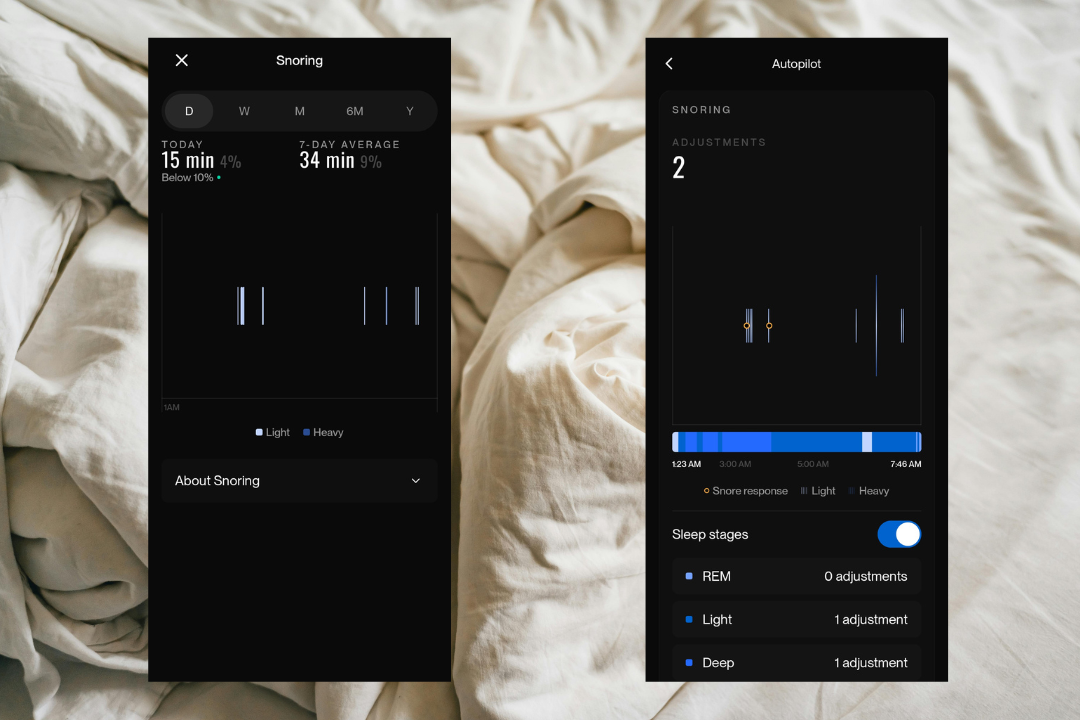
There’s another limitation here I wanted to mention. Unless I record myself throughout the night using another device, I can’t independently verify that every minute Eight Sleep labels as snoring really is snoring. The vibration alarm issue has made me particularly hesitant to treat its snoring totals as perfectly accurate. I find the data useful for spotting general patterns, but I wouldn’t obsess over whether I snored for exactly 32 versus 37 minutes on a particular night.
Is Eight Sleep Worth It For Snoring?
I wouldn’t buy an Eight Sleep Pod 5 solely because you snore unless it was severely affecting your life, in which case I would rather consult a healthcare professional first. After several months of testing, I think the snoring feature works best as an added benefit of a system you’re already interested in for its other features, particularly temperature regulation.
The technology itself is impressive, considering it detected snoring I didn’t know was happening and automatically moved my bed without waking either me or my husband. What I can’t say is that it has meaningfully reduced my snoring long term, only in the moment. My data shows the same average after several months and the same typical amount of adjustments made by the bed.
If you’re like me and snoring isn’t causing a major disruption, then I would consider the snoring mitigation as a useful bonus rather than the sole reason to spend thousands of dollars ($5,300 for the queen size Pod 5 and adjustable base) on an Eight Sleep system. For me, the Pod’s temperature regulation remains the star of the show. The anti-snoring feature is neat, remarkably unintrusive, and occasionally helpful, but hasn’t magically turned me into a permanent silent sleeper.