


- How to Choose the Best Bed Sheets for Dust Mite Allergies - March 17, 2026
- Best Sustainable Bedding Brands - February 9, 2026
- Sleeping with Hormone Changes: Winning the War with Your Body for Restful Sleep - January 17, 2026
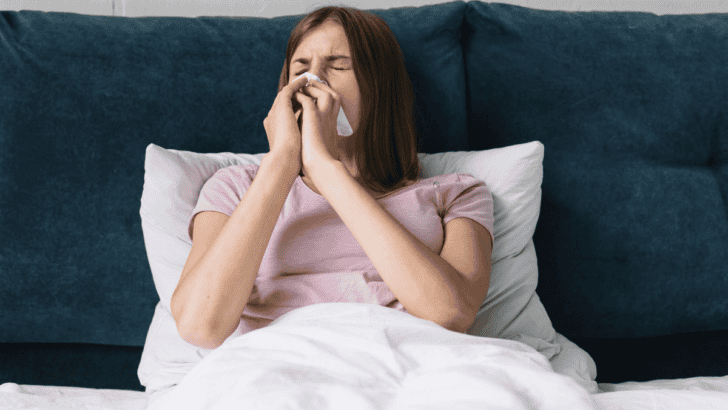
Losing sleep because of allergies is one of the most frustrating experiences, so it’s worth trying the best bed sheets for dust mite allergies if you’re struggling.
Beyond picking fabrics for seasonal comfort, some sheets are better at reducing sneezing, coughing, wheezing, and watery eyes – and it’s not just about how often you wash them.
Here’s a quick glance at what makes sheets effective for dust mite allergies: tighter weave, breathable fabrics, hypoallergenic natural fibers, moisture control, anti-microbial properties like silver, easy care, and helpful certifications (OEKO-TEX, GOTS, Asthma & Allergy Friendly).
Natural fibers like cotton, linen, bamboo, silk, Tencel/Lyocell, and wool are ideal. Avoid polyester and microfiber, which can trap moisture and static. These are the sheets that actually make a difference for allergy relief while keeping your bed comfortable and easy to care for.
Here’s the TL;DR If you’re in the market for some of the best sheet brands by material:
- Cotton (percale is tighter than sateen):
- Silver-infused options:
- Silk:
- Bamboo (naturally antimicrobial):
- Linen:
- Sheets with Asthma and Allergy Friendly Certification:
Ranking Criteria for the Best Bed Sheets for Dust Mite Allergies

Trying to track down the perfect set of sheets that fits your bed, your preferences, and your budget can be a chore, so we’ve ranked the features to look for by importance.
However, you should keep in mind that some features work together or are so interwoven that it’s important to have both.
1. Weave
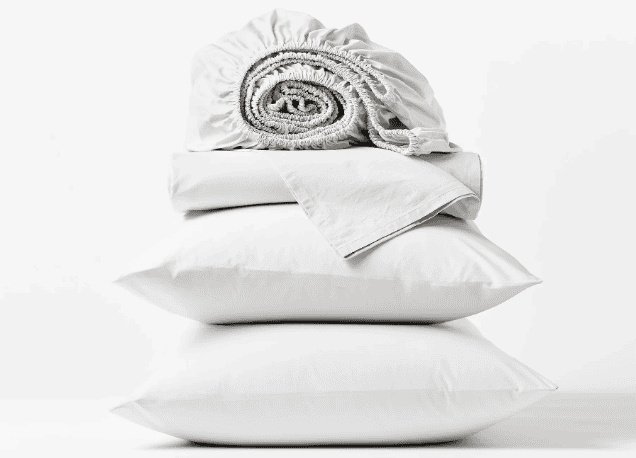
A tighter weave keeps the dust mites (and their waste) from having a place to settle into, or seep through (to you or your mattress for the long haul). It’s basically an uninviting physical barrier to keep dust mites away from you.
A synthetic fabric with a tighter weave won’t necessarily be better than a natural fabric with a looser weave. Sheets with a tighter weave in a moisture-wicking natural fabric that dries quickly can be more effective at preventing allergy flare-ups than another set of sheets with a looser weave, even though the air will pass through the loose weave more quickly (which suggests that the sheets might dry faster because of it).
If your mind’s going to thread count (or GSM/momme) and how that works into the picture (since thread count affects the density of the fabric), it will play a role here, but it’s not the whole picture. More on that in a minute.
If you’re in the market for cotton sheets, percale will offer a tighter weave than sateen, for example. Consider:
2. Breathability
If you’re not sweating and trapping that moisture, you’re not creating a buffet for dust mites, so breathability matters – and it’s not just about having a loose weave. Sheets with good breathability, usually natural fibers, discourage the humidity that encourages bacterial growth and tempts dust mites to move in.
There’s a bonus too: better temperature control. You’re less likely to overheat, which helps you fall asleep and stay asleep. Waking up hot and damp in the middle of the night is never fun, allergy symptoms or not.
All of the options I’ve listed offer excellent breathability. They’re natural fibers with good moisture-wicking properties, so you get comfort and allergy relief in one.
3. Hypoallergenic Materials
Some materials just aren’t hospitable to dust mites (or the bacteria they like to eat).
Natural materials (which most hypoallergenic materials are) are also naturally static-resistant in many cases. There might be a little static, but it’s much better than what you’d experience in sheets made from synthetic materials.
Why does static matter from an allergy standpoint when you’re shopping for sheets? Static can hold onto things (like skin cells) that dust mites will be interested in–as well as the dust mites themselves.
Look for natural materials like cotton, linen, bamboo (naturally antimicrobial), silk, Tencel/Lyocell, and wool. (Wool is rare in sheet sets, but keep it in mind for other bedding.) Skip polyester and microfiber to avoid most static and trapped moisture. Instead, consider:
- Silk: Lilysilk 25 Momme Seamless Luxury Bedding Sets or THX Silk 25 Momme Silk Fitted Sheet Set.
- Bamboo: Quince Bamboo Sheet Set, Cosy House 100% Bamboo Bed Sheets, and Eden & Om Bamboo Sheet Set.
- Cotton: Avocado Organic Cotton Sheets, Quince Organic Brushed Cotton Sheets, or Miracle Brand (Generation 3).
- Linen: Silk & Snow’s Flax Linen Bed Sheets
4. Moisture Control
Damp sheets are a breeding ground for bacteria, which invites dust mites to pull up a chair and have a feast. Add to that any trapped skin cells, and you have some happy microscopic little campers.
Consider thread count here. If you go with a higher thread count, you may end up with a warmer set of sheets that will trap heat and moisture. This is not exactly the same as the tighter versus looser weave. With thread count, the number of threads is higher per square inch. That makes a denser fabric, and denser is not always a bad thing as long as you know when and how to use it.
Weave is different. It has to do with how the threads are actually woven together, their pattern, which can affect cooling properties. It can also affect how the sheet feels against your skin. For example, percale and sateen are not types of threads or cotton. They are weaves that affect how the cotton feels once it is woven together to create your bedding.
Generally, the ideal thread count really matters less than you might think, simply because there are different qualities of materials and different weaves to consider. Around 500 to 600 is often marketed as ideal, but for allergy sufferers concerned with moisture control, 300 to 400 is best. Slightly lower, around 250, is acceptable for bamboo sheets. Most of the cotton options mentioned here have thread counts around 300.
Do not go lower than a thread count of 200 in most cases for quality’s sake. Linen is an exception, with quality linen sheets that are good for allergies in a slightly lower thread count range. You may actually see linen sheets listed with a GSM, or grams per square meter, instead of thread count. In that case, look for 150 to 200 GSM.
Similarly, silk sheets may not have a thread count listed. Instead, you may see momme. A momme of 25 is ideal if your allergies are making you miserable, but 19 and up will still be beneficial to allergy sufferers.
5. Additional Antimicrobial Properties

In some cases, your sheets can be treated or interwoven with natural deterrents for bacteria, and therefore, dust mites. Silver’s a common one because it releases ions that kill bacteria and other microbes, and keep them from reproducing. Less bacteria means fewer dust mites.
In some cases, you may see bamboo charcoal or essential oils, but these are less common, and the essential oils are hit-or-miss for people with allergies, anyway. If you’re looking for sheets that have extra antimicrobial properties, silver’s the way to go for effectiveness and allergies.
Try Miracle Brand sheets if you’re looking for a silver-infused option that can help prevent bacteria from ever growing. Rest EverCool is another option.
6. Ease of Care
You are much more likely to wash your sheets frequently if it is easy. Frequent washing helps keep bacteria and dust mites at bay, regularly removing allergens and anything that might attract dust mites in the first place.
In some cases, you may not need to wash as often, unless you want to. That is true for silver-laced sheets, where you could get away with washing every two weeks instead of every week without aggravating allergies.
If your sheets are not finicky about care, you have the freedom to choose the detergent that works best for you and does not aggravate your allergies. More delicate sheet sets usually require gentle, fragrance-free detergents, which are often the best option for allergy sufferers.
Temperature is another factor to consider. Can your sheets handle water hot enough to kill dust mites, or will they shrink? Will it bother you if you cannot use hot water as you have always done?
For example, bamboo sheets should not be washed in hot water. They usually need to be washed in cold water with a gentle detergent, then air-dried or dried on very low heat. Bamboo sheets have many positives, including natural antimicrobial properties, so whether the care requirements are a dealbreaker is up to you. Sometimes it is just a bit of extra thought rather than doing laundry on autopilot.
7. Certifications
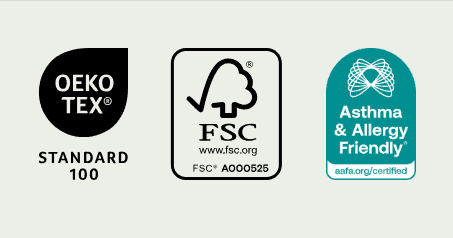
These are nice to see, but I wouldn’t call them a must-have if a brand or set checks several other boxes. However, seeing the certifications is a shortcut to getting a grasp on the materials used at a glance.
A few certifications to check for:
Asthma and Allergy Friendly Certification: Sheets with this certification have been vetted by asthma and allergy specialists and deemed good for people with allergies and asthma. Some of their picks include:
- Sijo (AiryWeight Eucalyptus)
- Wicked Sheets (Moisture-Wicking)
- Eternity (Luxe)
OEKO-TEX Standard 100: The materials are at least 70 percent organic, the sheets are processed without toxic chemicals or heavy metals, and they’re created under ethical work conditions.
GOTS (Global Organic Textile Standard, usually STANDARD 100): Sheets do not have harmful levels of pesticides, heavy metals, etc. Every material used in the sheet set will have been tested for over 1000 harmful substances.
How to Choose the Best Allergy-Friendly Sheets for You
One person’s best bed sheets for dust mite allergies might be someone else’s least favorite. The most crowdpleasing of all would be a set of cotton sheets with a tight weave, for the easy care, moisture-wicking, and breathability. Additional features, like silver threads and certifications, are a great bonus.
If you want something light and airy, linen or bamboo is the way to go, but the trade-off is probably going to be paying extra attention on laundry day.
You’re basically looking for a natural fabric with a tight weave that acts as a barrier, ideally with an extra bacteria-fighting boost and/or certifications that ensure the fabric you’re resting on and under doesn’t have nasty, harmful chemicals trapped inside it.