




- 5 Effective Alternatives to Nasal Strips for Snoring - December 24, 2025
- The 5 Best Anti-Snoring Devices in 2025 - December 17, 2025
Are you often awoken at 2 in the morning by a frustrated elbow to your side? Or startled awake by your own bed-shaking snorts or rattles? You’re not alone. About 45% of us snore on occasion, and 25% of us snore regularly – this can leave us (and our partners) feeling tired and cranky in the A.M.
I spent years in denial about my own snoring before my partner very gently suggested that I try out a few solutions. My natural curiosity took over, and finding the solution to my nightly snorechestral performances became my mission. I was relentless. And through tireless research and testing out one gadget after another, I learned a lot.
Not All Snoring is Created Equal
There are different types of snoring, and knowing why you snore will help you choose the right anti-snoring solution.
Nasal snoring: When your nasal passages are partially blocked due to allergies, illness, a deviated septum, or even certain medications, it can create whistle-like snores. If you have trouble breathing through your nose even when awake, you may experience either nasal snoring or mouth snoring while asleep.
Airway (or mouth) snoring: When your tongue and throat muscles relax a little too much during sleep, they can partially block your airway. The resulting vibrations create rumbly-sounding snores that get shockingly loud, as many a long-suffering spouse can confirm – mine included! Mouth snoring can be caused or worsened by severely blocked nasal passages, enlarged tonsils, weak palatal tissue, having a narrow airway, drinking alcohol before bed, or simply being in the habit of breathing through your mouth during the day.
Sleep apnea: Sometimes snoring is a warning sign of obstructive sleep apnea (OSA), which can lead to cardiovascular problems and other serious issues. The Mayo Clinic recommends getting assessed for OSA if you have the following symptoms:
- Witnessed breathing pauses during sleep
- Excessive daytime sleepiness
- Difficulty concentrating
- Morning headaches
- Sore throat upon awakening
- Restless sleep
- Gasping or choking at night
- High blood pressure
- Chest pain at night
- Your snoring is so loud it’s disrupting your partner’s sleep
Sleep apnea requires special treatment, so talk to your doctor about your best options!
The Case For Nasal Strips
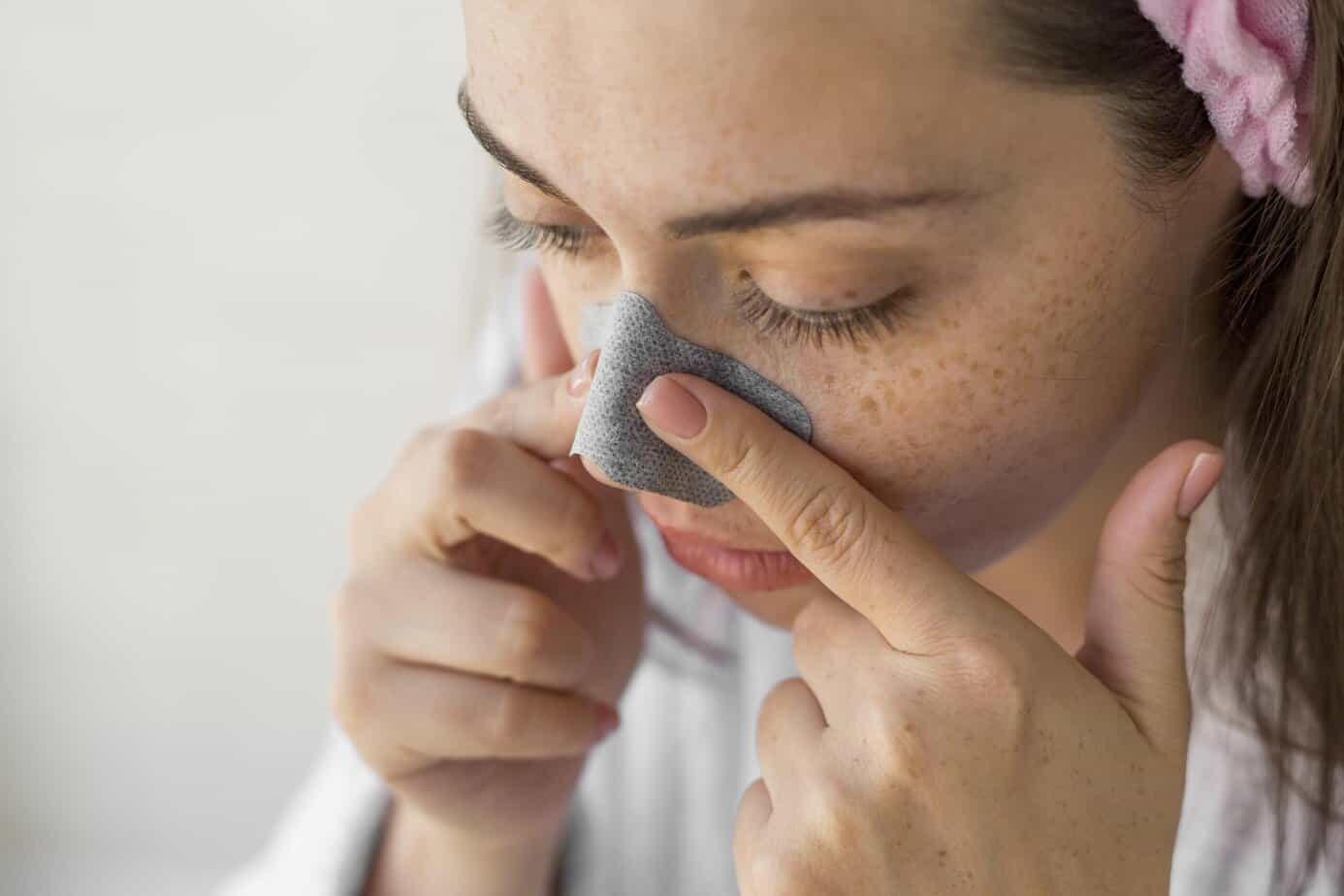
If your snoring isn’t apnea-related, there are a ton of anti-snoring solutions out there to choose from, ranging from cutting-edge technologies to simple plastic devices. Many people start their anti-journey with nasal strips. Why? Because they’re cheap, super easy to use, and available in every pharmacy.
But while nasal strips may be a popular solution, they’re not right for everyone.
The downsides to nasal strips:
- Not everyone finds them comfortable to use
- Low-quality strips may fall off while you sleep
- Since they’re single-use items, you need to remember to replace them regularly
- They can cause skin irritation, especially if you have sensitive skin like me
- While they sometimes help with nasal snoring, they’re less effective for airway-related snoring
If nasal strips work for you, that’s amazing! You can stop reading right now and enjoy your restful nights! But if you’re one of the many people who find them ineffective, uncomfortable, or irritating, here are five nasal strip alternatives worth considering, based on customer reviews and my own research.
Nasal Strip Alternatives
Airmax Nasal Dilator
If you find nasal strips effective but don’t love dealing with adhesive residue in the morning, the Airmax nasal dilator could be the answer. This FDA-registered device is made from flexible, medical-grade material that sits in your nostrils.
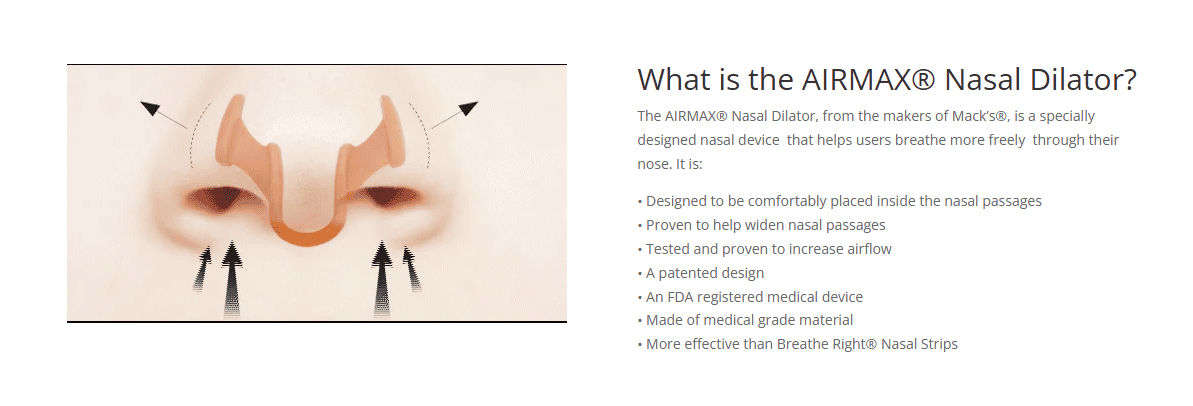
It operates pretty much the same way as a nasal strip does, but its patented design increases air flow by widening your nasal passages from the inside, rather than pulling your nostrils open from the outside. This means zero skin irritation due to adhesives, which can be a huge relief for some people.
The Airmax is a great option if your snoring is caused by blocked nasal passages, but it may not help with other types of snoring. The trial pack sells for $19 and includes both available sizes, so you can take them for a test drive and see which works best for you. As it comes with a 90-day quality guarantee, you can get a replacement if your dilator is damaged through normal use.
Pros
- It’s easy to travel with
- It’s easy to clean
- It’s effective for nasal snoring
- It comes in multiple sizes
Cons
- It’s less effective for airway snoring
- Some people may find it uncomfortable
Nitetronic Z6 Anti-Snore Pillow
If nighttime wearables make it harder for you to fall asleep, you might consider investing in a smart pillow.
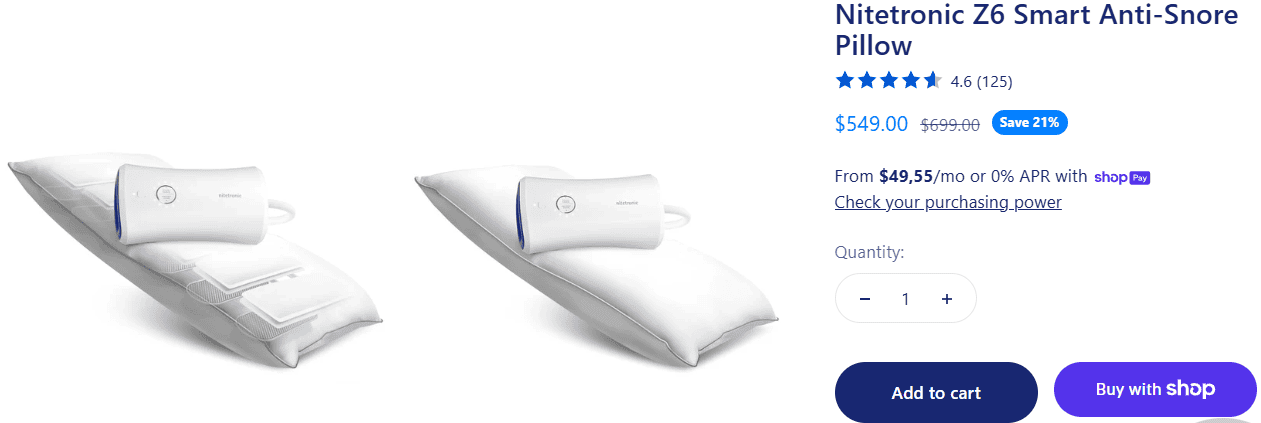
When the high-tech Nitetronic Z6 Anti-Snore smart pillow detects that you’ve begun to snore, it uses tiny micro-scale sensors to determine your current head position. It then inflates its internal airbag, gently turning your head to the side and clearing your airway.
The pillow itself contains a comfortable memory foam core and six independent airbags, so you’ll be supported no matter what side of the pillow you end up on. The companion app allows you to track your snoring time, snoring intensity (Quiet, Light, Medium, Loud, and Epic), sleep quality, and the pillow’s intervention, so you can customize your best sleep setting. While the Z6 costs $549, it does come with a 30-day trial, free shipping, and a 3-year warranty.
Pros
- It reacts to your snoring in real time
- It’s effective for airway snoring
- It comes with a 30-day trial
- You don’t have to wear a device while sleeping
Cons
- It’s difficult to travel with
- Wifi connectivity issues can stop it from working properly
- Some customers find the pillow uncomfortable
Nora Pillow
If you already have a pillow you love, the 3-piece Nora system can turn it into a snore-busting smart pillow. Its cutting-edge snore-detection monitor sends signals to a discreet air pump that sits beside your bed, which inflates a comfortable insert that fits underneath your pillow. As the insert shifts, your head is readjusted to help you breathe more freely.

The sleek white monitor, which takes up very little space and resembles a wireless mouse, is powered by AI and can predict snoring before it even happens, which can help you and your bed-partner enjoy more snore-free nights.
The Nora is FSA/HSA accepted, so costs may be covered by health benefits. The manufacturer also offers a no-risk 30-day trial, free shipping and returns, and a 1-year warranty, which helps to offset its $439 price tag.
Pros
- It reacts to your snoring in real time
- It’s effective for airway snoring
- It comes with a 30-day trial
- You don’t have to wear a device while sleeping
- You can use it with your current pillow
Cons
- It’s difficult to travel with
- If you’re a light sleeper, the sound of the inflator may wake you up
- Inflation may also be triggered by non-snoring sounds
eXciteOSA Device
The eXciteOSA is an FDA-cleared medical-grade alternative for people whose snoring originates from the airway, rather than the nose. The twist? Rather than being worn while you’re sleeping, the eXciteOSA is used for just 20 minutes a day while you’re awake. This is a fantastic option for people who find it hard to sleep with an uncomfortable gadget in their mouth or nose, or who feel self-conscious wearing a mouthguard or dilator.
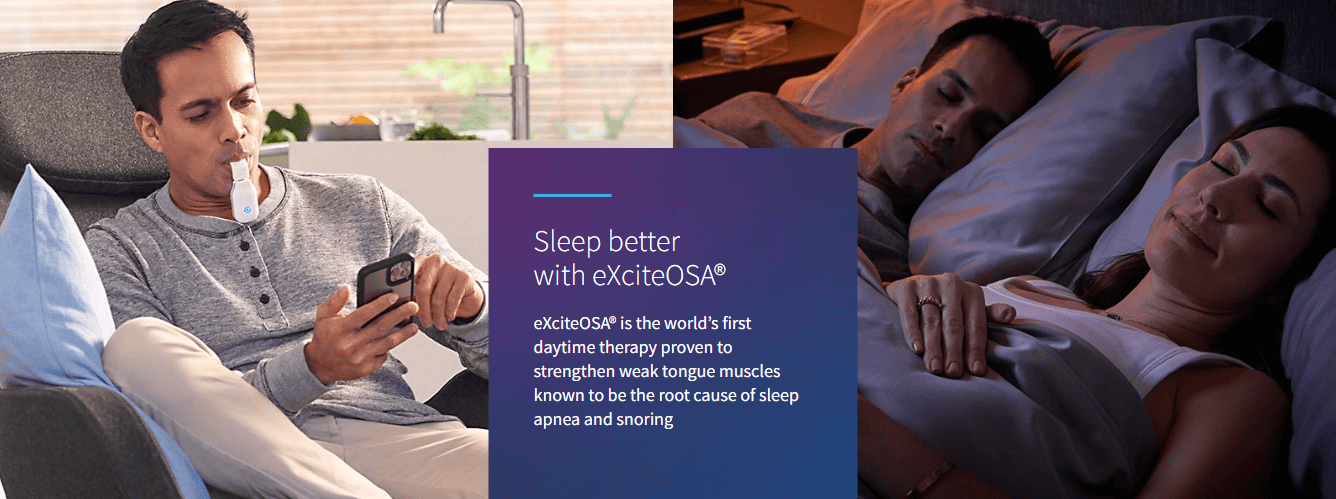
The eXciteOSA’s comfortable silicone mouthpiece uses gentle electrical stimulation to safely activate your nerves and improve the muscle function of your tongue and upper airway, helping them to hold their position while you sleep, instead of collapsing in and narrowing your airway. This makes it easier to breathe and improves your sleep quality, so you can wake up feeling rested.
The eXciteOSA requires a prescription and is a little more expensive than other options on this list; the kit starts at $1,650, but you can also use a promotion for 10% off and one free mouthpiece. This system actually addresses a root cause of snoring and mild apnea. It has been clinically proven to reduce snoring in 6 weeks, with many people reporting great results just one month in.
If the price is giving you pause, consider this: the eXciteOSA comes with a 90-night risk-free trial. Since you’ll experience your best results before you have to make your final purchasing decision, you’ll be 100% sure whether this device is right for you.
Pros
- It tones your tongue and throat muscles
- It’s effective for airway snoring
- It comes with a 90-day trial
- You don’t have to wear a device while sleeping
- You use it for 20 minutes while awake rather than overnight
Cons
- It does require a prescription, but this can thankfully be done easily from the comfort of your own home at springsleep.com.
- You need to replace the mouthpiece every three months
ZQuiet Mouthpiece
The ZQuiet Advance is a dentist-designed adjustable mouthpiece that retails for about $90. This makes it a little pricier than the $40 mouthguards you can find on Amazon, but more affordable than custom-fit prescription devices that can cost up to $2,000.
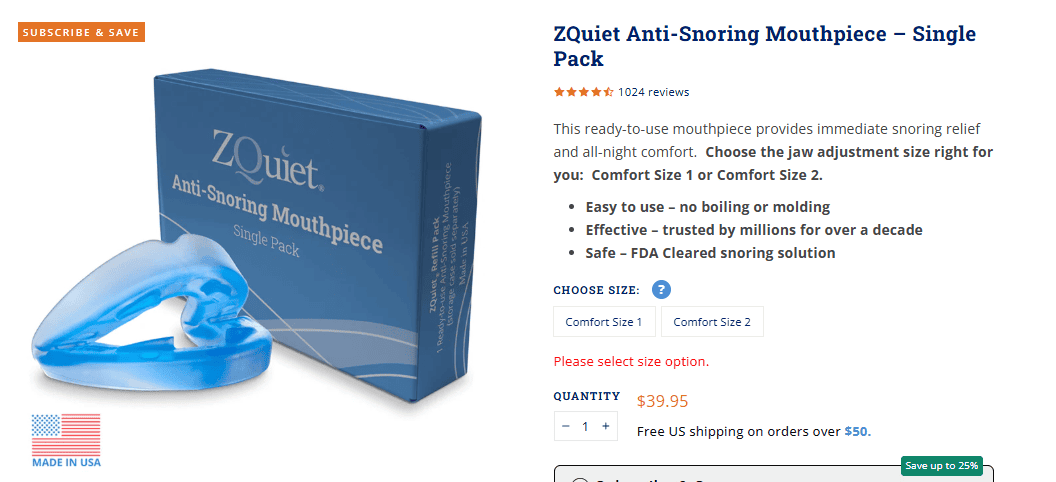
The ZQuiet works by gently pushing your lower jaw forward, which helps to keep your airway open while you sleep. It also has built-in tongue support to keep your airway clear. What helps the ZQuiet Advance stand out from other boil-and-bite mouthguards is its slim profile (which makes it far more comfortable to wear), and its contactless design that reduces tooth pain caused by pressure.
If your snoring is airway-related, the ZQuiet Advance may be a great option, especially as ZQuiet backs all of its products with a 60-day money-back guarantee.
Pros
- It’s easy to travel with
- It’s easy to clean
- It’s effective for airway snoring
- It’s adjustable and customizable
- It’s more comfortable than other mouthguards
- It supports your tongue
- It comes with a 60-day trial
Cons
- It may not be comfortable for everyone
- It may cause drooling
The Takeaway
Before you start to shop around for an anti-snoring device, first try to identify the issues that are causing your snoring. Understanding the problem that needs to be addressed will help you cut out a LOT of this trial-and-error process!
If you’re one of the rare, lucky few, you may find your ideal anti-snoring solution right away. Lucky you! But if you need to kiss a few frogs before finding your snore-stopping prince, don’t get discouraged.
As you can see from this list, many promising solutions offer lengthy risk-free trials and money-back guarantees, so you don’t need to drain your bank account to secure a good night’s sleep. And when you finally find The One and experience the joy of a great night’s sleep, it’ll all be worth it!