




- How to Choose the Best Bed Sheets for Dust Mite Allergies - March 17, 2026
- Best Sustainable Bedding Brands - February 9, 2026
- Sleeping with Hormone Changes: Winning the War with Your Body for Restful Sleep - January 17, 2026
The best sustainable bedding brands are designed to be better for you and for the environment. Made from natural, chemical-free materials, these sheets and pillowcases are gentle on sensitive skin and free from harsh dyes or fabrics that can cause irritation.
High-quality sustainable bedding is built to last for years, maintaining its softness and shape through countless washes. It’s often made from durable materials, such as organic cotton, linen, and bamboo, which last for years. And when your sheets do eventually wear out, they break down naturally, leaving less waste behind.
Producing these sheets and covers also uses fewer chemicals and significantly less water than conventional options, helping reduce resource consumption while supporting more responsible manufacturing practices.
But which brands have the best sustainable bedding, and why?
Best Sustainable Bedding Brands at a Glance
- Best Overall: Parachute
- Best Budget: Quince
- Best Splurge: Coyuchi
- Best for Hot Sleepers: Silk & Snow (flax linen and muslin, especially)
- Best for Cold Climates: Under the Canopy (flannel, especially)
- Best Year-Round: Parachute (linen, especially)
The Criteria
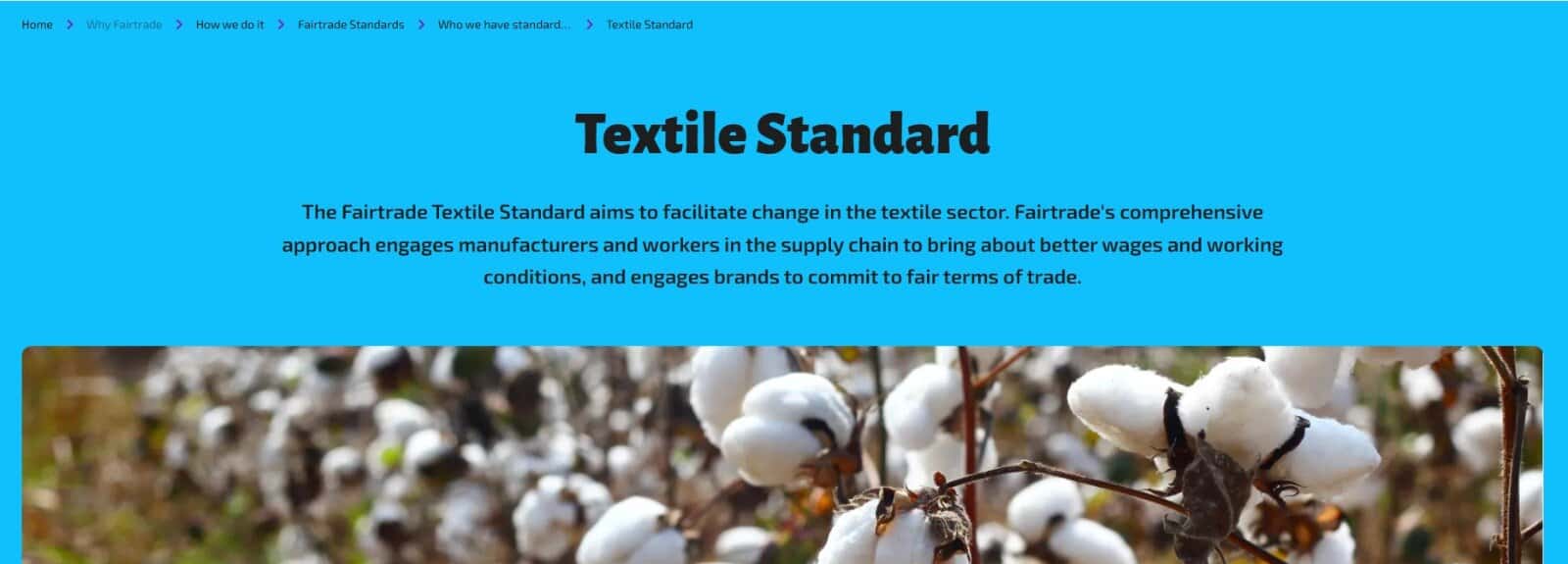
What makes the best sustainable bedding brands stand out? We looked for certifications, like:
- Oeko-Tex Standard 100: You can count on bedding with this certification to be free from harmful chemicals because every bit of it has been tested against 1,000 harmful substances. Products marked this way meet international standards, and this is a meticulous process, with updates to their standards at least once per year.
- Global Organic Textile Standard (GOTS): This organization prohibits child labor, makes sure workers are safe and protected on the job, supports a range of natural fibers that benefits rather than harms the planet, and uses a third party to ensure that greenwashing isn’t occurring and you’re getting fabric with substance (not just marketing).
- Fair Trade Certified: This certification means workers are treated fairly (paid an acceptable wage and safe on the job), and they have stated, agreed-upon, guidelines regarding overtime, temp work, and working hours.
- GreenGuard Gold: The materials in these products are low in VOC emissions, which means they help keep your living area safe, even if you’re sensitive.
- Climate Neutral Certified: These brands are working to reduce or eliminate greenhouse gas emissions.
- RDS Down: Ducks and geese used for down are treated more humanely under this certification.
Then there’s the type of fabric used. Brands that use materials like organic cotton, linen, Lyocell, TENCEL, bamboo, hemp, eucalyptus, and even wool, tend to be more sustainable. Options made from recycled materials also win in the sustainability category.
We’re also looking for any additional information brands provide in the name of transparency, to show consumers what else they’re doing to improve (or avoid harming) the environment, and make sure their bedding is safe for use.
Now, let’s dive into a few brands that live up to the standard!
The 5 Top Sustainable Bedding Brands
Parachute: Best Overall and Year-Round Use
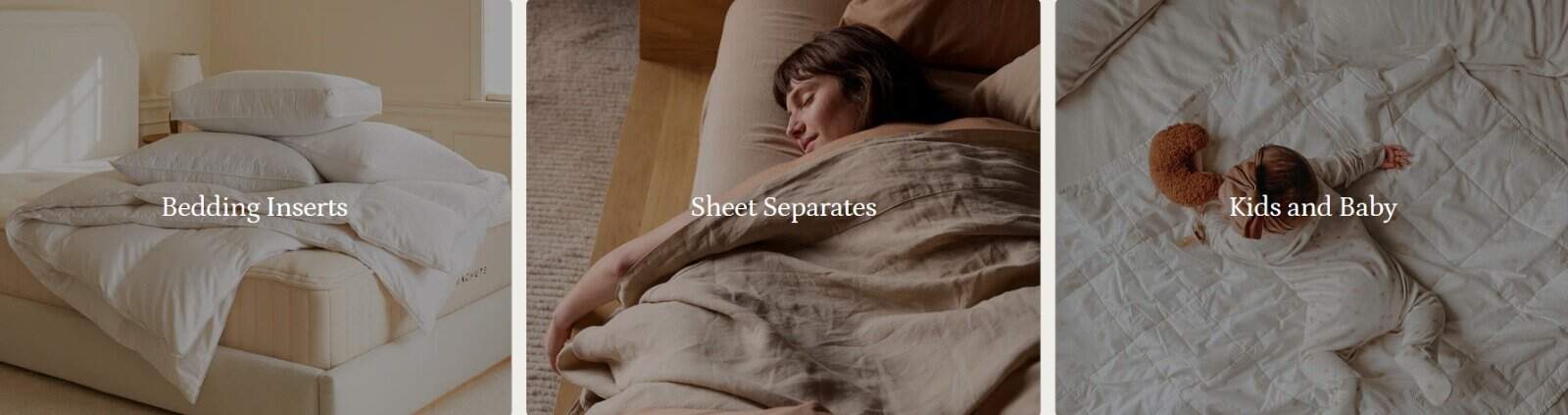
Parachute is well known for its quality, luxury bedding, with soft, breathable fabrics and classy, modern colors and styles.
Parachute is selective about the materials used in their bedding, focused on finding high-quality fibers and reducing emissions. Their materials have a low carbon footprint, are biodegradable and compostable, and their organic cotton is free from harmful dyes and chemicals.
The brand is also very transparent about what they’re doing to benefit the workers and the planet. They make their vendors sign a Code of Conduct, ensuring workers and the environment are treated ethically.
Materials: Linen, brushed cotton, percale, sateen, linen Tencel
Certifications: OEKO-TEX STANDARD 100, RDS Down
Price: Starts at $259.00 (Full, percale), with bundles including sheets and duvet cover up to almost $900.00.
Pros
- Enter your email on the site to receive a discount.
- Good value for the quality, especially in bundles that include sheets and a duvet cover.
- Wide variety of materials and styles to suit different preferences: airy linen, cozy brushed cotton, or crisp percale.
- Durable options: long-staple cotton in percale and sateen sheets holds up well over time, while linen Tencel is particularly breathable for hot sleepers.
- Sustainable practices: returned down is sanitized and reused, and recycled polyester is used for their down-alternative fill.
Cons
- Expensive (but you get a lot for your money, like a duvet and a sheet set in a bundle).
- Nothing stands out for people who are always cold at night.
- No Twin or Twin XL sizes.
Quince: Best Budget
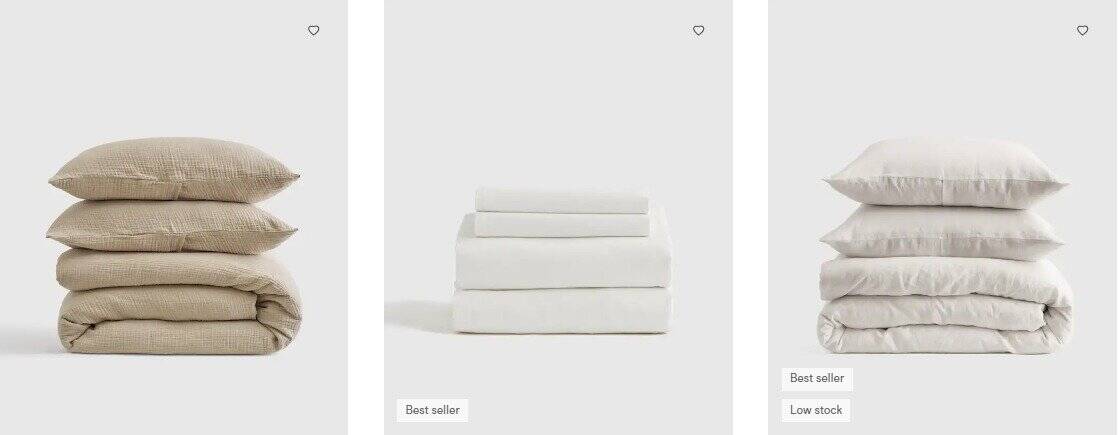
Quince is an affordable luxury brand for clothing, jewelry, accessories, and, yes, bedding.
Their bedding is known for being affordable without sacrificing quality. They do this by sending your purchase straight to you from the factory, cutting out the middleman and saving you money in the process.
Quince offers versatility in fabrics, and they let you choose your sheets with or without the top sheet (which means less waste if you don’t use one, plus less money spent on your end). Keeping with the focus on variety, they have one of the color palettes on this list, and you can shop sizes from Twin to California King.
Materials: Linen, bamboo, percale, cotton sateen, and cotton
Certifications: OEKO-TEX STANDARD 100
Price: Starts at $79.90 (Twin, Classic Organic Percale Gingham Set)
Pros
- Save $40 by entering your email at checkout.
- Wide variety of materials, including linen, bamboo, percale, cotton sateen, and cotton.
- 365-day return policy for added peace of mind.
- Partner with factories that pay workers fairly.
- Direct-to-consumer shipping reduces costs and environmental impact.
- Option to choose sheets with or without a top sheet, reducing waste if you don’t use one.
- Extensive color palette and full range of sizes, from Twin to California King.
Cons
- Fewer fabric options suited for cool sleepers.
- Materials may be less strictly sourced; the brand is working toward more sustainable options.
- Less transparency compared to other brands regarding sustainability efforts.
Coyuchi: Best Splurge
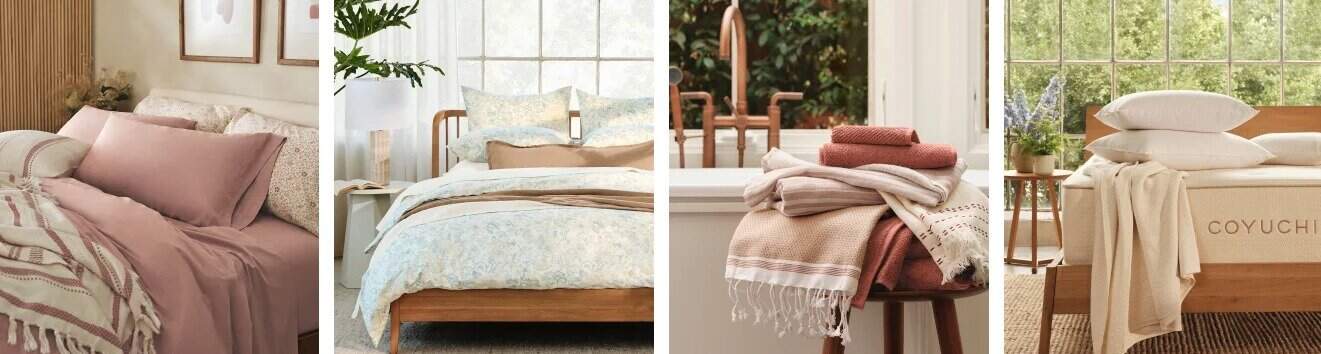
Coyuchi’s been making organic bedding since 1991, and they’re openly focused on continuing to use natural organic fibers that are easier to recycle. Their goal is to reduce waste by creating products that are made to last, and also by being good to people and the planet.
Their packaging is reusable (fabric), and their bedding is dyed with low-impact dyes (so no vibrant colors here, just muted, almost vintage-looking tones). Reusability doesn’t just stop with the fabric bags your sheets come in. Coyuchi’s “2nd Home Take Back” program makes use of returns, defective, and used products so they don’t end up in landfills.
They also work with regenerative farms, so they’re restoring the land rather than depleting it through conventional farming methods.
As far as their actual bedding goes, it meets the standards Coyuchi has clearly set for themselves, demonstrated by the care they put into everything from farming to production. Linen and sateen sheets are usually associated with hot sleepers, but Coyuchi’s linen option is great for hot or cold sleepers. Their flannel, of course, is perfect for cold nights.
Materials: Linen, cotton, percale, sateen, brushed organic flannel
Certifications: GOTS, Fair Trade Certified
Price: Starts at $168.00 (Twin, percale), with some duvet sets passing the $1,000.00 mark.
Pros
- Luxurious options.
- Suitable for every season and type of sleeper.
- Diverse range of materials.
- Made in Fair Trade factories.
- Interesting textures and patterns, often with a story or a nod to a simpler time.
Cons
- Very expensive when compared to other brands.
- Not all bedding is GOTS certified, though other sustainability-related practices are noted
Silk & Snow: Best for Hot Sleepers
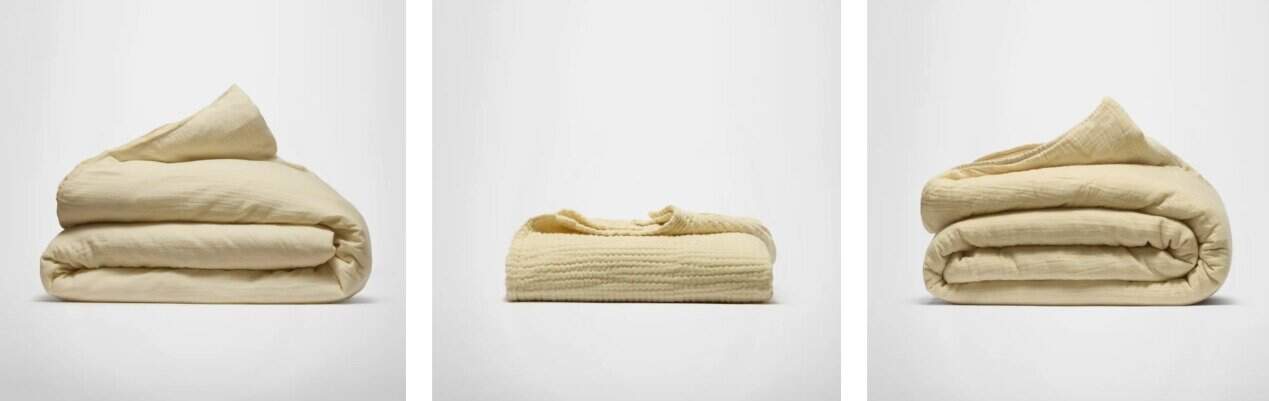
Silk & Snow is great for hot sleepers because they use lightweight, breathable fabrics like percale, linen, muslin, and waffle weave. These materials allow air to circulate and help regulate temperature, keeping you cooler through the night.
With most brands, you can usually expect linen, cotton, and percale, but you don’t see a lot of muslin or waffle weave (theirs are cotton, and available in coverlet, sham set, and duvet covers).
Silk & Snow also focuses on keeping emissions and wastewater to a minimum; choosing quality, natural cotton, and making sure everything they use is OEKO-TEX STANDARD 100 certified. They source renewable, recyclable, biodegradable cotton and flax from reputable fields and use GOTS-approved dyes.
Materials: Flax linen, Egyptian cotton, percale, muslin, and waffle (cotton)
Certifications: OEKO-TEX STANDARD 100
Price: Sheet sets start at $95.00 (Twin, percale)
Pros
- Something for everyone, whether you sleep hot or cool.
- You have the option to donate trees with your order.
- Duvets are available in lightweight or all-season.
- 100-night trial and one-year warranty.
- Committed to ethical labor practice.
- More affordable than other brands.
- Richer color options than a lot of other sustainable bedding brands.
Cons
- Some bedding only comes in two sizes (starting at Queen).
- Limited color options on some products.
Under the Canopy: Best for Cold Climates
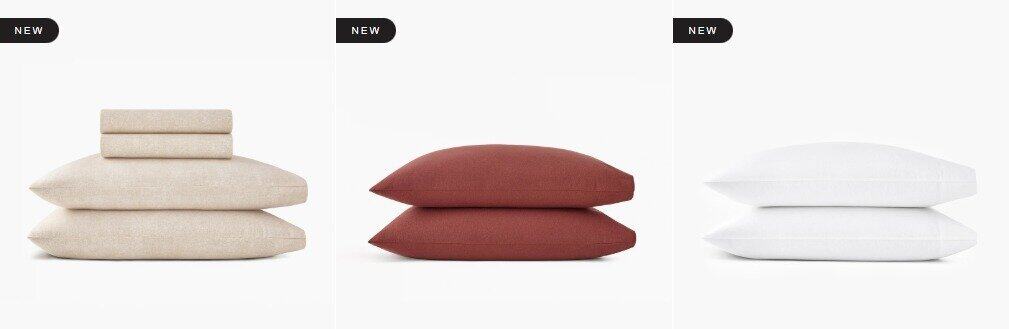
Under the Canopy reduces plastic use (which is why some products come in a fabric bag) and uses organic materials to keep toxic chemicals off your skin, all while remaining relatively affordable for most budgets.
Their heavier fabrics, like flannel and wool, provide extra warmth, making this brand particularly well-suited for colder climates. But their range also includes soft, linen and crisp cotton sateen, making them versatile enough for warmer sleepers, too.
Materials: Flannel, sateen, percale, cotton, wool, TENCEL Lyocell, linen eucalyptus, crinkle matelasse (Turkish cotton)
Certifications: OEKO-TEX, GOTS
Price: Starts at $88.00 (Twin)
Pros
- You can save 20% when you enter your email address.
- More affordable when compared to other brands.
- Bold colors are available in many different forms.
- Twin to California King sizes available.
Cons
- Some customers complain of pilling on the flannel sheets.
- There are some complaints about the elastic breaking on the sheets.
Three Honorable Brand Mentions
Boll & Branch
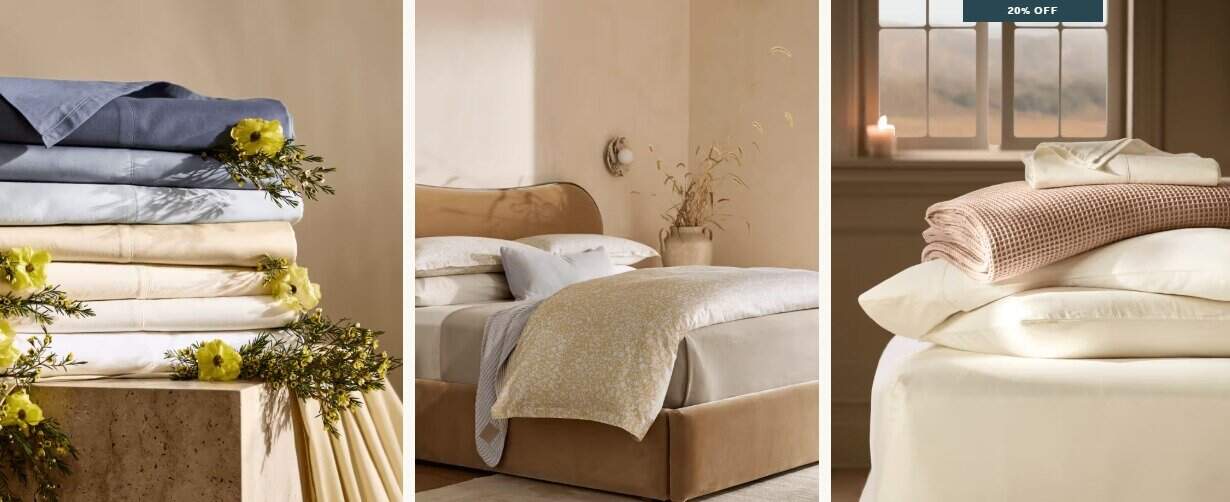
Boll & Branch focuses on sustainability from the very start, beginning with their non-GMO, organic cotton seeds. During cultivation, the farmers they partner with rely on natural rainfall instead of irrigation and take steps to improve soil health.
At the spinning stage, they reduce waste by selling the cotton seeds, and the money goes to the farmers, then during the dyeing phase, they live up to the standards set by OEKO-TEX STANDARD 100 certification. Boll & Branch also explicitly prohibits dangerous methods like sand blasting, along with other harmful chemical or synthetic treatments. This makes the entire process better for the environment, the consumer, and the worker.
Just as you’re looking to your bedding brands to have certifications that show they support safety and sustainability, Boll & Branch does, too. They strive to ensure that their partners treat workers well. If they don’t have the certifications they’re looking for, Boll & Branch conducts their own audit to make sure the partner lives up to their standards.
Materials: Cotton, percale, flannel, cotton cashmere, and Supima cotton
Certifications: OEKO-TEX STANDARD 100, GOTS, Fair Trade Certified, RDS
Price: Sets start at $229.00 (Twin, percale)
Pros
- Wide variety of materials to suit all seasons, from flannel to linen, with various cotton options in between.
- Clear guidance on which sheets work best for different types of sleepers and seasons, reducing guesswork when shopping online.
- Reasonably priced for the quality offered.
- Surprisingly large selection of colors and patterns, though mostly muted tones.
- Available in a wide range of sizes.
- Long-staple cotton ensures softness and durability.
Cons
- Prices may still feel high for some consumers, despite being reasonable for the quality.
- Not all sheet sets offer many color or pattern options; for example, the Signature Vintage set comes in five neutral shades with no patterns.
Pact
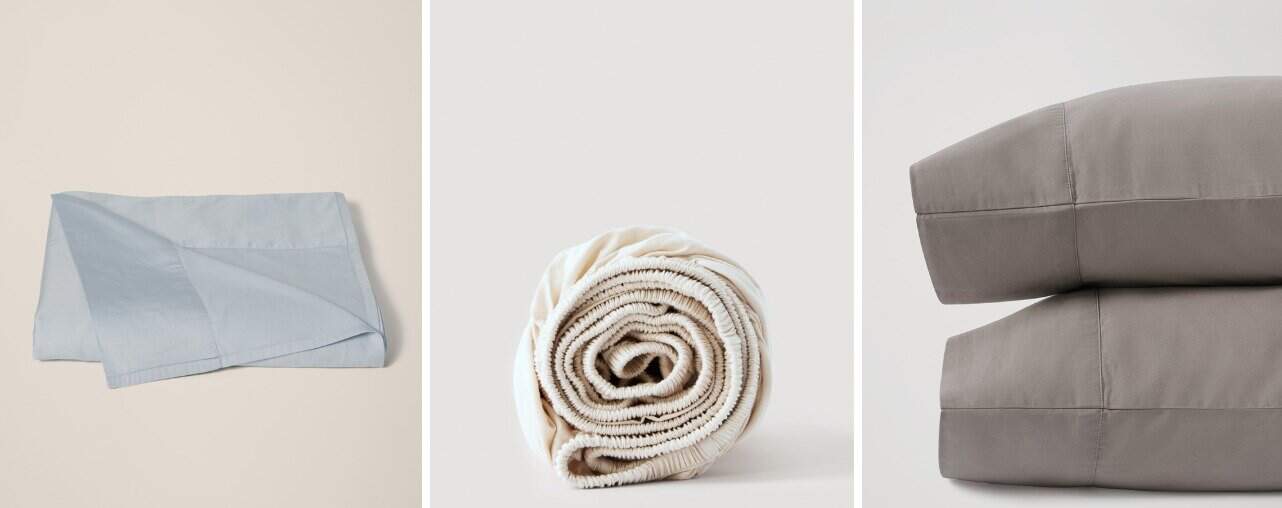
Pact bedding is made from organic cotton, and they’re focused on staying climate-friendly, carbon-neutral, ethical, and using sustainable materials. Organic farming, like what their partners do, uses 81% less water than conventional farming and keeps the air and soil healthier.
In addition to doing good for the environment and workers in the manufacturing and shipping of their products, Pact works with ThredUp to allow you to earn pact cash when you send them your used items (any brand). They’ll even send you a free shipping label. They’re serious about keeping things out of the landfill when possible.
Materials: Cotton (percale, sateen, and jersey)
Certifications: GOTS, Fair Trade Certified
Price: Sets start at $100.00 (Twin, Favorite Tee Jersey)
Pros
- Save 15% by entering your email at checkout.
- Carbon-neutral production.
- Recyclable paper packaging instead of plastic.
- Partners with ThredUp to keep used clothing and accessories out of landfills.
- Reasonably priced for the quality.
Cons
- Not many options for cool sleepers.
- When you buy sheets separately (not a bundle with pillow cases, flat sheet, and fitted sheet), they’re expensive.
Piglet in Bed
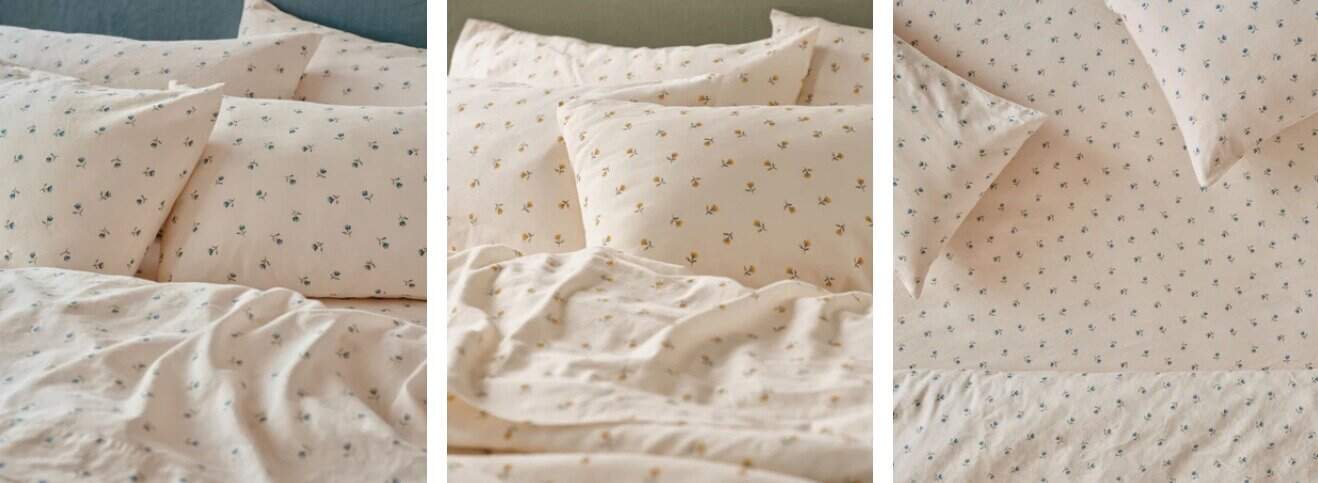
Piglet in Bed has niched down to the linen and cotton bedding world, and they do it well, with patterns and colors you don’t usually see in other sustainable bedding brands. You can get 100 percent linen, 100 percent cotton, or a blend.
Focused on sustainability at all levels, Piglet in Bed’s partners in Portugal switched to all electric vehicles to reduce their carbon emissions. Piglet in Bed also visits their partners’ facilities to ensure they’re treating workers fairly and they have a safe environment. They also prioritize working with partners that are reducing waste, water use, plastics, and taking other steps to improve the environment.
Materials: Linen and cotton
Certifications: OEKO-TEX STANDARD 100
Price: Starts at $297.00 (Twin, linen)
Pros
- Long-lasting, durable bedding.
- Becomes softer with use over time.
- Timeless designs that can be kept for years.
Cons
- Primarily linen products, which may not appeal to those looking for other materials.
- Not all items are OEKO-TEX STANDARD 100 certified (though most are).
- Relaxed, lived-in look throughout the collection, which may feel limited for those seeking a different style.
Choosing Your Sustainable Bedding Brand
Any of these options will be wonderful if you’re looking for bedding that doesn’t–and won’t–harm the planet. They have more in common than they don’t, due to durability, softness, lack of harmful chemicals, and breathability.
That said, if you’re looking for a high-quality (especially year-round) option that feels luxurious and checks a lot of boxes not just for the environment, but in worker fairness and safety, Parachute’s a good place to start.
If you want something especially warm and you have the budget for it, take a look at Coyuchi’s brushed flannel option.
And if you’ve always wanted to shop for sustainable bedding, but the prices kept them out of reach, start your search with Quince and you may be pleasantly surprised.
Again, any of these will be a soft, breathable, better-over-time option that you can feel good about.