




- How to Choose the Best Bed Sheets for Dust Mite Allergies - March 17, 2026
- Best Sustainable Bedding Brands - February 9, 2026
- Sleeping with Hormone Changes: Winning the War with Your Body for Restful Sleep - January 17, 2026
When your hormones are running amok, it can make it hard to fall asleep, stay asleep, stay cool, stay calm, and ultimately, function well on a day-to-day basis.
Imbalances or disruptions in hormones like estrogen, progesterone, and cortisol can cause one or more of the following:
- Insomnia
- Overheating
- Night sweats
- Hot flashes
- Anxiety
- Restlessness
- Waking up several times through the night
- Feeling tired as soon as you wake up
- Trouble falling asleep
And as your sleep is increasingly disrupted, it can raise your cortisol — which in turn just perpetuates a cycle of bad sleep.
The good news is that you don’t have to keep suffering through it. From new sheets and aromatherapy to a new fan and high-tech tools like the Eight Sleep system, there are several options you can try to start sleeping well again.
What You Can Do to Get Better Sleep Despite Hormone Changes

If physiological treatment like HRT isn’t for you (and it won’t be for most people), don’t worry. There are still plenty of things you can do to ensure you improve your sleep, including staying cooler, drier, less anxious, and generally more comfortable when you lie down at night.
Keeping It Cool
Cooling your bedroom down is the most obvious thing to try first, and there are several ways of going about it.
Adjusting the Thermostat
You can always use the thermostat to drop the temperature a little while before you turn in for the night, making your bedroom nice and cool for when it’s time to sleep. However, this can get expensive quickly, and your partner and anyone else in the house might not enjoy the change.
If you live alone (or with someone else who likes to keep it cool at night) and your budget allows it, this could be all you need to do.
Adding a Fan
You can try adding a fan to your room to encourage airflow and a cooler sleeping environment (and some nice white noise if you like that kind of thing). It can blow directly onto you so that your partner suffers less, or just past your body so that you enjoy the slight breeze without drying out your skin.
Some fans, like the BedJet, are designed to blow under the covers from the foot of the bed, which will keep you more comfortable and keep the cool air exactly where you need it. This is good if you sleep hot but can’t fall asleep without a blanket on you.
Adding High-Tech Sleep Tools
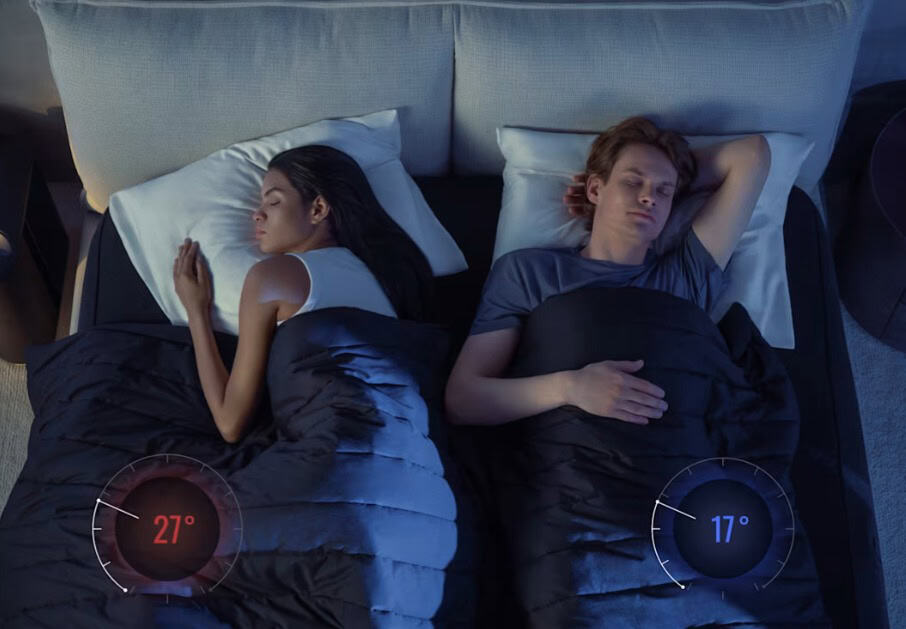
If you’re looking to make big changes, a setup like Eight Sleep can overhaul your sleeping experience in a major way. It’s also the most expensive way to go, though.
This system is composed of a cover that goes over your mattress and a hub that pumps cool water through the topper (don’t worry, it doesn’t leak!). It works to actively cool you down without depending on the room’s general airflow or temperature. Your partner can even control their side of the bed, so your personal needs won’t affect their ability to sleep comfortably.
Depending on the package you select, other features include sleep and health tracking, vibration, thermal alarms, back pressure relief, and even snoring mitigation.
Swapping Out Your Mattress or Mattress Topper
Pay attention to your mattress and mattress topper. Memory foam can trap heat and make you feel hotter, so what may have felt great five or ten years ago might be causing problems for you now that the material’s broken down a bit and you’re just running hotter than you used to.
If you’re using a removable mattress topper, try replacing it with a moisture-wicking, cooling option. If you don’t have one yet, you could consider adding one and pairing it up with cooling sheets to see if that keeps you comfortable enough through the night.
Using Moisture-Wicking Cooling Sheets

Cooling sheets can make quite a difference in how you sleep at night. They’re not actively cooling you, but they do feel cool to the touch and wick moisture away as soon as it shows up, which means they can help you get a better night’s sleep.
Look for fabrics like:
- Bamboo
- Mulberry silk
- Silver-infused cotton
- Cotton percale
- Linen
- Lyocell
- Tencel
For specific brands, check out:
- Miracle Made (especially their Extra Luxe line) and Rest Evercool for silver-infused cotton
- THXSILK for Mulberry Silk
- Quince for linen
- Brooklinen for cooling cotton percale
- Luxome or Cosy House Collection for bamboo
Bonus tip: Choose your pajamas carefully too. Look for similar features: cooling, moisture-wicking fabrics that won’t trap heat and make you sweat.
Addressing Your Anxiety
Pounding heart? Racing thoughts? Feeling like something’s wrong, but unable to put your finger on what it is, so your mind just keeps going and going instead of letting you sleep? These may help, but you should also consider talking with a mental health professional if your symptoms are moderate to severe.
Trying Aromatherapy

If you just need help relaxing, you could try the standard (lovely!) lavender. However, other essential oils can also be helpful when you can’t sleep because of hormonal changes.
For example, sage and peppermint oils can relieve hot flashes and help you sleep. Citrus may also help you sleep better in menopause (neroli in particular is great for relieving anxiety as well as improving libido).
Consider using a diffuser as part of your nighttime routine. If you want to apply the oils directly to your skin, be sure to research the oil you’re using. In most cases, you’ll need a carrier oil.
Another option is to purchase an aromatherapy spray like Dr. Teal’s Sleep Spray, which you can either spray around your room or onto your bedding right before settling in.
Burrowing Under a Weighted Blanket
A cooling weighted blanket sounds like an impossible creation, but there are options that can accomplish both goals. After all, you don’t want a hot and heavy blanket if you’re struggling with hot flashes or night sweats.
Bearaby’s Tree Napper is designed with keeping cool in mind, but the Baloo weighted blanket is another good option.
Exercising

You don’t want to do anything too intense before bed, but an after-dinner walk, yoga, or stretching can help lower cortisol levels and calm you down before bed. Doing a more moderate workout routine (like lifting weights or jogging) in the morning or during the day could also help you sleep better at night.
Taking Casein Before Bed
Casein is a slow-releasing protein that can help you sleep better when you consume it about an hour before bedtime. The amino acids in it work to stabilize your mood and calm anxiety, but it can also prevent some muscle loss that comes with age.
It can take the form of a protein shake (you can buy casein protein powder specifically), Greek yogurt, cottage cheese, milk, or even eggs.
Making Lifestyle Changes
You may have already heard two or three of these, but in case you haven’t, here are a few lifestyle tweaks to try if you’re having trouble falling asleep or staying asleep:
Cutting Back on Alcohol
As relaxing as alcohol can feel, it actually disrupts your sleep (especially REM, which is tied to memory and emotional processing). If you do drink, enjoy it earlier in the evening, then switch to water to stay hydrated. If nothing else, you won’t be compounding the fatigue and brain fog with alcohol so much when you avoid having it right before bed.
Avoiding Afternoon Caffeine

Similarly, keep an eye on your caffeine intake; try cutting off the coffee and caffeinated teas by around 2:00 in the afternoon.
Winding Down at Night
Create a wind-down routine, whether that’s showering, doing skin care, reading, setting your clothes out for the next day, and so on. The goal is to let your mind and body know it’s almost time for bed, so it’s time to wind down.
In the hours leading up to bed, go analog as much as you can. Skip the screens, read, journal, play games with your family, etc.
Choosing Your Path Back to Solid Sleep
There are several ways to encourage better sleep in the wake of significant hormone changes.
If you’re looking for the most aggressive cooling option that won’t disturb anyone else, the Eight Sleep option is extremely nice and solves a lot of problems. If you’re not quite ready to go all out, try a set of cooling sheets instead.
If your biggest issue is anxiety, consider sheets that make you feel especially comfortable (like a crisp cotton set), paired with aromatherapy and a solid nighttime routine that signals to your mind and body that it’s safe to sleep.
Treat the list above as a smorgasbord of options to mix and match until you find your way back to the solid sleep you’ve been missing.