

- Best FSA-Eligible Sleep Apnea Products - December 4, 2025
According to statistics from the American Medical Association (AMA), sleep apnea affects an estimated 30 million Americans (with only around 6 million of these having official diagnoses).
Managing sleep apnea can be expensive, but a Flexible Spending Account (FSA) helps soften the blow by letting you use pre-tax dollars for eligible medical purchases. If you have an FSA, you might already use it for basics like prescriptions, eyeglasses, or first aid supplies. What you might not realize is that you can also use FSA dollars on a range of specialized sleep apnea products, from CPAP machines and masks to innovative new therapies.
I’ve looked at six of the most useful FSA-eligible sleep apnea products. My picks span different categories and different price points, so there’s something here for everyone.
Here’s a quick look at my best picks:
- eXciteOSA Daytime Therapy Device by Spring Sleep – Best overall
- ResMed AirSense 11 AutoSet CPAP Machine – Best user friendly CPAP
- ResMed AirMini Travel CPAP – Best travel size CPAP
- Contour CPAP Max Pillow 2.0 – Best CPAP accessory
- SnoreRx Mouthpiece (Oral Appliance) – Best budget friendly MAD
- Bongo Rx EPAP Nasal Device – Best for quiet nights
1. eXciteOSA Daytime Therapy Device by Spring Sleep
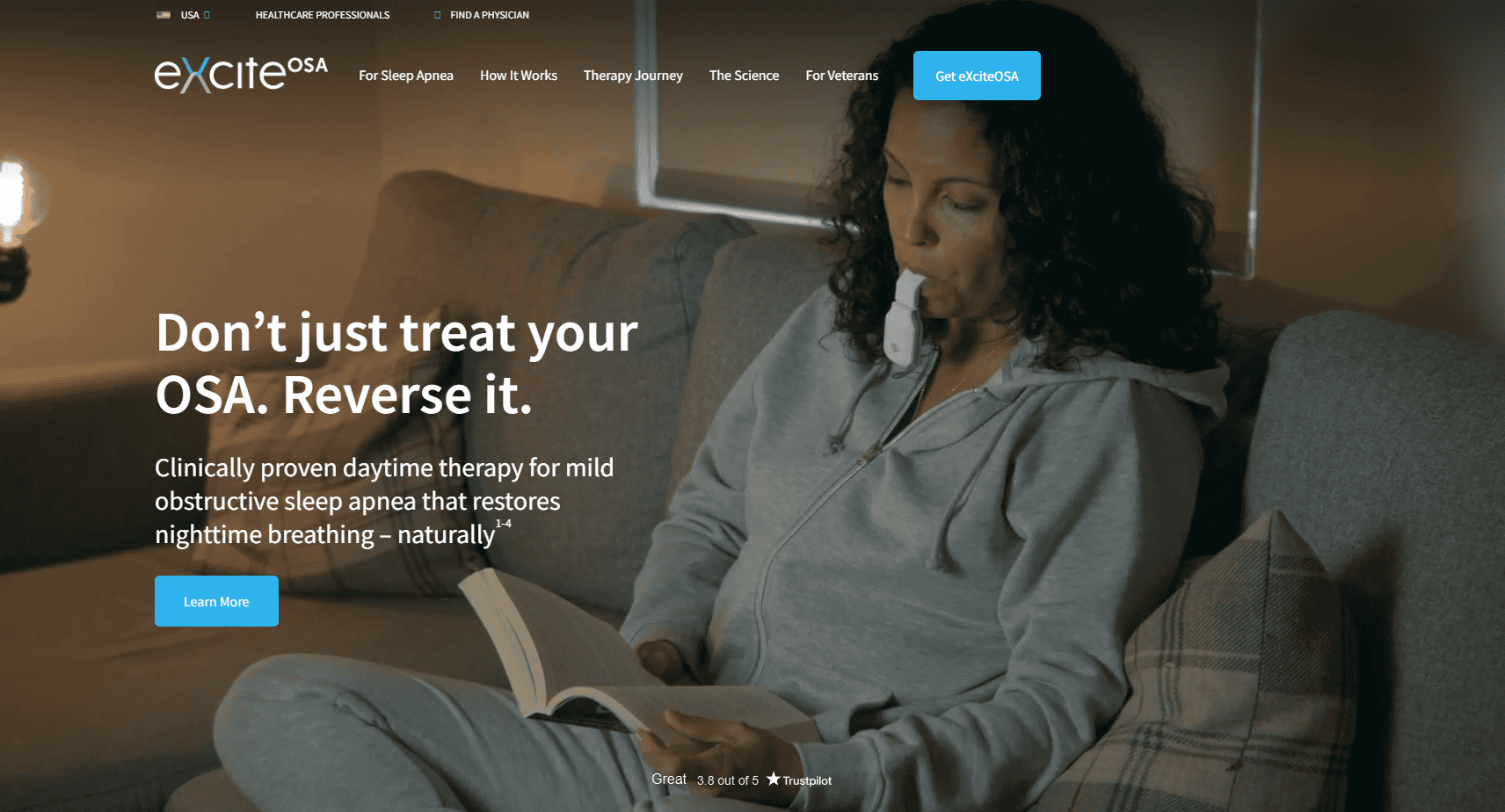
This is a highly innovative CPAP alternative that has taken sections of the sleep apnea community by storm. It doesn’t require you to wear anything during the night; instead, you insert a small silicone mouthpiece for 20 minutes a day while you’re awake. It delivers gentle electrical pulses to strengthen your tongue muscle, which in turn helps keep your airway open at night.
The mouthpiece is the only daytime therapy FDA-cleared to treat a root cause of sleep apnea, and is clinically tested to reduce snoring and treat mild apnea symptoms with just 20 minutes of daily use .
One reason why I put this at the top of the list is its cost. The device retails at around $1,650, and the silicone mouthpiece needs replacement every 90 days for hygiene and effectiveness, adding roughly $600 per year in upkeep – though you can save some money with a subscription. FSA discounts can therefore add up quickly if you decide to use this approach to apnea management.
I should note that the eXciteOSA may not work for all types of sleep apnea. It’s most effective when the tongue is the main source of apnea symptoms; in cases where the tongue is not the culprit, it may not be as effective. Though it’s not FDA cleared for more severe cases of sleep apnea, some people have used the eXciteOSA in tandem with CPAP therapy.
If you’re interested but concerned it may not be for you, there is a 90 night trial period with a money back guarantee, but only if you purchase your device through SpringSleep.
However, if this does work for you, it could release you from the dreaded shackles of the CPAP forever. Doesn’t that sound like fun?
2. ResMed AirSense 11 AutoSet CPAP Machine
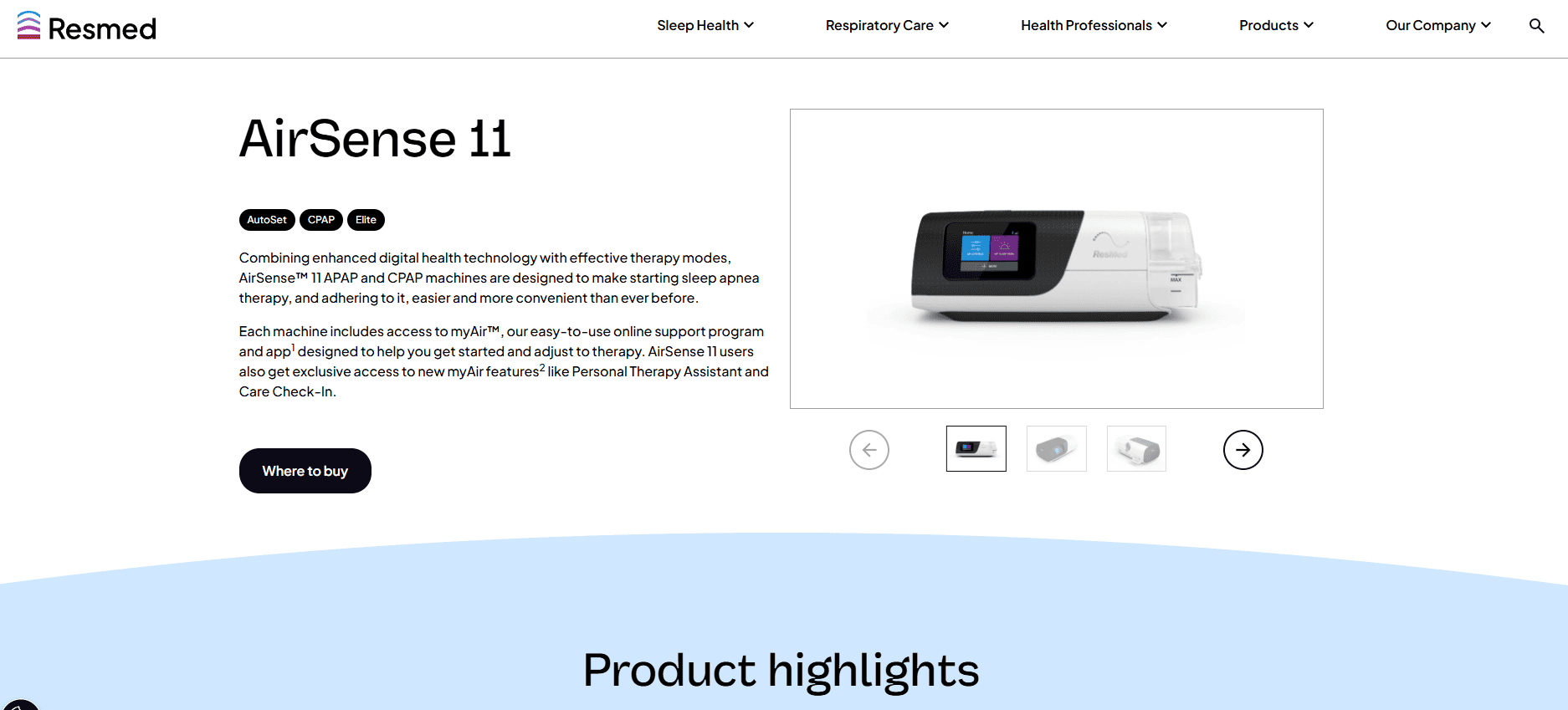
Although CPAP machines can be disruptive to your nighttime routine, they are regarded as the gold standard when it comes to sleep apnea treatment.
There are some great products competing for top pick in this area, but I’ve gone with the ResMed AirSense 11 AutoSet. It blends user-friendly design with cutting-edge features, including:
- Automatic pressure adjustment (it will change its own settings during the night based on your needs).
- An integrated heated humidifier.
- A sleek touchscreen interface.
- High-quality noise control (it runs at about 27 decibels, which is quieter than the average whisper).
- Bluetooth and cellular connectivity.
- A “score” that tracks usage hours, mask seal, apnea events, etc. This gamification of the therapy helps to keep you accountable.
Unfortunately, this all doesn’t come cheap. If you’re paying out of pocket, the ResMed will set you back around $900-$1000 for the machine alone; this is on the high end for CPAPs.
However, the lifestyle benefits could well outweigh this cost. CPAPs don’t work for everyone, but nor does any other sleep apnea treatment. If your healthcare provider has suggested that you try a CPAP, but you’re hesitating because of the costs involved, the FSA scheme may provide you with a route to test it out.
3. ResMed AirMini Travel CPAP
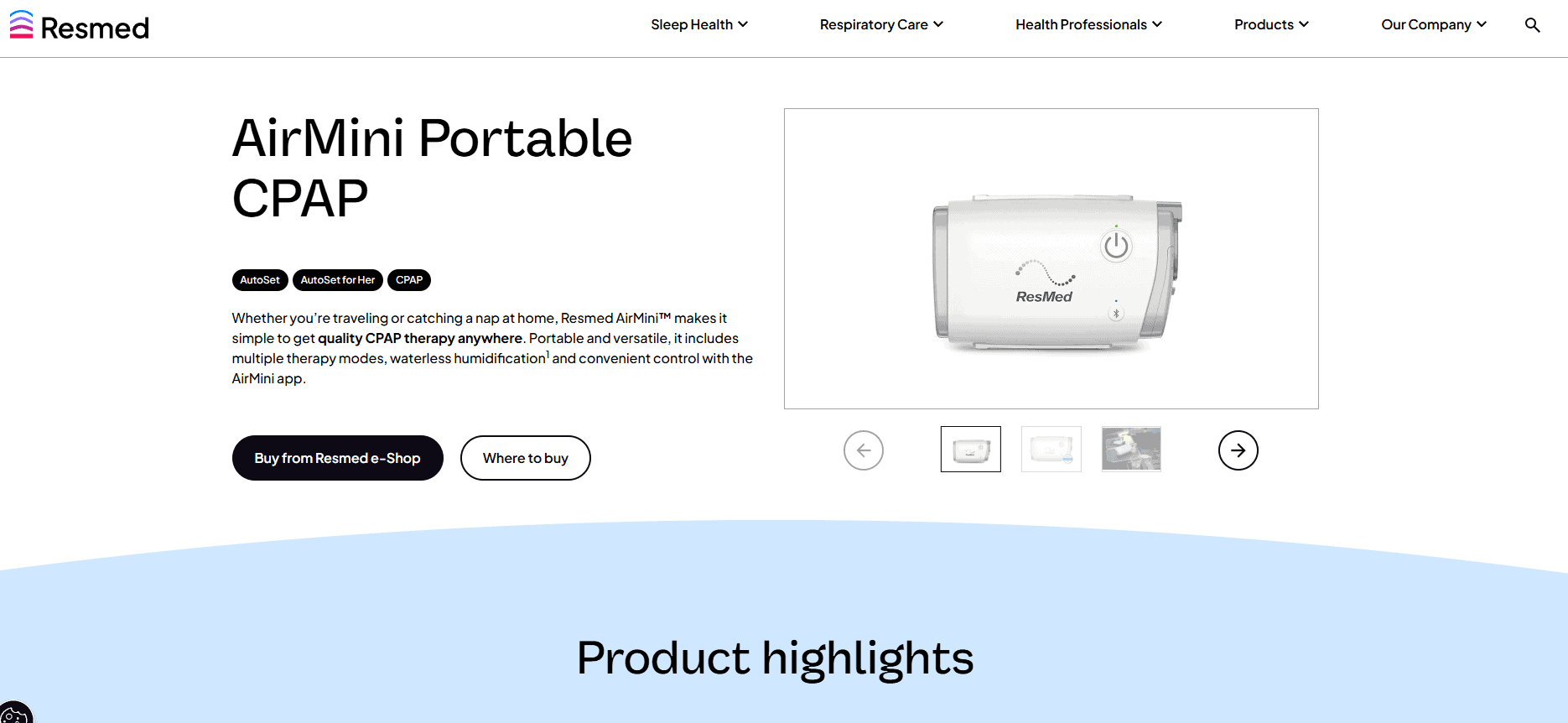
If you’re a frequent traveler or you just want a portable backup CPAP, there’s a lot to like about the ResMed AirMini (especially as it’s FSA-eligible).
The device is truly tiny – it weighs only 0.66lbs, and fits in the palm of your hand. Prepare to be shocked that a fully functional CPAP could be the size of a portable radio. Airlines generally allow it in carry-on bags, so you can even use it during flights.
Despite its size, the AirMini packs a punch in terms of features. It offers both CPAP (fixed pressure) and APAP (auto-adjusting) modes, and it includes ResMed’s “AutoSet for Her” algorithm as well, similar to the big AirSense 11.
Like the AirSense 11, this offers Bluetooth connectivity and an app that allows you to monitor your therapy and adjust settings. It also brings some unique functionality to the table, including a waterless humidification system: instead of a traditional water chamber, it uses a small HumidX cartridge (a moisture exchanger) that snaps into the mask tubing. This does a lot to take the edge off the skin dryness that can often accompany CPAP use. It also allows you to travel without packing distilled water, which is handy.
One drawback of the AirMini is that it’s not battery-operated by itself. You’ll need to plug it in, or invest in a separate travel battery pack if you need to use it where power isn’t available (camping, long flights, etc.). It’s also somewhat noisier than one of the larger machines.
Travel CPAPs like the AirMini, are usually not covered by insurance (they’re seen as convenience devices), so you’ll be paying out of pocket – often around $800-$1000 for the unit. Again, if you’re making this kind of investment, FSA eligibility can be very useful.
4. Contour CPAP Max Pillow 2.0
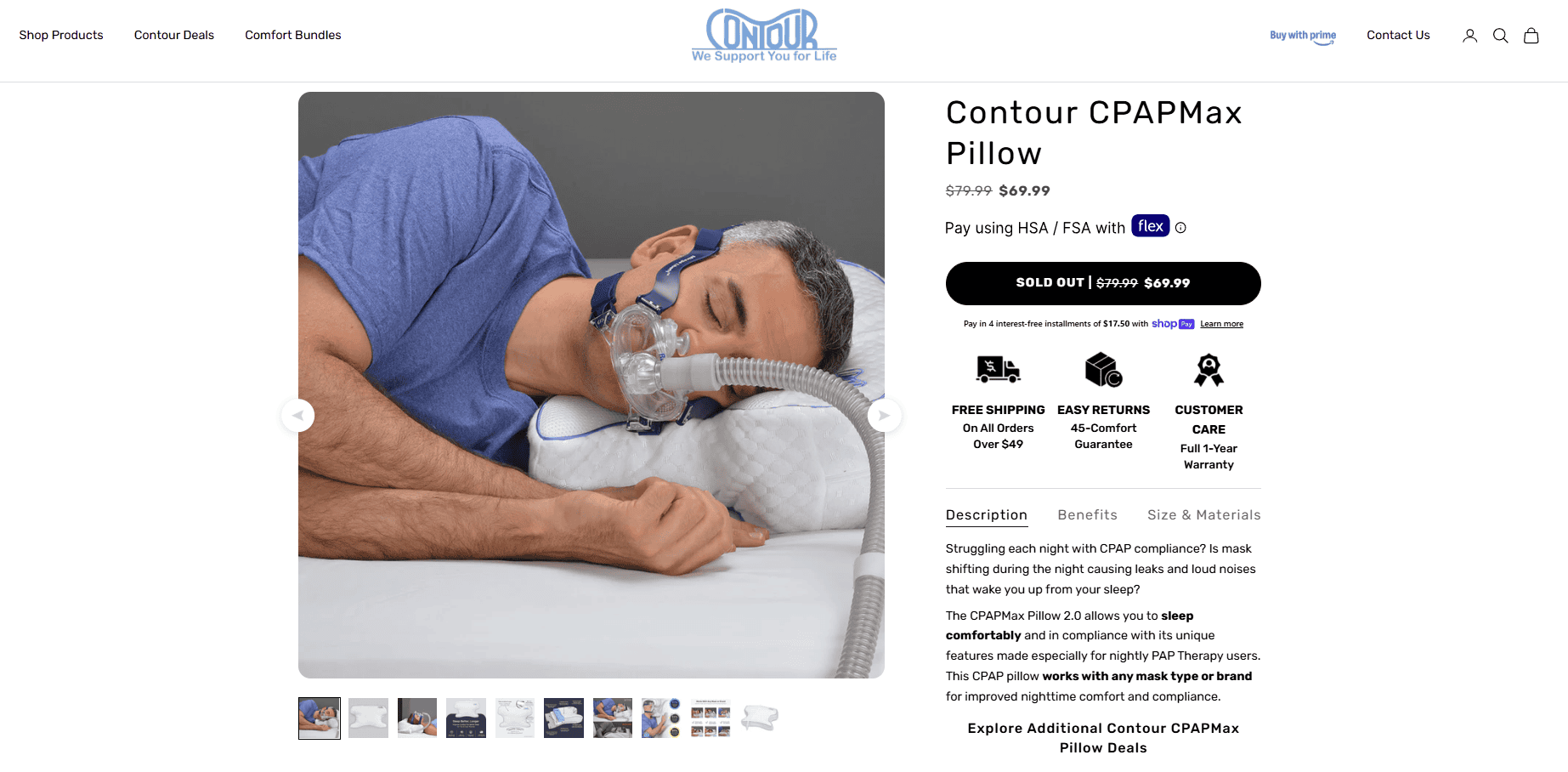
Standard bed pillows often don’t mix well with CPAP masks; the Contour CPAP Max Pillow 2.0 offers a solution to this problem. It’s orthopedically contoured with a recessed center for your head, raised supportive edges for your neck, and cut-outs on the sides for your CPAP mask and hose. The idea is that when you side-sleep, those cut-out zones relieve pressure on the mask, so you don’t get air leaks or face soreness.
A CPAP pillow like the Contour 2.0 can be a modestly priced (around $60-$80) yet hugely impactful accessory, and FSA eligibility makes it even more accessible. If you’re already a CPAP user but you struggle to stay comfortable with the machine throughout the night, this pillow might be worth a try.
5. SnoreRx Mouthpiece (Oral Appliance)

For those with mild sleep apnea or who primarily struggle with loud snoring, an over-the-counter oral appliance can be a worthwhile FSA-eligible purchase. The SnoreRx mouthpiece is a type of mandibular advancement device (MAD).
These are custom-fit plastic mouthguards for nighttime wear. Your mouthpiece gently holds your lower jaw forward, keeping your airway more open and reducing the vibrations and obstructions that cause snoring and apnea.
The boil-and-bite fitting process is straightforward, and the device has adjustable settings in 1mm increments. The mouthpiece is, as you might imagine, much more travel-friendly than a CPAP machine.
Cost-wise, SnoreRx runs around $100 or less, and it is often FSA-reimbursable as a stop-snoring device (especially if you have a note from your doctor).
There are some drawbacks of using a mouthpiece like this, the big one being jaw discomfort and dental pressure. These affect different users to different extents, so there’s no way to know how big a deal it will be for you until you try a mouthpiece for yourself.
Additionally, a mouthpiece won’t be as effective as a CPAP for the majority of people. If yours is a more serious case of sleep apnea, a mouthpiece may not cut it by itself.
Lastly, the SnoreRx will wear out after a year or so of use. This isn’t a huge deal for a product costing ~$100, but it’s still something to bear in mind.
Overall, I’d say the SnoreRx or similar FSA-eligible oral appliances are worth considering if you have mild apnea or primary snoring and can’t tolerate CPAP. Just introduce it gradually, be prepared for some jaw ache, and keep in touch with your dentist if you use it long-term.
6. Bongo Rx EPAP Nasal Device
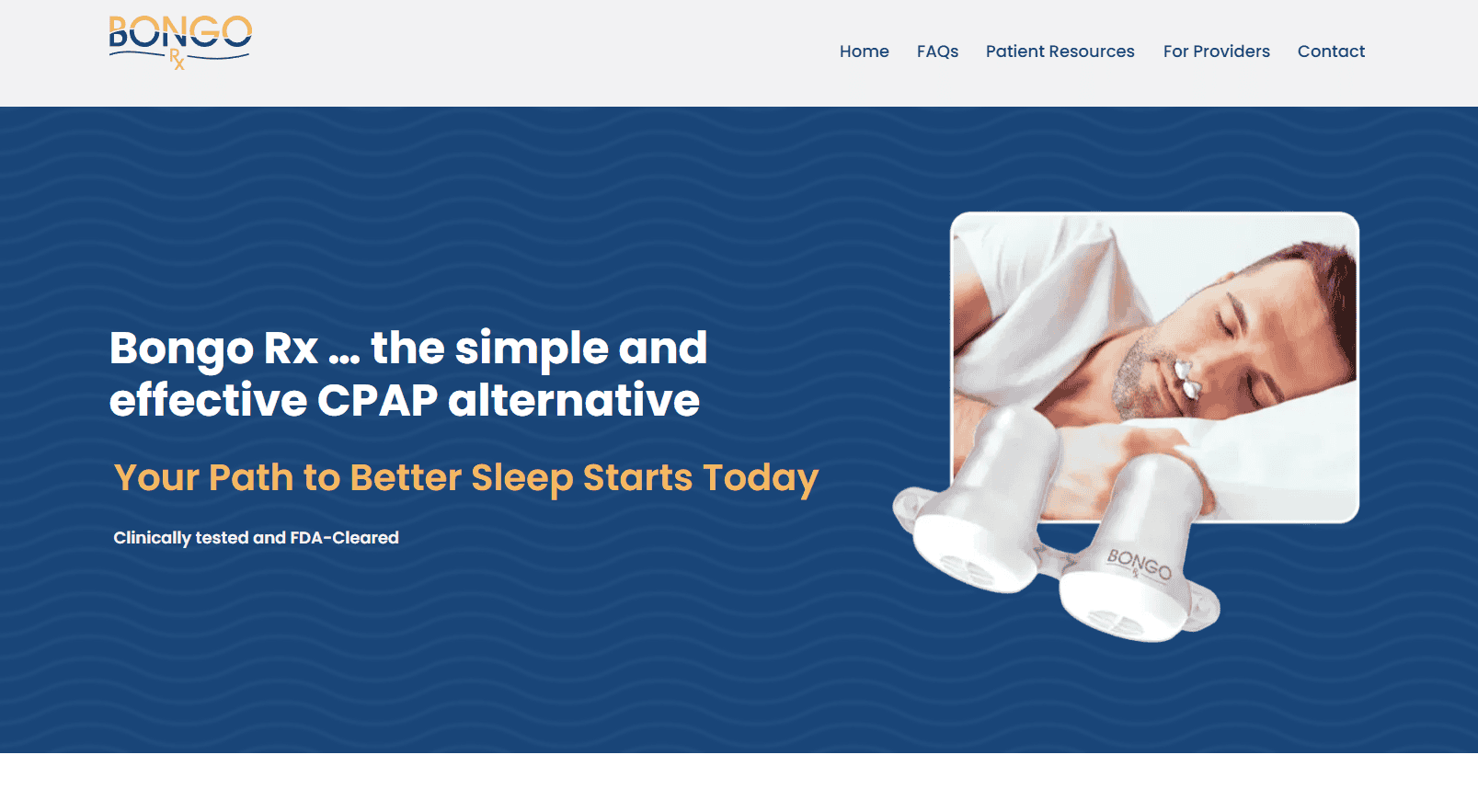
The last product on this list is a relatively new alternative therapy that’s making waves: the Bongo Rx by AirAvant Medical. This is an EPAP (expiratory positive airway pressure) device. There’s no machine, no power, no mask; just small silicone inserts you wear in your nostrils while you sleep.
When you inhale, the valves in the device open so you can breathe in freely through your nose. When you exhale, the valves partially close, creating back-pressure in your airways – that pressure helps keep your throat from collapsing.
The biggest benefit here is the freedom from hoses and heavy equipment. The Bongo plugs are so small and unassuming that you’d almost forget they’re there. It’s also silent, which is highly unusual for an effective apnea therapy.
Clinically, Bongo is FDA-cleared for treating mild to moderate obstructive sleep apnea. However, it’s not for everyone. You must be able to breathe through your nose well; if you have nasal congestion or a deviated septum, or you’re a chronic mouth breather, Bongo isn’t going to work (the company actually warns against using the product in those cases).
Also, Bongo is only indicated for mild to moderate OSA. If you have a more severe diagnosis, the plugs might not provide enough pressure to stent your airway.
The starter kit will set you back around $200, and replacement sets for a year might cost another couple hundred.
Making the Most of Your FSA for Better Sleep
There are plenty more FSA-eligible tools you can use in the fight to manage sleep apnea; think of this article as a starting point. My main recommendation in this area is that you actually use your FSA funds; too many people don’t. Healthcare is getting more expensive by the day, so, as consumers, we need to do everything possible to make it more affordable. The FSA program is one of the best ways to do this.