



While his specialty is sports rehabilitation, his diverse patient base pulled him into an unexpected focus: sleep quality. From obstructive sleep apnea to chronic insomnia, Trevor has committed himself to understanding the conditions that steal restful nights, because sleep doesn’t discriminate. It affects everyone, from the stay-at-home parent squeezing in weekend workouts to the elite athlete chasing peak performance.
When he’s not treating patients or reviewing sleep solutions, Trevor is with his family, coaching soccer, or spending time at the beach. His best sleep hack? Keep a consistent wake-up time, even on weekends. Your body’s internal clock thrives on routine, and once it locks in, falling asleep starts to feel like the easy part.
- Best Mattress for Shoulder Pain - October 2, 2026
- Best Inspire Alternatives - August 31, 2026
- Best Tongue Stabilizing Device for Mild Sleep Apnea - April 13, 2026
Do you ever wake up in the morning with achy, stiff shoulder pain that bothers you in the morning and then fades by lunch? I hear that story almost every day. Usually, my patients will ask, “Could it be my mattress?” or “What mattress should I buy?”
I can’t always answer that in the two minutes left in a visit, so here’s the longer version.
Below is a theoretical patient case that I’ve compiled from several cases, with details changed, but the pattern shows up in my clinic every month.
He’s a mail carrier in his fifties. Mail trucks are right-hand drive, so he spends his day reaching out the right window into curbside boxes, a few hundred times per shift. He also sleeps on his right side, and has for as long as he can remember. A few years back, he bought a firm mattress because someone told him firm was good for his back. His right shoulder was stiff every morning until about the third hour of his route, and his wife said he flipped from side to side all night.
I treat his shoulder in the office, but the bed was part of the problem too. The firm surface gave the joint nowhere to go, so after a full day of reaching, it spent the night under pressure as well. He switched to a medium hybrid with a thicker comfort layer and went up a size on his pillow. The change didn’t happen overnight. Around week five, he told me his stiffness was gone by the time he loaded the truck, and his wife had stopped complaining about the flipping.
The bed didn’t fix his shoulder by itself. But it stopped working against everything else we were doing.
What your shoulder deals with at night
A lot of my clinical week involves shoulders, and the anatomy explains a lot of this complaint. The shoulder trades stability for range of motion. The socket is shallow, soft tissue does most of the work of keeping the joint centered, and the top of the upper arm sits close to the skin with little padding over it. The hip is built the other way around, with a deep socket and thick muscle spreading the load.
When you roll onto your side, that shallow joint carries your head, your arm, and part of your upper torso for six to eight hours. It’s a joint designed to move, and we ask it to hold still under load all night.
So for a side sleeper, the top third of the mattress has one job, and that’s giving the shoulder room to drop.
Before any shopping advice, I tell every patient this: A new bed won’t fix shoulder pain that has a cause above the mattress. If pain wakes you several times a night, hurts when you reach overhead during the day, comes with weakness or numbness running past the elbow, or hangs around longer than a few weeks, get it looked at by a clinician who can examine you in person. What follows is general guidance on sleep surfaces, not an assessment of your shoulder.
Two ways a mattress gets this wrong
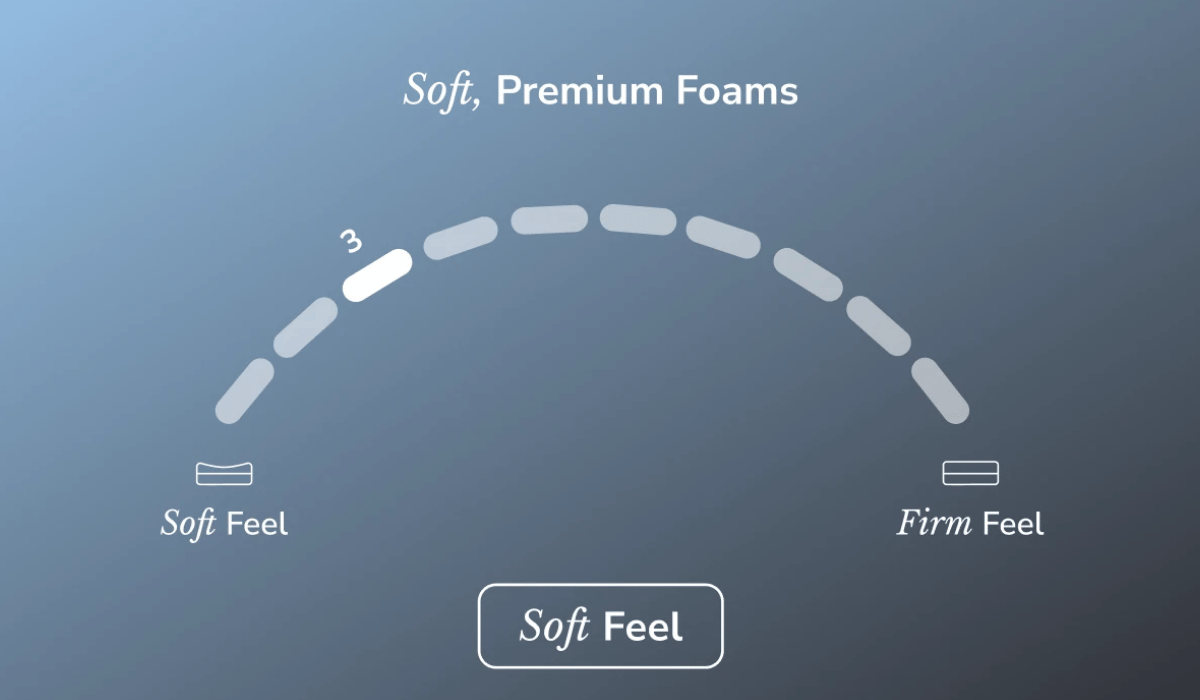
Too firm, and the shoulder has nowhere to go. Patients describe the same sequence: comfortable at lights out, pressure building over twenty or thirty minutes, a roll to the other side, and the cycle repeating. Several position changes a night on a surface with no give pull you toward lighter sleep.
A bed that’s too soft causes a different problem. The shoulder sinks past the point of relief, the torso follows, the hips drop, and the spine bends sideways for the night. Now the lower back comes up at the next visit, and the shoulder still ends up pressed into the firmer layers underneath.
What you want sits between those two. The comfort layer should be deep enough and slow enough to let the shoulder settle about an inch, with a support core underneath that keeps the hips and ribcage level.
Symptoms I listen for

- Stiffness peaks in the first hour after waking and clears by mid-morning.
- You switch sides several times a night without waking fully.
- You sleep with the arm overhead or tucked under the pillow to unload the joint.
- Soreness follows whichever side you slept on.
- The ache eases on a hotel bed or a guest bed and returns at home.
If two or more of these show up together, I start asking about the mattress.
What I look for in the build
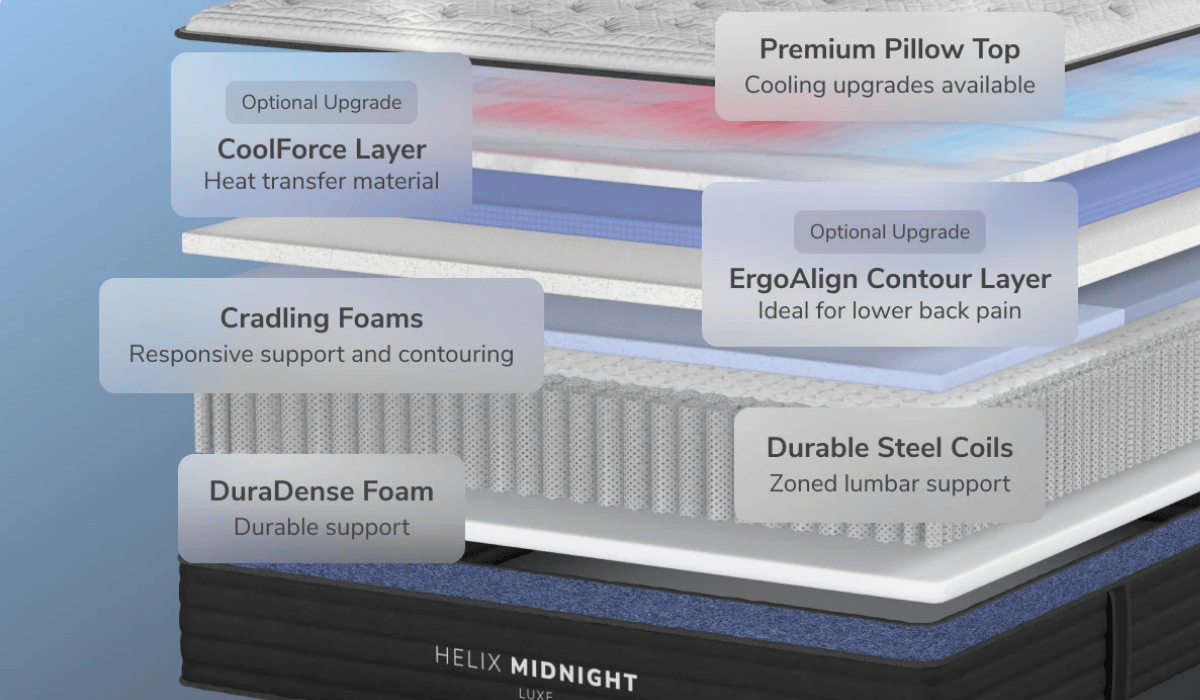
Comfort layer depth matters more than anything else on the spec sheet. I want three to four inches of give above the support core. A broad shoulder will bottom out on a hybrid with two inches of foam over coils, whatever firmness number the website puts on it. Each brand sets firmness on its own scale, so a 6 from one company and a 6 from another can feel nothing alike. Layer thickness is the number you can compare across brands.
Foam type comes next. Memory foam contours slowly and spreads pressure across a wide area, which suits a shoulder with one sharp tender spot. Latex and responsive polyfoam push back faster and make rolling over easier, which suits someone who switches sides through the night to rest a sore shoulder.
Zoning is worth checking on the layer diagram. Firmer coils through the midsection and softer ones under the shoulders let the shoulder sink while the hips stay level.
On coils versus all-foam, I lean toward hybrids for this group. Pocketed coils push back under the waist, hold the edges, and move air. All-foam beds isolate a partner’s movement well and cost less.
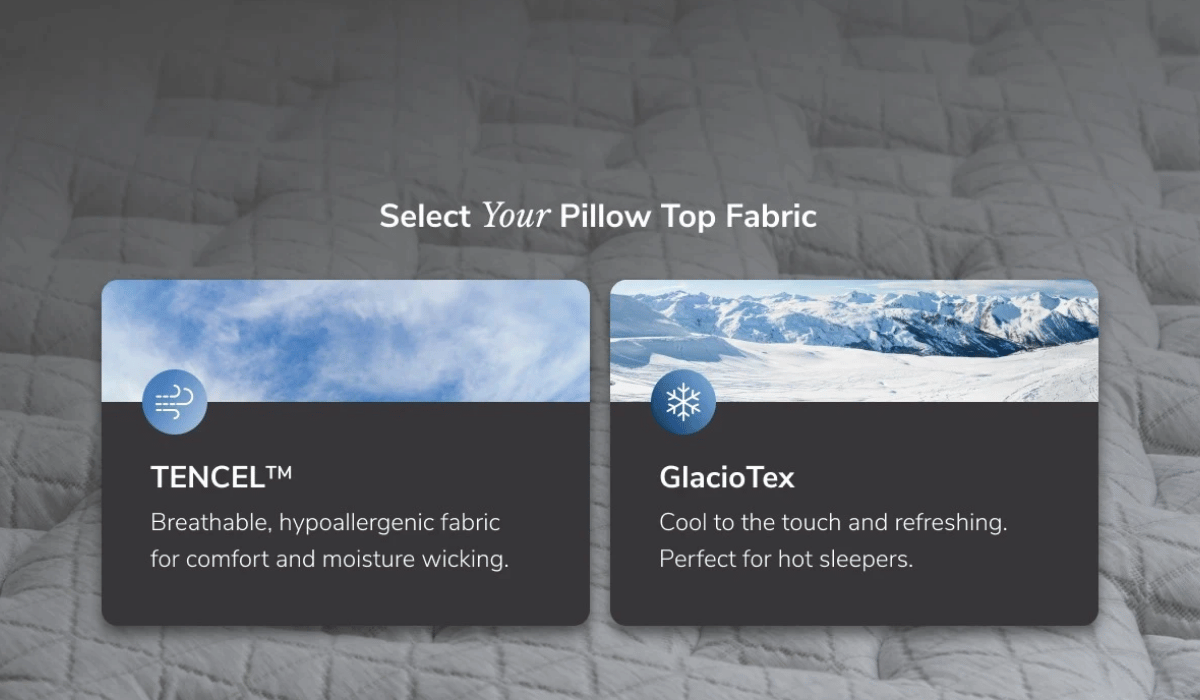
Heat is the other thing I ask about. Deep contouring puts more of your body in contact with foam, and foam holds heat. Down here on the Gulf Coast, where the humidity doesn’t break until October, a hot sleeper wakes up and rolls over, and every roll restarts the pressure on the shoulder. A coil base helps, and so does a phase-change or Tencel cover.
As a starting point for firmness by body weight: under 130 pounds, soft to medium-soft, around 4 to 5 out of 10. Between 130 and 230 pounds, medium, around 5 to 6.5. Above 230 pounds, medium-firm with a thick comfort layer, since a soft top compresses all the way and leaves you lying on the core.
Models I point people toward
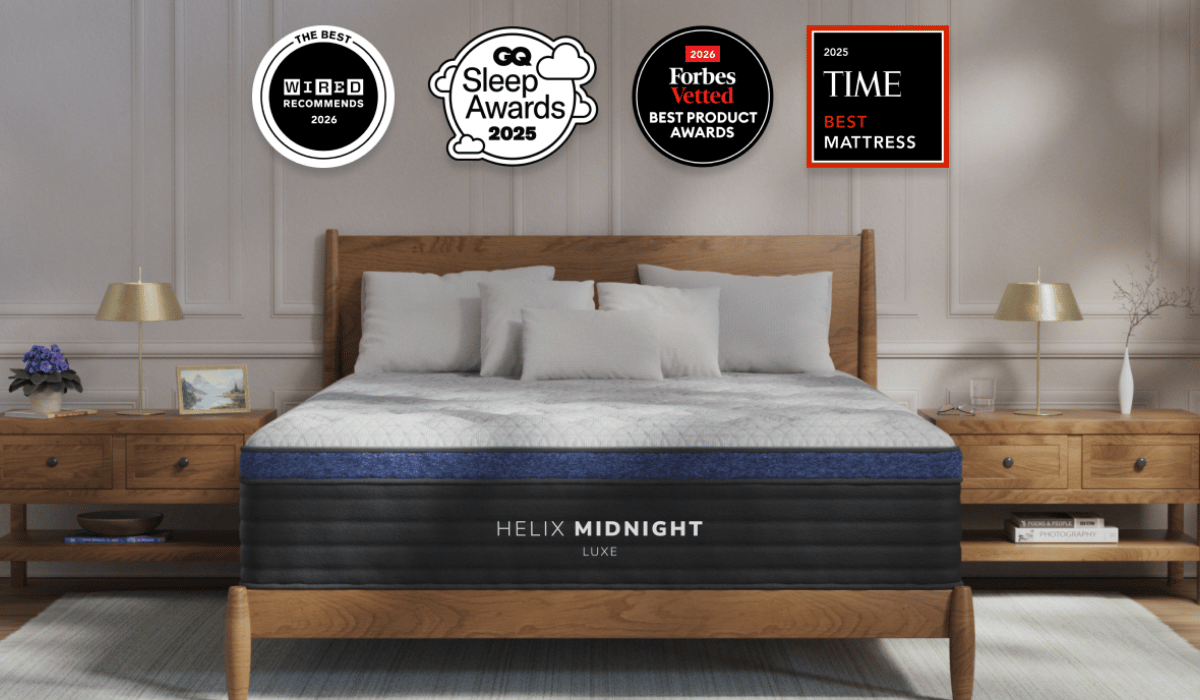
Helix Midnight Luxe. A medium hybrid, around 6 out of 10, built around side sleeping. It’s 13.5 inches tall, with a quilted pillow top, memory foam comfort layers, zoned pocketed coils, and a high-density foam base. The shoulder settles through the pillow top while the firmer coils under your waist hold the hips up. Reviewers report good pressure relief at the shoulders and hips and solid edge support. A queen weighs over 100 pounds, so plan on a second person or pay for the in-home setup, and expect a foam smell for about a week. Tencel cover is standard, but you could consider a GlacioTex cooling cover as an upgrade. The queen size is listed at $2,499 and sells closer to $1,874 on sale. You get 120 nights to try it, with a 30-night minimum, and a limited lifetime warranty. I would suggest this one for side sleepers between 130 and 230 pounds.
Helix Sunset Luxe. The same 13.5-inch build with a softer top, around 3 to 4 out of 10. That extra give matters under 130 pounds, where a medium surface often won’t let the shoulder sink far enough and the joint stays pressed against the firmer layers all night. Testers measure the deepest sinkage at the shoulders and hips of any Helix model, which is the point for a lighter frame, and the zoned coils underneath still keep the hips from dropping with it. You have the same cover options and the same shipping weight as the Midnight Luxe. The price for the queen size is about the same at $2,499, and the discounted price is closer to $1,874 on sale. You get 120 nights to try it, with a 30-night minimum, and a limited lifetime warranty. This mattress is best for side sleepers under 130 pounds, or anyone whose shoulder pressure hasn’t eased on a medium bed.
Titan Plus Elite. Brooklyn Bedding’s heavy-duty model, which is 14 inches tall and medium-firm. A thick comfort layer on a standard bed flattens under heavier weight and leaves you lying on the core, so this one runs a dual coil system, micro-coils stacked over individually encased coils, rated to hold 1,000 pounds and over across the mattress. The cooling pillow top counts for more at higher body weights, since deeper compression traps more heat against you. The queen is listed at $1,699 and sells closer to $1,274 on sale, which is the lowest price on this list. You get 120 nights to try it and a limited lifetime warranty. It’s best for sleepers over 250 pounds who need shoulder cushioning that holds its shape.
Saatva Classic. This is the innerspring option here, with a Euro pillow top over a coil-on-coil build instead of foam over coils. Make sure to choose the Plush Soft version for shoulder pressure, which rates around a 3 out of 10; the Luxury Firm and Firm versions sit too high for most side sleepers with a sore joint. It comes in two heights, 11.5 and 14.5 inches. The feel is bouncier than the hybrids above, so changing sides takes less effort, and people who dislike sinking into foam tend to prefer it. A queen runs about $1,795 with Saatva’s standard voucher. You get 365 nights to try it, the longest trial here, along with free in-home delivery and old mattress removal, and a lifetime warranty. This one is best for anyone who wants the most time to decide or prefers a traditional feel.
***Prices listed above are for a queen-size model as of Sept 2026, shown at list price and at the discounted prices currently advertised.
The pillow does half the work
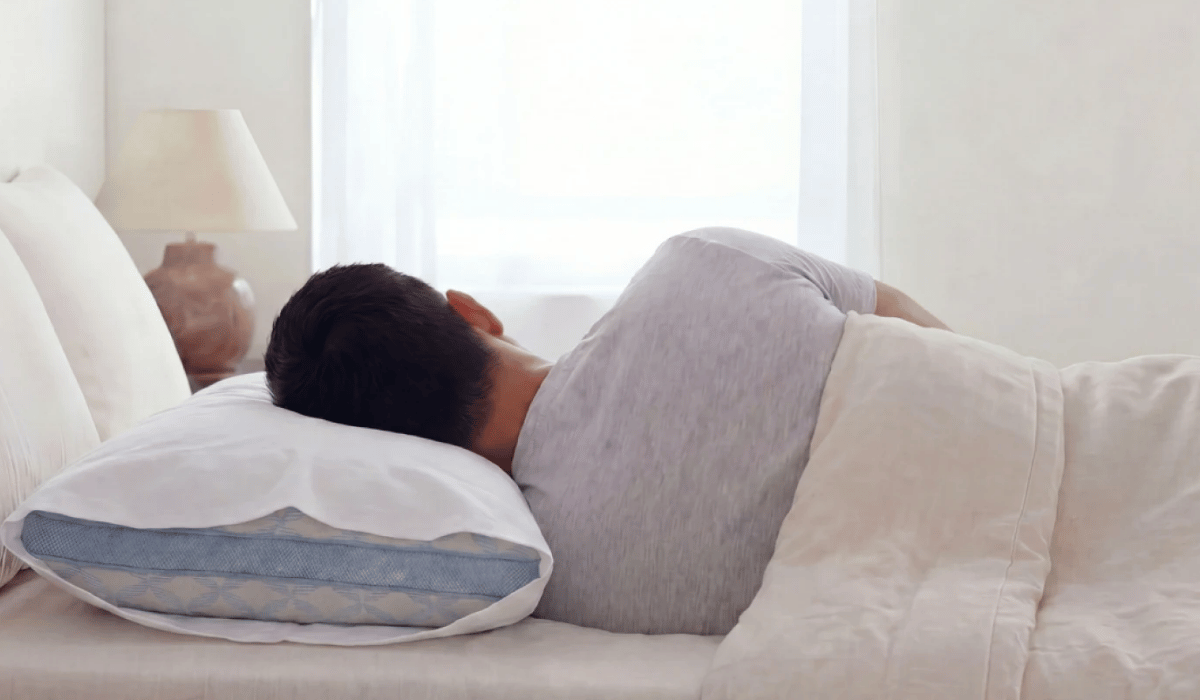
A mattress with the right give still won’t help much if the pillow is wrong, and the pillow is the first thing I ask about after the mattress. When you lie on your side, there’s a gap between your ear and the bed about as wide as your shoulder, usually four to six inches. The pillow has to fill that gap. A flat pillow lets your head tip down and strains the neck. One that’s too tall pushes the head up and rolls the shoulder forward under your chest. Either way, the shoulder stays loaded, and now your neck hurts too.
Buy the pillow when you buy the mattress, and change one thing at a time so you know what helped.
Here are two other things worth trying: Hug a body pillow so your top arm stops pulling the shoulder across your chest. And check your bed frame, since slats more than 3.5 inches apart let the comfort layer sag unevenly and undo the zoning you paid for.
How to judge a mattress during the trial
New foam sleeps firmer than broken-in foam, and it takes four to six weeks to settle. Week one doesn’t tell you much about week four, and night three is too early to decide anything.
Three things are worth watching, whatever mattress you end up with. First, whether your shoulder settles into the comfort layer without your hips following it down. Second, how much effort it takes to roll from your side to your back. Third, whether the edge holds when you sit to put on your shoes. Those are the three places where a side-sleeper mattress succeeds or fails.
Instead of going on first impressions, keep track of a couple of things: how long your morning stiffness lasts, and how many times you switch sides. Both should drop across weeks two through five. If nothing has changed by week six, the firmness is likely wrong, and you’re still inside the trial window to exchange it.
Common Questions
Is a firm mattress better for shoulder pain?
Not for a side sleeper. Firm beds suit back and stomach sleepers who need their hips held up. A sore shoulder on its side needs room to sink at the top of the bed, with support underneath.
Will a topper fix a mattress with no give?
Sometimes. A three-inch memory foam topper can add contouring to a bed that has a solid core and a thin comfort layer. It won’t rescue a mattress that’s already sagging through the middle, because the dip is still underneath.
How long before a new bed makes a difference?
Give it two to three weeks for the surface to break in, and another two for your body to stop bracing against old positions. I’d judge it at week five or six.
Does a soft mattress cause shoulder pain?
A soft top over a weak core can. The shoulder sinks, the torso follows, and the spine bends sideways all night. Softness over a firm coil base behaves differently, and that’s why I steer side sleepers toward hybrids.
Where I’d start

If you sleep on your side and your shoulder is the first thing you feel in the morning, look at the top few inches of your mattress before anything else. You want enough give for the shoulder to sink, enough support underneath to keep your spine straight, and a pillow that fills the gap between your shoulder and your ear. In the middle weight range, a medium hybrid like the Helix Midnight Luxe fits that description, with the softer Sunset Luxe for lighter frames and the Titan Plus Elite for heavier ones. Give any new bed five or six weeks before you judge it. If your shoulder still hurts after that, the mattress may not be the problem, and it’s time to have someone examine it.