


While his specialty is sports rehabilitation, his diverse patient base pulled him into an unexpected focus: sleep quality. From obstructive sleep apnea to chronic insomnia, Trevor has committed himself to understanding the conditions that steal restful nights, because sleep doesn’t discriminate. It affects everyone, from the stay-at-home parent squeezing in weekend workouts to the elite athlete chasing peak performance.
When he’s not treating patients or reviewing sleep solutions, Trevor is with his family, coaching soccer, or spending time at the beach. His best sleep hack? Keep a consistent wake-up time, even on weekends. Your body’s internal clock thrives on routine, and once it locks in, falling asleep starts to feel like the easy part.
- Tongue Strengthening Device vs Mouthguard: Which One Actually Fixes Snoring? - April 13, 2026
- Somnee vs Elemind: A Doctor’s Take on Electrical and Auditory Brain Modulation for Better Sleep - January 26, 2026
- Somnee Review: Does It Really Work? - January 6, 2026
If you’ve ever been down the rabbit hole of “how to stop snoring,” you’ve probably either been exposed to or tried out many different devices. Two categories of gadgets that I’ve spent the most time recommending to my patients in my clinical practice are mouthguards and tongue-strengthening devices. Both can address the problem at hand, however, they operate on completely different principles. Depending on your situation, one is likely a much better long-term bet than the other.
I’ve spent a lot of time talking to patients, clinicians, and people who’ve tried just about everything short of surgery to get a decent night’s sleep. What I’ve found is that most people pick a device based on price and social media ads, without really understanding what it does.
Before we dive into how each device works, however, let’s recap why they are even needed.
Snoring — What’s Actually Going Wrong
When you fall asleep, every muscle in your body starts to relax. That’s normal. The problem starts when the muscles around your throat, especially the tongue and soft palate, lose enough tone that gravity drags them backward into the airway. When they just vibrate, that’s what we call snoring. If they collapse far enough to actually cut off the airway, that’s Obstructive Sleep Apnea (OSA). When your airway gets blocked, your brain panics, wakes you up just enough to gasp a deep breath, and the cycle starts over. In some cases, this can happen up to 30 times every hour.
Either way, the root cause is the same: the muscles that are supposed to keep the airway open aren’t doing their job, and that’s where the two device categories diverge. Mouthguards try to physically hold things in position while you sleep, while tongue-focused devices try to make the muscles strong enough that they hold position on their own.
Mouthguards
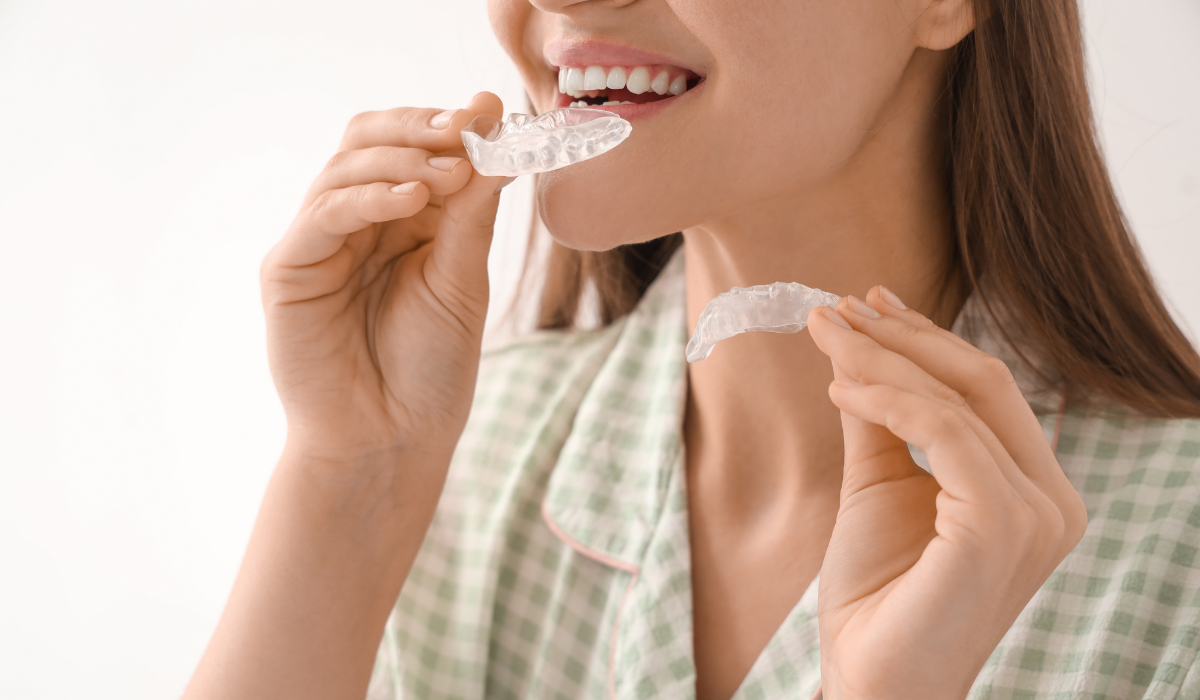
Mandibular advancement devices (MADs) look like athletic mouthguards that you mold to your teeth, and they work by pushing your lower jaw forward, which pulls the base of the tongue along with it and opens up some extra room in the airway.
For a lot of people, the relief is immediate. Pop it in, and the snoring drops that first night noticeably. It’s satisfying, especially to your partner, and it’s why these are so popular. But some catches tend to show up a few weeks or, if you’re lucky, a few months down the road.
Where Mouthguards Cause Trouble
- TMJ issues. Holding the jaw in a forward position for 7–8 hours a night, every night, puts stress on the joint capsule. A lot of people have developed jaw pain, clicking, or difficulty opening their mouth after long term use. Unfortunately, when TMJ dysfunction sets in, it can be really difficult to resolve.
- Bite changes. Over time, the sustained forward pressure can actually shift the way your teeth line up.
- They’re a nightly commitment. The first night you stop using one, snoring comes right back. The device isn’t changing anything structurally; it’s just holding things in place while it’s in your mouth.
- Comfort. Plenty of people can’t fall asleep with a hunk of plastic wedged between their teeth. Drooling, dry mouth, and the general feeling of having something foreign in your mouth all night are common complaints.
These are some of the most common concerns I hear from my patients. Even with all those considered, MADs have earned their spot at the table. Especially for someone who needs quick relief while they figure out a longer-term plan.
Tongue-Based Strengthening Devices
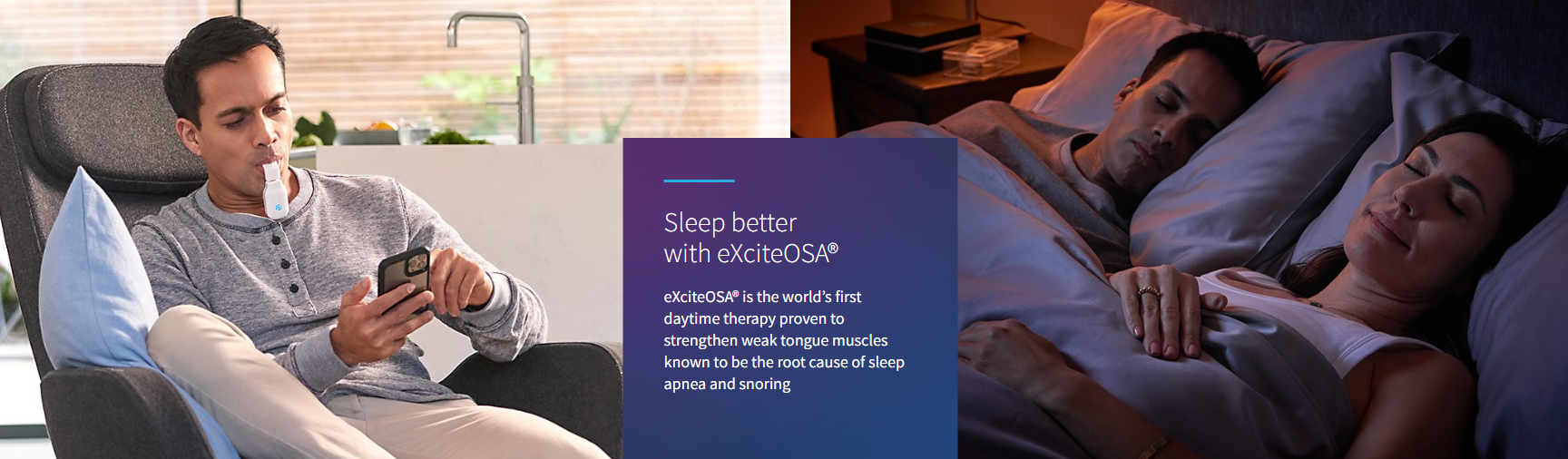
Tongue-focused devices take a fundamentally different approach. Instead of mechanically propping things open while you sleep, they work during the day to strengthen the muscles that are supposed to keep the airway open on their own. The idea is the same as physical therapy for a weak back — you train and tone the muscles, and the problem resolves because the underlying cause has been addressed.
The most established device in this category is the eXciteOSA, which is a clinically tested, FDA-cleared neuromuscular stimulation device. It sits around the tongue for 20 minutes during the DAY and delivers gentle electrical impulses that contract the tongue and soft palate muscles.
Tongue Devices Highlights
- Nothing worn at night. This is a big deal for a lot of people. You use the device during the day — while watching TV, doing dishes, catching up on emails — and sleep completely device-free.
- It targets the root cause. Rather than repositioning structures mechanically, it strengthens the glossopharyngeal muscles so they maintain tone on their own during sleep. The same rehabilitation principle that we’ve been using in musculoskeletal care for decades.
- No jaw side effects. Because it never touches the jaw or teeth, there’s zero risk of TMJ problems or bite changes. That alone provides a lot of value for anyone who’s already suffering from Temporomandibular Dysfunction (TMD) from braces or trauma.
- Clinically validated. Multiple randomized, controlled trials with objective, reproducible outcomes. Some of which showed a 79% average reduction in snoring time and a 50% average drop in AHI (the number of times breathing stops per hour) for OSA cases.
A Quick Comparison
Mechanism of Action
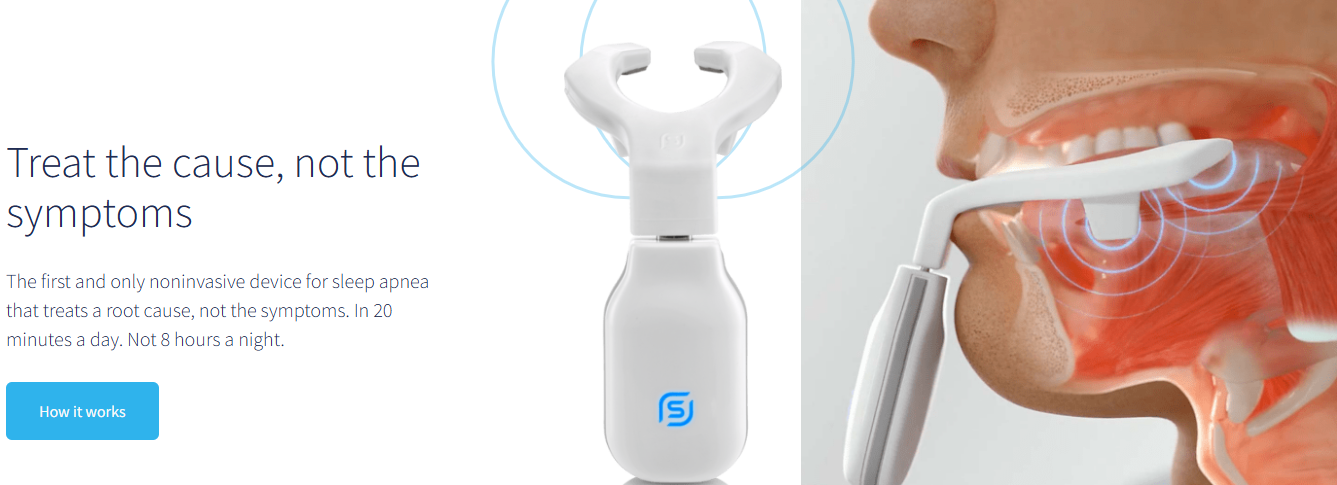
A mouthguard physically pushes your lower jaw forward to hold the airway open while you sleep. Tongue devices take the opposite approach — they use neuromuscular stimulation to strengthen the tongue and soft palate muscles, so they hold the airway open on their own. One braces against the problem; the other trains it.
When and How You Use It
Mouthguards go in every night and stay in all night. Meanwhile, tongue devices are typically used for 20 minutes during the day while you’re doing normal stuff (cooking, cleaning, or reading a book). Treatment is typically daily for six weeks, then tapers down to two or three maintenance sessions per week.
Side Effects and Risks
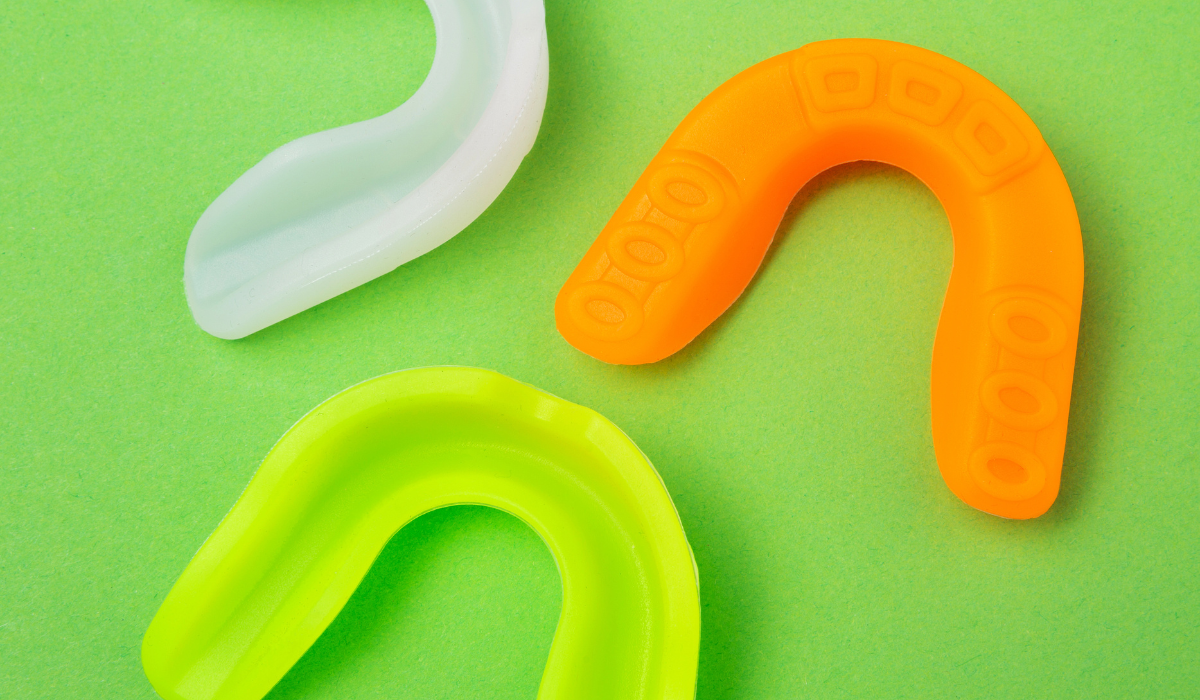
Extended mouthguard use has been linked to TMJ dysfunction and permanent bite changes in some users. Tongue strengthening devices have not been linked to any short or long-term side effects.
FDA
FDA clearance varies widely across mouthguard brands — some have it, many don’t, and the clinical evidence behind individual products is inconsistent.
How long you have to use it
Once you stop wearing a mouthguard, the snoring comes right back. With tongue-focused devices, though, the muscle strength you’ve built doesn’t just disappear. Clinical data show benefits persist well beyond the initial 6-week program, as long as you keep up minimal maintenance.
Root Cause vs. Symptom Management
A mouthguard manages the symptom. It holds things in position so they don’t collapse while you sleep, but it does nothing to make the airway muscles stronger. Tongue-focused devices rehabilitate the weak muscles that caused the problem in the first place. Like rehabbing muscles around the knee after a surgery — you don’t just wear a brace forever; you strengthen the movers and stabilizers so the function returns.
So, Which One Is Right for You?
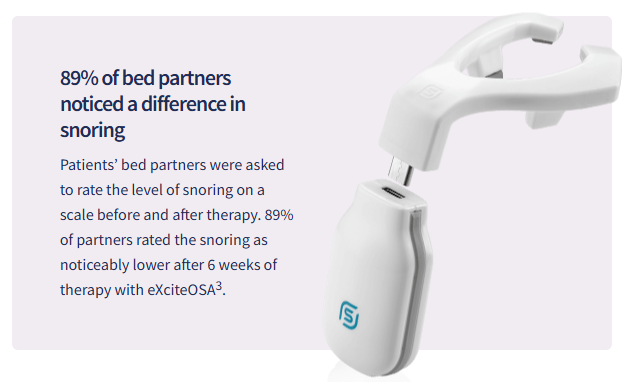
When my patients ask me which one I recommend, this is always my go-to response: If you need immediate, short-term relief (you’re sharing a hotel room next week, and your partner has threatened to sleep in the car) a mouthguard can help tonight. But if you’re looking for something that actually fixes the underlying problem without strapping hardware to your face every night, a tongue device like exciteOSA is what I would suggest. 20 minutes during the day, no nighttime wear, no jaw complications, and clinical data showing results that hold up over time.
As a conservative care clinician, I also recommend a stepped approach, starting with the least invasive and working up. Most of my patients will start with diagnostic mouth taping in weeks one and two to rule out simple nasal breathing issues, then I will give them a mouth exercise routine. If they still have problems, I would suggest getting an MADs to address the problem and get some better rest, then onto eXciteOSA for a regimented muscle strengthening device to enhance rehab for long-term results.
The Bottom Line
Mouthguards have been around for a long time, and they work — as long as you keep wearing them. Tongue-based neuromuscular training meanwhile specifically treats snoring and mild-to-moderate OSA the way good physical therapy addresses solutions: by making the muscles strong enough to do their job without external support. As far as investments go, your tongue is the best oral device you’ll ever own.