
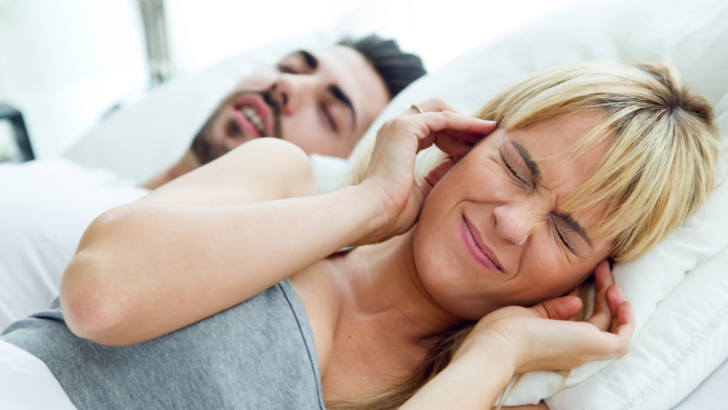
Snoring happens for a simple physical reason: airflow is getting partially blocked while you sleep.
When you fall asleep, the muscles in your throat relax. In some people, especially when they lie flat on their back, this relaxation allows the soft tissues in the throat to narrow the airway. Air still gets through, but it has to squeeze through a smaller space. That airflow causes vibrations, and those vibrations are what you hear as snoring.
That’s the basic mechanics. But why some people snore, and others don’t, usually comes down to a mix of factors, including:
- Sleeping position, especially back sleeping
- Nasal congestion or seasonal allergies
- Alcohol use before bed, which relaxes throat muscles further
- Extra weight around the neck or upper body
- Natural differences in airway shape and anatomy
One of the most effective and overlooked ways to reduce snoring is changing your sleep position. For many people, that means keeping the upper body slightly elevated instead of lying completely flat.
That’s where mattress toppers come into the conversation. Some can help with positioning, but only a small subset are actually designed in a way that influences snoring. Most are built for comfort, not airway support.
Can a Mattress Topper Actually Help with Snoring?
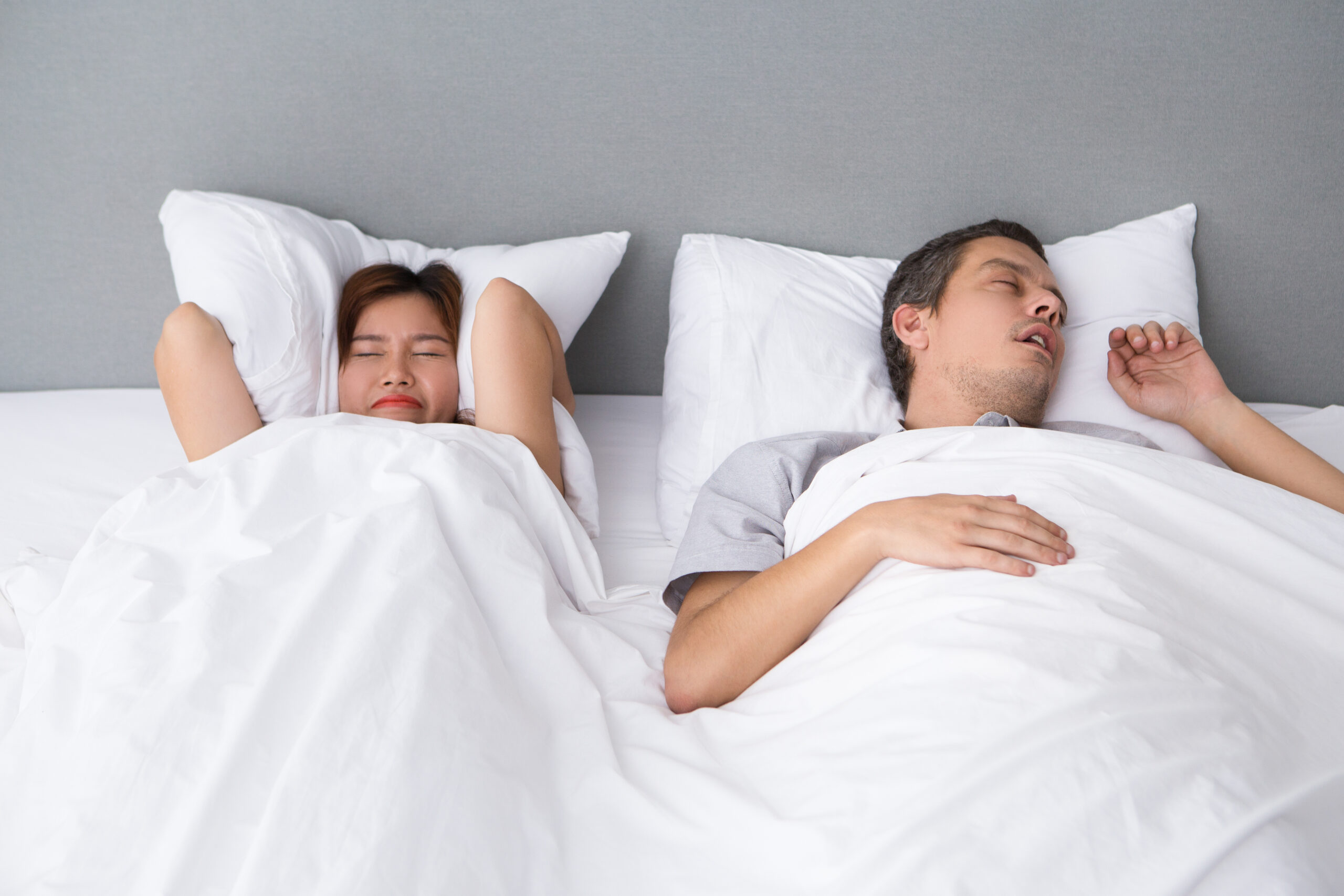
The short answer is yes, but only in specific situations.
A mattress topper can help if your snoring is positional. That means your snoring changes based on how you are lying down. For example, if you snore more when you’re flat on your back and less when you’re on your side or slightly elevated, then your airway is likely sensitive to position.
In those cases, elevation can make a real difference. Raising the upper body slightly may help:
- Keep the airway more open
- Reduce collapse of soft throat tissues
- Improve airflow through the nose and throat
This is why some sleep setups that include incline or contouring can reduce snoring for certain people. That said, it is important to set expectations correctly. A mattress topper is not a medical treatment, and it is not a cure for snoring in all cases.
A topper will not:
- Treat sleep apnea
- Correct structural airway issues
- Guarantee reduced snoring on its own
- Provide elevation unless it is specifically designed for it
The majority of mattress toppers are designed to change comfort, not sleeping angle. So even if you buy a high quality topper, it may do nothing for snoring if it does not change your head and torso position.
Who Actually Benefits Most From a Mattress Topper For Snoring?
A mattress topper is most likely to help if your snoring is position-dependent.
You may be a good candidate if:
- Your snoring is worse when you sleep on your back
- A partner has noticed you snore less on your side
- You wake up feeling okay, even though you snore
- You do not have a diagnosis of sleep apnea
In these cases, the issue is often more about airway positioning than a constant obstruction. That’s where small changes in elevation or surface support can sometimes reduce snoring.
On the other hand, a mattress topper is unlikely to help much if:
- You snore in every sleep position
- You regularly gasp, choke, or wake up suddenly at night
- You feel very tired during the day despite sleeping enough
Those patterns can point to something more complex than positioning alone, and a topper by itself usually will not be enough.
Now, let’s dive into the best mattress topper types and how they may be able to help you with your snoring:
1. Memory Foam Mattress Toppers

If your goal is to make your bed feel more comfortable, memory foam is often the first place people land. These toppers are known for their contouring feel. They mold to your body, soften pressure points, and can make an older or too-firm mattress feel noticeably more comfortable.
For a lot of sleepers, that alone improves sleep quality. You may fall asleep faster or wake up less from discomfort.
What they do well:
- Relieve pressure on hips, shoulders, and lower back
- Help support more neutral spinal alignment for some sleepers
- Improve overall comfort and “cradled” feel
What they do not do:
- Elevate your upper body
- Improve airway positioning
- Directly reduce snoring
While memory foam can make sleep more comfortable, it does not meaningfully change the angle of your head, neck, or upper airway. So even if you sleep better on it, the mechanics behind snoring usually stay the same.
2. Latex Mattress Toppers
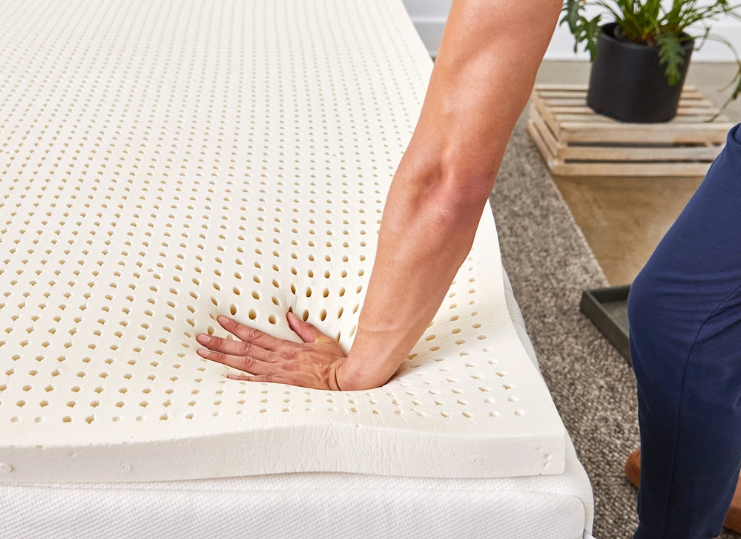
Latex toppers sit in a similar comfort category as memory foam, but they feel a bit different when you lie down. Instead of that slow, sinking contour, latex tends to feel more responsive and slightly springy. Many people also notice that it sleeps cooler and feels more “neutral” overall.
Because of that balance, latex is often chosen by sleepers who want comfort without feeling stuck in the mattress.
What they help with:
- Consistent support and long-term durability
- Better temperature regulation compared to many foam options
- A more responsive, slightly bouncy feel that makes movement easier in bed
What they do not do:
- Provide meaningful upper body elevation
- Change head or airway position during sleep
- Directly reduce snoring
Like memory foam, latex can absolutely improve how comfortable your bed feels, so for some people, better sleep quality can indirectly help things like restlessness or sleep disruption. But it still won’t angle you in a way that might reduce or stop your snoring.
3. Pillow-Top or Fiber-Fill Toppers
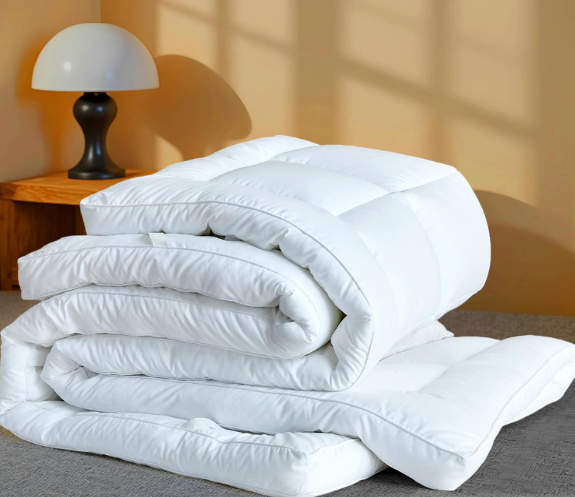
If what you want is a softer, more cushioned surface, pillow-top and fiber-fill toppers are usually the plushest option. They feel airy, fluffy, and noticeably softer than foam or latex. Think of them as adding a comfort layer rather than changing how the mattress behaves underneath you.
These are often chosen when a mattress feels too firm or too “direct,” and you want a more cloud-like surface. Still, these toppers are best thought of as comfort enhancers, not functional sleep-position tools.
What they help with:
- Softness
- Surface comfort
What they don’t do:
- Provide structural support
- Elevate the torso
- Reduce snoring
In some cases, very soft toppers can actually work against better sleep posture. If your body sinks too deeply, especially around the shoulders or midsection, it can flatten your alignment and make it easier for the airway to narrow. But for someone who already snores, that can be counterproductive.
4. Wedge or Inclined Mattress Toppers (Why Elevation Works)
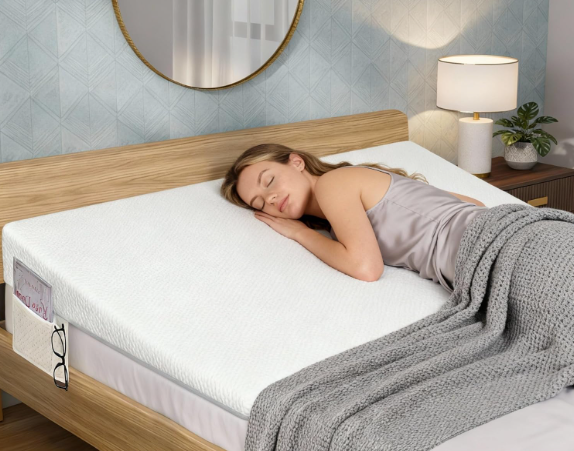
Wedge toppers are different from most other mattress toppers because they are not just about comfort. They are designed to change your sleeping angle by gently elevating your upper body, usually around five to 10 degrees.
So, what is actually happening when you lie flat?
Why Lying Flat Can Worsen Snoring
When you sleep on your back in a fully flat position:
- Gravity pulls soft tissues in the throat backward
- The airway can become narrower
- Airflow becomes more turbulent as it moves through a tighter space
That turbulence is what often leads to the vibration sound we recognize as snoring.
How Elevation Changes That
When your upper body is slightly elevated:
- The airway is less likely to collapse backward
- Soft tissue pressure on the airway is reduced
- Airflow can move more smoothly and steadily
Why Elevation Isn’t Always Enough
Snoring is rarely consistent night to night or even hour to hour. It can change based on a mix of factors that affect how open your airway is while you sleep, including:
- Sleep stage (you tend to snore more deeply during certain stages of sleep)
- Sleeping position
- Nasal congestion from allergies or illness
- Alcohol intake before bed, which relaxes throat muscles
Because of this variability, the amount of elevation that helps can also change.
Wedge toppers are often one of the first elevation-based solutions people try when they learn that snoring is tied to airway position. They can be effective, but their biggest limitation is precision. Because they offer a single fixed angle, they either work well for your body or they do not.
What About Side Sleeping?
Side sleeping is one of the most common recommendations for reducing snoring, and for good reason. For many people, it does help. When you sleep on your side, your airway is less likely to collapse backward, which can reduce the vibration that causes snoring.
The challenge is consistency, because most people do not stay in one position all night. Even if you fall asleep on your side, your body naturally shifts during sleep cycles. It is very common to end up on your back at some point without realizing it.
That is why side sleeping can be helpful, but not always reliable as a long-term solution on its own. It depends on how well you can maintain that position throughout the night.
5. Smart Sleep Systems that Actively Respond to Snoring
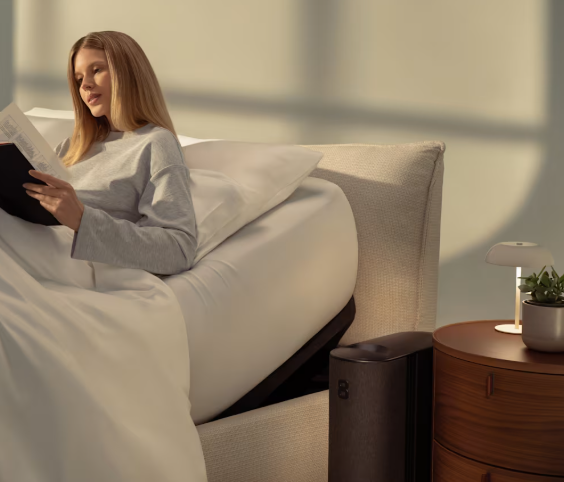
Smart sleep systems use built-in sensors to detect signs of snoring and can automatically adjust elevation to help reduce airway obstruction. Unlike a wedge topper, which stays at one angle all night, the system can react as your sleep changes without you doing anything.
A well-known example is the Eight Sleep Pod 5 Ultra, which combines a cover, hub, and adjustable base into a single system. It is currently one of the only options that brings together active snore detection and automatic elevation in one integrated setup.
Other brands offer pieces of this idea, but not the same level of integration. The Sleep Number 360 Smart Bed can detect snoring and automatically elevate the head of the bed, while the Tempur-Pedic Ergo Smart Base includes snore response features through its adjustable base. These options can be helpful, but they typically focus on one aspect of the solution rather than combining multiple systems into a single platform.
However, the Eight Sleep Pod 5 Ultra stands out as a more complete system because it layers multiple features together in one place.
Dynamic Elevation
A major advantage is flexibility. The Eight Sleep Pod 5 Ultra base can:
- Adjust elevation automatically
- Allow custom positioning
- Fine-tune settings over time
The “right” incline is not the same for everyone, and it can even vary from night to night depending on congestion, fatigue, or alcohol intake.
Temperature Regulation and Sleep Quality
Snoring is often linked to overall sleep quality, and temperature plays a major role in that.
Systems like the Eight Sleep Pod 5 Ultra can adjust bed temperature throughout the night, typically ranging from about 55 to 110 degrees Fahrenheit. Each side of the bed can also be controlled independently, which is helpful for couples with different sleep preferences.
Autopilot and Personalized Sleep Optimization
The Eight Sleep Pod 5 Ultra uses biometric data, sleep patterns, and environmental inputs to adjust your sleep conditions over time automatically. It’s not reliant on guesswork, and as the system learns your habits, it can become even more personalized.
Integrated Health and Sleep Tracking
Eight Sleep Pods also monitor key sleep and health signals, including:
- Heart rate
- Heart rate variability
- Respiratory rate
- Sleep stages
All of this is tracked without wearable devices. Over time, it can give a clearer picture of how your sleep quality and snoring patterns are changing, and whether adjustments are actually helping.
Durability and Past Concerns
If you’ve looked into smart sleep systems before, you’ve probably come across mentions of leaks in earlier versions of the Eight Sleep Pod. That concern is real, and it’s something the company has acknowledged openly.
The good news is that newer generations, including the Eight Sleep Pod 5 Ultra, were specifically redesigned to address those earlier issues. The updates focus on the parts of the system that matter most for durability over time.
Here’s what has changed:
- Tubing has been redesigned to reduce stress points where wear is most likely to occur
- Materials are more flexible and durable, allowing the system to better handle movement and pressure
- The system now manages internal pressure on a daily basis to help prevent buildup and strain
These improvements are aimed at making the system more reliable for long-term use, especially for people who plan to use it nightly. No sleep system is completely immune to wear over time, but the latest versions out there reflect a clear effort to improve durability and address the concerns that came from earlier models.
Important: When Is a Topper Not Enough?

Sometimes snoring goes beyond what a mattress or topper can fix. If you notice:
- Loud, persistent snoring
- Gasping, choking, or pauses in breathing
- Daytime fatigue despite sleeping enough
Then it may point to sleep apnea, which is a medical condition. A mattress topper or sleep system can help with positioning, but it is not a replacement for proper diagnosis or treatment with a medical professional.
A Practical Way to Approach Your Decision
If you’re finding it difficult to decide between the various options, it may be helpful to ask yourself a few questions:
- Is my snoring clearly positional?
- Am I comfortable sleeping at an incline?
- Do I want a simple solution or something more adaptive?
If your snoring is mild, a basic elevation solution may be all you need. If you’ve already tried simple approaches without success, you may want to consider options that offer more flexibility and responsiveness, such as Sleep Eight’s Pod 5 Ultra.
Start with a lower-cost option to see if elevation helps. If it does, you can progress to a more advanced setup if it feels worth it, based on your experience. There’s no right or wrong answer. You have to see how your body responds rather than just look at a product’s features; then your decisions will lead to a better outcome.