
- Best Cooling Blankets for Hot Sleepers in 2026 - September 18, 2026
- Best Organic Mattress: What the Certifications Actually Mean and Which Mattresses Earn Them - September 7, 2026
- Helix vs. Sealy: Which Mattress and Shopping Experience Is Right for You? - September 7, 2026
Your bed isn’t working. Maybe you are waking up drenched. Maybe your back is shot every morning. Either way, you have a budget and a decision to make, but it is less obvious than it looks. This is because a cooling system and a new mattress do not fix the same thing. Buy the wrong one, and you will still have the original problems. Just now you will have less money and something new to return.
What’s Your Big Problem?
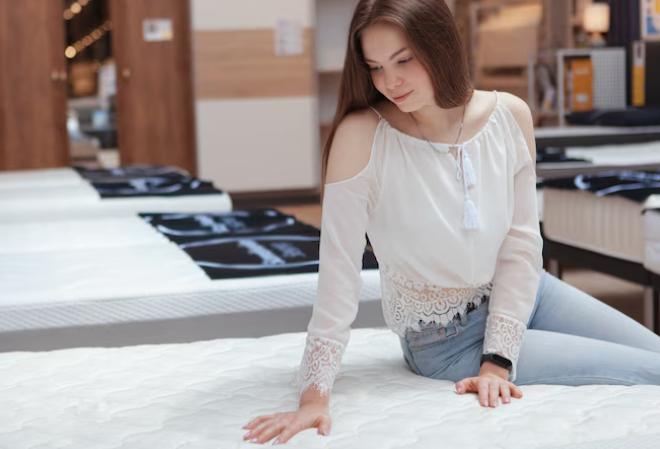
That is the real question. People jump straight to researching products when the smarter move is to spend a few minutes diagnosing the actual issue first. A hot sleeper on a ten-year-old mattress has two problems, and solving them in the wrong order is expensive. So what is actually waking you up?
If it is the heat and you are sweating or kicking off your covers or waking up at 2am unable to get comfortable, then you have a temperature problem. The mattress in this situation is not really the villain here. Most beds trap body heat to some degree, foam especially, and once the surface warms up, it stays warm. Structural support has nothing to do with it.
If it is pain and your lower back, hips, and shoulders loosen up after you have been upright for twenty minutes, then you have a support problem. You might have foam compressed past it useful density, coils that have lost tension, or a surface with visible body impressions. Cooling technology is not going to fix any of that,
If you are one of the many people that are experiencing both of these problems, then there is an order that you need to fix these issues.
The Case for a New Mattress
Mattresses have a real lifespan, and most people underestimate how much a deteriorating one affects sleep quality. Seven to ten years is the general window before support starts breaking down. Some last longer with better materials and care; many do not.
The signs are hard to miss once you know what you are looking for. You sink in and feel the coils. You wake up stiff but feel noticeable better after being upright for a while. There are visual impressions on the surface where you normally sleep. None of that is fixable with a topper, a cover, or any kind of cooling technology. The structural layer is gone, and the only real way to fix it is to replace it.
When you are shopping, construction type shapes the outcome more than most buyers realize. Memory foam is popular for its pressure relief and motion isolation, which is especially beneficial for couples with different sleep styles. The downside is that they retain more heat than almost any other material. If temperature is even a secondary concern, a hybrid (pocketed coils plus foam comfort layers) or latex is worth considering, as both breathe significantly better.
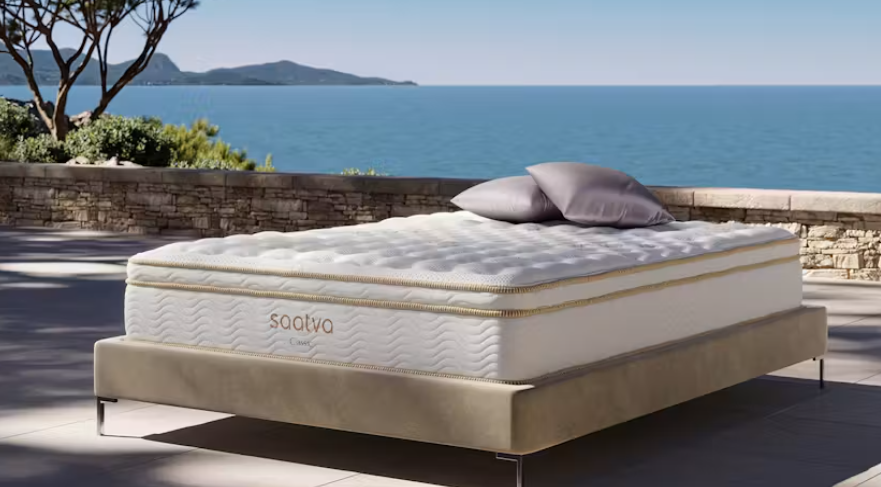
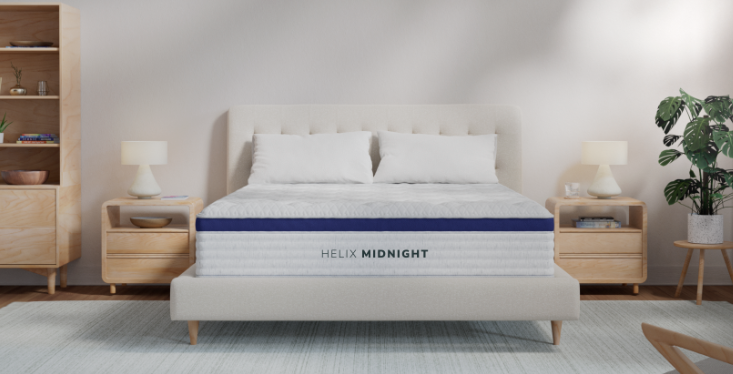
For hot sleepers, the Bear Elite Hybrid with Celliant cover consistently earns top marks for temperature regulation in independent testing. The Saatva Classic is another strong all-around option with better trial and warranty terms, allowing buyers a year-long sleep trial with free white-glove delivery. Helix has a solid range of hybrids with different feels by sleep position. Most of these brands offer 100- to 120-night sleep trials, which is an important metric to pay attention to because it takes your body time to adjust to a new sleeping surface. How a mattress feels in a show room tells you almost nothing about how your body is going to feel sleeping on it after a week.
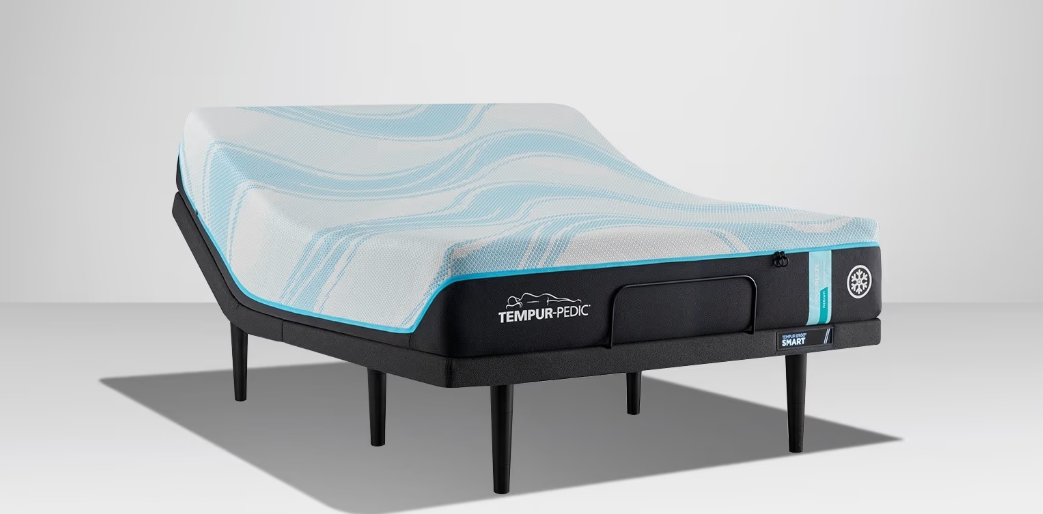
When you start looking at the prices, a quality mid-range queen bed typically runs between $1,000 and $1,800. Cooling-focused construction tends to push towards the higher end. At the premium tier, the TEMPUR-Breeze ProBreeze, for example, a queen currently will set you back $3,899.
Even the best passive cooling mattresses have a higher price point. Gel foam, phase-change materials, and breathable covers all work by absorbing the body heat and releasing it. They moderate temperature rather than control it. For a lot of people, that is sufficient, especially combined with good airflow and breathable bedding. For serious hot sleepers, or couples with very different preferences, it often is not.
The Case for a Cooling System
Active cooling works differently. Instead of relying on materials to absorb heat, water-based systems continuously circulate temperature-controlled water through tubing in a cover that sits over your existing mattress. The surface temperature is maintained, not just moderated.
A few brands play in this space. The Chilipad 2.0 (formerly the Dock Pro sold by sleep.me) is the main alternative that is worth considering. It features a dual-zone “We” version that starts at $1,699 for a queen and has no subscription required as of July 2026. It holds a set temperature you program in rather than adjusting dynamically through the night, which is fine if all you want is reliable cooling without the data layer. If budget is a constraint or you don’t care about sleep tracking, it could be the solution for you,
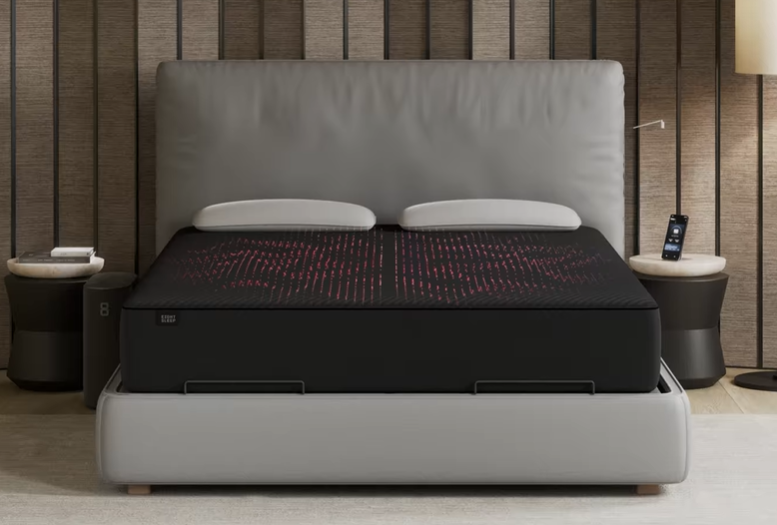
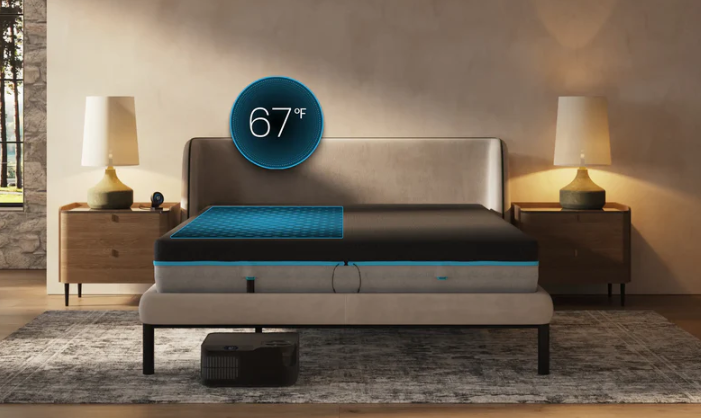
The Eight Sleep Pod 5 is the more capable, more expensive version of the concept. It runs two completely independent zones anywhere from 55℉ to 110℉ per side and adjusts automatically based on biometrics and sleep stage rather than holding a fixed setting. A couple where one person runs cold and the other runs hot can both sleep at their actual preferred temperature without negotiating. No mattress is able to do that, regardless of its cooling technology or price.
The other thing that sets the Pod apart is what it tracks. Every night it is logging heart rate, HRV, respiratory rate, time in deep sleep, and snoring events, and these are data that accumulates and surface patterns that you would not catch by feel. For athletes, people managing health proactively, or anyone who’s been waking up tired without a clear reason, that data stream has immense value. It’s a different category of product than just a mattress.
The Pod 5 Cover starts at $2,749 for a queen. It also requires an Autopilot subscription for the first twelve months for $17 to $33 per month depending on the tier, which is what powers the automatic adjustments and sleep tracking. You can cancel after year one, but without the software, the hardware functions manually. Three years all in, with a mid-tier plan, runs roughly $3,600 to $3,900. That’s more than the cost of many new mattresses, but it may be the right solution depending on your problem.
Which Situation Fits Yours
If you wake up hot, but your mattress is structurally fine, then you have the clearest case for a cooling system. Mid-range mattresses won’t reliably solve a serious heat problem without stepping up to cooling-specific construction. Active cooling addresses the actual mechanism. If budget is a concern, the Chillpad 2.0 is worth looking at before committing to the Pod’s price point.
If you wake up sore with an aging mattress, then you need to buy a new mattress. This is the more urgent issue, and leaving it unaddressed has real consequences for your body over time. Match the construction to your sleep position. If you are a side sleeper, then you typically need more pressure relief. If you are a back/stomach sleeper, you typically need firmer support. Also make sure you do not skip the trial period.
If you and your partner sleep at different temperatures, then a two-zone active cooling system is the only answer that solves both sides independently. This is the scenario where the Pod 5’s dual-zone setup has no equivalent in the mattress world.
If you have both the support and temperature problems, then you need to focus on the mattress first. Putting a cooling system on a structurally failing bed means that even though you will sleep at the right temperature, you will still wake up in pain. First and foremost, you need to get a solid foundation, let it break in properly, and then revisit the heat question if it persists.
If you have already tried a cooling topper and it did not move the needle, then you need to try a different cooling mechanism. Passive and Active Cooling are different systems, not just different strengths of the same thing. If gel foam or a phase-change pad didn’t help, adding more passive material probably won’t help either. An active system is the next logical step.
If your mattress is fine and you are still not recovering well each night, then temperature might be a factor even if you don’t feel obviously hot. Sleep stage disruption from heat often happens without fully waking you up. Biometric tracking over time, looking at HRV trends, resting heart rates, and deep sleep duration, can inform you whether temperature is the culprit. Only investing in a new mattress gives you none of that data to help you understand what is happening with your body.
One Thing Neither Fixes

It is worth laying out plainly; if the problems that are causing you poor sleep are stress, alcohol, late screens, or chronically inconsistent sleep timing, no upgrades for your mattress are going to fix the problem. You might notice some marginal improvement from sleeping cooler or without the pressure points of a worn-out bed, but the underlying issue stays put. Buying a $2,700 cooling system on top of a sleep schedule that’s fundamentally broken is an expensive way to learn that. A good bed is one variable in a working sleep setup, not a substitute for addressing the others.
In Summary
The path forward depends on the answer to one honest question: what is actually broken?
For a heat problem on a solid mattress, the tool that you need is a device with active cooling. The Eight Sleep Pod 5 is the strongest option in the category. It is especially effective for couples with mismatched temperature preferences, as it is the only one that genuinely solves both sides at once. The Chillpad 2.0 is the right choice for consumers that need active cooling, but at a lower price point before committing.
Support problems on an aging mattress require a mattress replacement. Make sure to focus on the construction type that is best for your sleep position and use the entire trial period seriously. The Bear Elite Hybrid, Saatva Classic, and Helix lineup are all solid starting points. Hybrid construction mattresses tend to sleep cooler than foam mattresses across the board.
Sleepers struggling with both heat and support need to fix the mattress problem first and then reassess from having a solid foundation. No matter what, diagnose before you spend.