
- How Accurate Is Eight Sleep Pod 6 Tracking? What the Data Can Actually Tell You - November 20, 2026
- The Best Water-Cooled Mattress Pads for Hot Sleepers - November 16, 2026
- What Are the Most Comfortable Mattress Brands? - November 9, 2026
My wife and I have been sleeping on the Eight Sleep Pod 6 for over a month now, and the automatic temperature adjustments have become part of our nightly routine. I also like being able to wake up and see how I slept, from my heart rate and breathing patterns to how much time I spent in each sleep stage, without having to wear a watch or ring to bed.
I’ve gotten into the habit of checking the Eight Sleep app in the morning, and most of the time, the numbers give me a pretty good picture of the night before. But occasionally I’ll see a good sleep score after a night when I didn’t feel particularly rested.
So how accurate is Eight Sleep Pod 6 tracking, especially when it comes to things like deep sleep, REM sleep, and the time you spend awake during the night?
What Does the Eight Sleep Pod 6 Track?
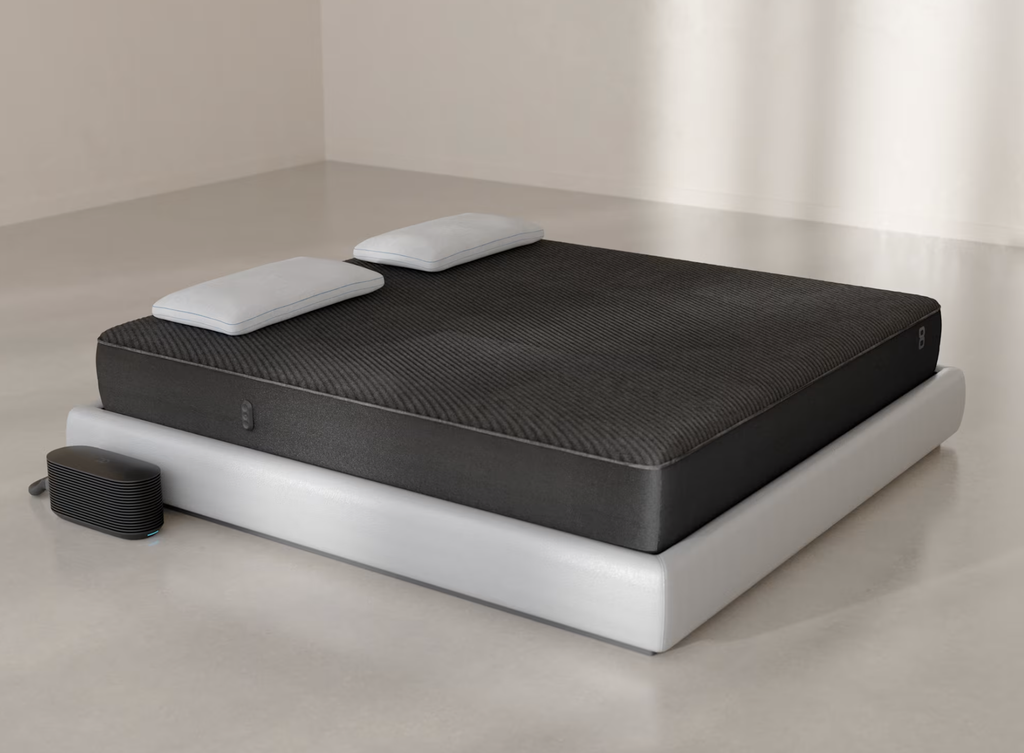
The Pod 6 collects several types of sleep and biometric data, which you can review in the Eight Sleep app each morning.
- Sleep duration and timing: How long you slept, when you fell asleep and woke up, and periods of wakefulness during the night.
- Sleep stages: Estimates of light sleep, deep sleep, and REM sleep. Light sleep accounts for much of a typical night, deep sleep is associated with physical restoration, and REM plays an important role in memory and emotional processing.
- Heart rate: Your resting heart rate during sleep, which can change with illness, stress, exercise, and recovery.
- Heart rate variability (HRV): The variation in time between heartbeats, often used to understand how your body is responding to stress and recovery.
- Respiratory rate: How many breaths you take per minute while sleeping, which can help identify changes from your usual breathing patterns.
- Sleep Fitness Score: A summary of your night’s sleep based on several measurements, designed to make the information easier to interpret.
The Sleep Fitness Score is helpful for comparing nights, although the individual measurements give you a better idea of what contributed to the score. The Pod also uses its measurements to help Autopilot adjust your bed temperature throughout the night.
How Does the Pod 6 Track Your Sleep?
The Pod is a cover that fits over your existing mattress, with biometric sensors positioned under the upper body that pick up tiny mechanical movements associated with breathing and heartbeats. Software interprets those signals to estimate heart rate, HRV, respiratory rate, sleep timing, and sleep stages.
The Pod 5 used one primary biometric sensor on each side of the bed. The Pod 6 has nine per side, for 18 total. The expanded array helps distinguish biometric signals when people move closer together or share their bed with a child or pet.
Separating those signals is particularly challenging in a shared bed, where movement from one sleeper can interfere with measurements from the other. Eight Sleep says it tested the newer system against clinical references, including electrocardiograms (ECGs) and sleep studies. The results showed that the Pod 6’s heart rate, heart rate variability, and respiratory rate measurements closely aligned with those from medical-grade devices, while the new sensors also improved sleep-stage classification.
How Accurate Are Heart Rate and HRV Measurements?
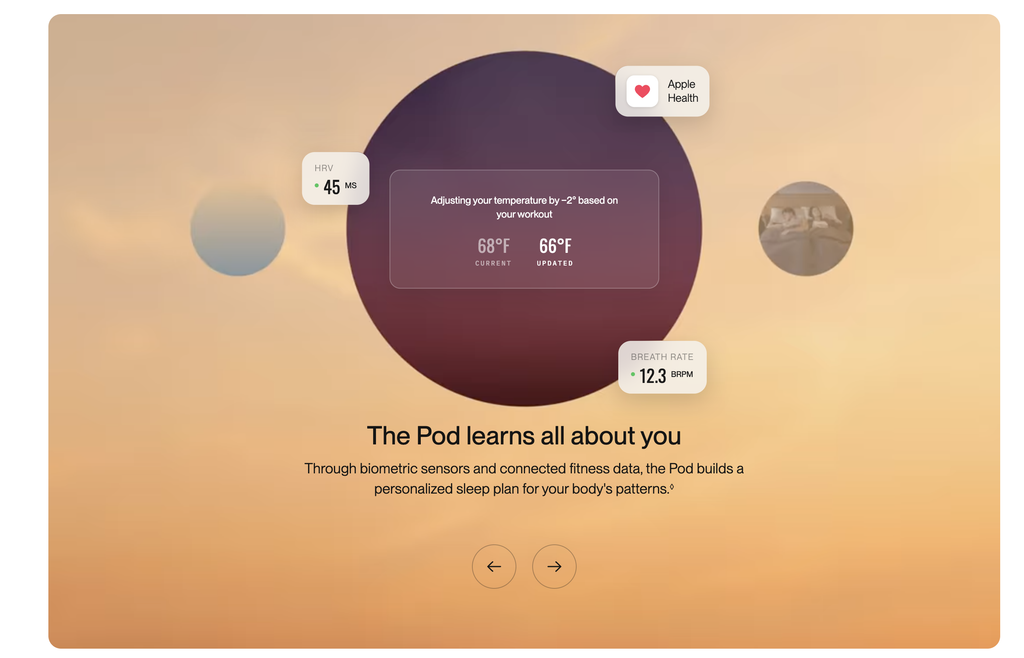
Heart rate is one of the best measurements in Eight Sleep’s tracking system. In a 2023 study involving 163 participants across 474 nights, Eight Sleep compared its heart-rate readings with electrocardiogram (ECG) measurements, which record the heart’s electrical activity. The results showed 99% accuracy for sleeping heart rate. The study used an earlier version of Eight Sleep’s tracking technology, while the Pod 6 has since introduced updated algorithms and additional sensors.
Heart rate variability, or HRV, measures the small differences in time between consecutive heartbeats. Even when your heart rate is steady, those intervals aren’t perfectly uniform. HRV can offer insight into how your body is responding to exercise, stress, illness, and recovery. Your own baseline is generally more informative than comparing your numbers with someone else’s.
A lower-than-usual HRV can sometimes accompany physical stress or poor recovery, while a return toward your normal range may indicate that your body is recovering.
Eight Sleep calculates HRV using a method called RMSSD, with results expressed in milliseconds. In the same validation study, its readings differed from the ECG reference by an average of 5.7 milliseconds. That’s a relatively small difference, although its importance depends on your typical HRV range.
I find these measurements particularly interesting after harder workouts or nights when I haven’t slept well. If my resting heart rate is running higher than usual or my HRV has dropped, I can look at what I’ve been doing over the past few days and see whether there’s a pattern. Over time, those trends give me more information than any single night’s numbers.
How Accurate Is Pod 6 Sleep Stage and Wake Tracking?
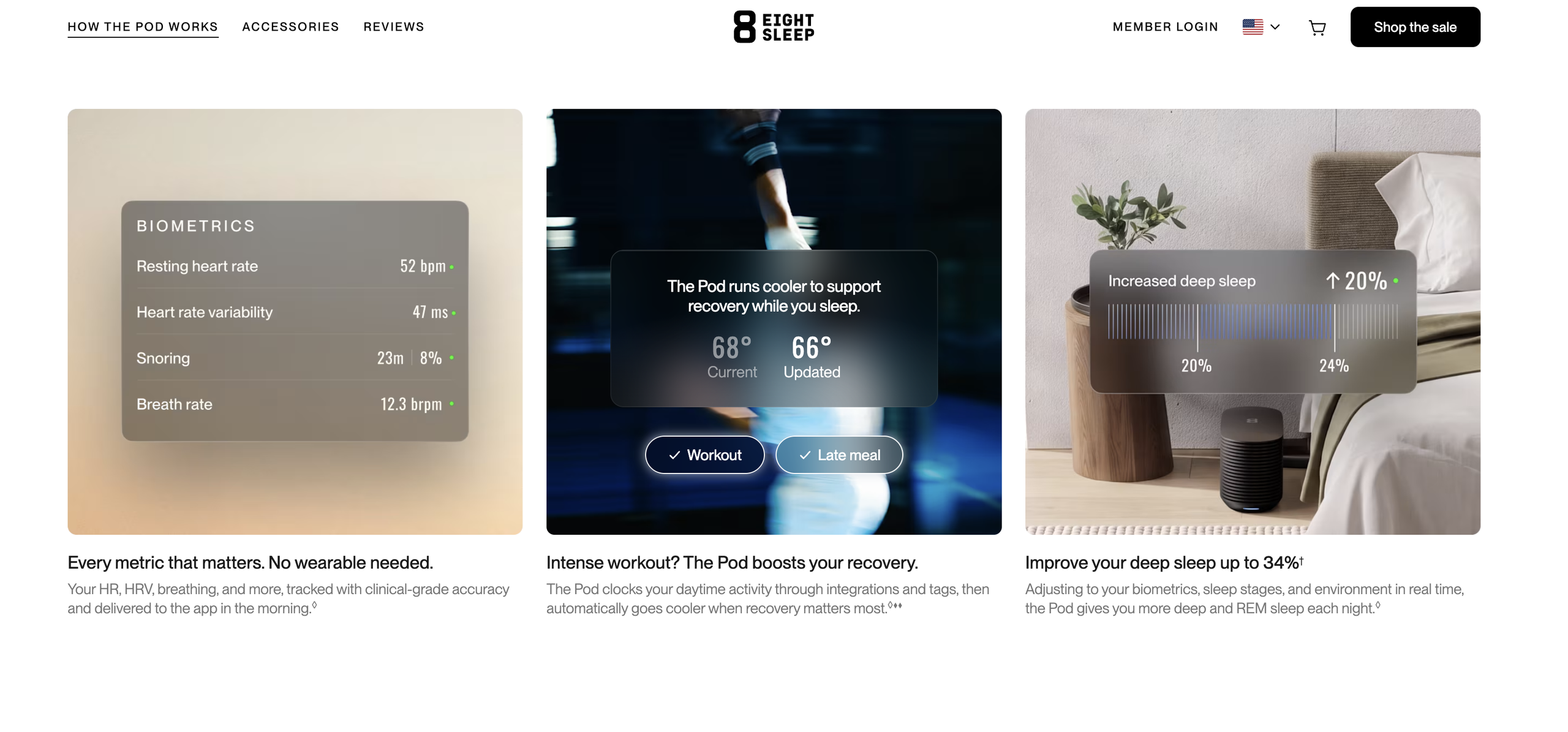
Sleep stages are the most tempting part of the report to take literally. You wake up and see specific totals for light sleep, deep sleep, and REM, sometimes down to the minute. But the Pod estimates those stages from physiological signals and movement; it doesn’t measure brain activity directly.
In a sleep laboratory, polysomnography combines brain-wave recordings with other measurements to identify sleep stages. That’s the reference standard. Consumer trackers, whether they’re worn or built into a bed, have to infer the stages from other signals. Even a tracker that recognizes most of the night correctly can misclassify individual stretches of sleep.
Eight Sleep’s earlier sleep-tracking research found 78% agreement with clinical sleep-stage measurements, meaning its system correctly identified the sleep stage about three-quarters of the time. The Pod 6 builds on that technology with updated algorithms and a more extensive sensor array, which Eight Sleep has also tested against clinical sleep-study equipment. The results showed improved sleep-stage classification, although Eight Sleep has not published an updated accuracy percentage for the Pod 6 in its validation report.
Recognizing when someone is awake presents another challenge. If you’re reading, meditating, or simply lying quietly in bed, your movements and physiological signals may resemble sleep closely enough that a tracker mistakes some of that time for sleeping. Research on consumer sleep devices generally has found that detecting sleep is often easier than identifying quiet periods of wakefulness.
For someone who spends half an hour reading before bed or lies awake without moving much, the reported sleep-onset time and total sleep duration may not reflect every minute accurately. The same issue can affect brief awakenings during the night. I find the stage breakdown interesting, particularly when I can see how a night with multiple interruptions differs from one when I slept straight through.
What About Breathing Rate and Other Health Data?
Respiratory rate is another area where Eight Sleep has demonstrated strong tracking accuracy. In a 2022 study covering 367 nights, the company compared its breathing-rate measurements with a respiratory monitoring belt and reported 98% accuracy. The average difference was just 0.28 breaths per minute, which means the readings were generally very close to the reference measurements.
The Health Check feature is available with the Elite Autopilot membership, which costs $399 annually. It monitors longer-term cardiovascular and respiratory patterns, typically taking two to four weeks to establish your personal baseline before identifying unusual changes in measurements like resting heart rate and breathing rate. A persistent change can be a reason to take a closer look at your health, especially when it differs from your usual patterns.
The Pod isn’t a medical device. It can’t diagnose conditions like sleep apnea or heart rhythm problems, and normal readings don’t necessarily mean everything is fine. If you’re experiencing symptoms like breathing interruptions during sleep, unusual daytime fatigue, or an irregular heartbeat, it’s best to discuss them with your doctor.
Autopilot Temperature Control
Autopilot uses biometric measurements, sleep patterns, and your temperature preferences to make automatic adjustments throughout the night. As it learns your routine, it can adjust the heating and cooling on each side of the bed without requiring you to change the settings manually.
At home, we’ve settled into a routine where the bed starts warm and gradually cools as the night progresses. I prefer sleeping in a cooler room, while my wife sometimes needs extra cooling during a hot flash. Having independent temperature controls on each side means we can both stay comfortable without compromising on our settings.
I’ve seen Autopilot make dozens of adjustments overnight, and most nights we don’t have to touch the controls. I rarely wake up because I’m too hot or too cold anymore, which used to happen pretty regularly before we got the Pod.
For me, temperature control is still the biggest reason to own the Pod. The sleep tracking gives me more insight into how I’m sleeping, and Autopilot uses that information to help keep the bed comfortable throughout the night.
How To Get More From Your Pod 6 Tracking
Give the system time to establish your normal patterns before drawing conclusions. A week of poor sleep can be revealing, but it also helps to consider whether you were sick, traveling, drinking alcohol, training harder, or dealing with an unusually stressful stretch. Any one of those could affect the measurements as well as the way you feel.
If your sleep report doesn’t match your experience, start with what you remember about the night. Spending time reading before falling asleep, waking frequently, or lying awake in the morning could explain why the app reports more sleep than you believe you got. A single disagreement isn’t necessarily a reason to change your temperature settings or bedtime routine.
If the same discrepancy keeps appearing, compare several nights and look at the individual measurements instead of relying entirely on the Sleep Fitness Score. You may find that your sleep duration is fairly consistent while the stage estimates fluctuate, or that changes in resting heart rate coincide with nights when you feel less rested.
Check that the Cover is fitted snugly and that your profile is assigned to the correct side. If you regularly sleep close to your partner or have a pet in the bed, the Pod 6’s denser sensor array is intended to reduce interference.
Access to automatic temperature adjustments and the full sleep-reporting experience requires an Autopilot membership, but without an active paid membership, you can still adjust the temperature manually on either side of the bed.
Is Eight Sleep Pod 6 Tracking Accurate Enough To Rely On?
For everyday sleep tracking, the Pod 6 does a good job of giving me a clear picture of my overnight patterns. Heart rate, HRV, and breathing measurements are particularly informative, and the sleep-stage breakdown adds context to how much time I’m spending asleep and when I’m waking up.
The biggest limitation is distinguishing sleep from quiet wakefulness, especially if you spend time reading or lying awake in bed. That’s something to keep in mind when looking at your total sleep time or the exact number of minutes spent in each stage.
After more than a month with the Pod 6, I’m happy with the tracking and how it fits into our nightly routine. Temperature control is still the feature I appreciate most, but the sleep data has given me another way to understand how I’m resting and recovering.