


- Eight Sleep Pod 6 vs Oura Ring 5 Sleep Tracking Accuracy: What I Found Using Both - October 28, 2026
- Eight Sleep Pod 6 vs Pod 5: Specs, Price, and What’s Different - October 14, 2026
- Mellow Body Pillow Alternatives - August 24, 2026
I’ve had my Oura Ring for over six months. I bought it to understand more about my sleep and help me figure out why I was exhausted all the time.
Last month I also got the Eight Sleep Pod 6, and I was curious how tracking my sleep with it would compare to my Oura Ring. Over this last month of using both, I’ve found that some mornings the two line up pretty closely, and some mornings they’re far apart. Let’s see where the Eight Sleep Pod 6 and Oura Ring 5 matched, where they didn’t, and what I think might explain the differences.
A couple of quick notes before we start. Neither of these is a medical device, and neither is intended to diagnose, treat, or prevent anything. This also isn’t an official lab test; this is based on my actual sleep numbers and research. The only way to get truly accurate sleep data is a clinical sleep study ordered by a doctor, where you sleep hooked up to sensors that read your brain activity.
How Each One Tracks Your Sleep
It’s not a perfectly fair comparison, because they collect data in completely different ways. The Oura Ring is a wearable, and the Eight Sleep Pod 6 is a cover that goes over your mattress. It’s not apples-to-apples, but they do track a lot of the same things.
Since they’re both fairly new, there isn’t much independent lab testing on the Pod 6 or the Ring 5 yet, so there’s no head-to-head accuracy score to go by.
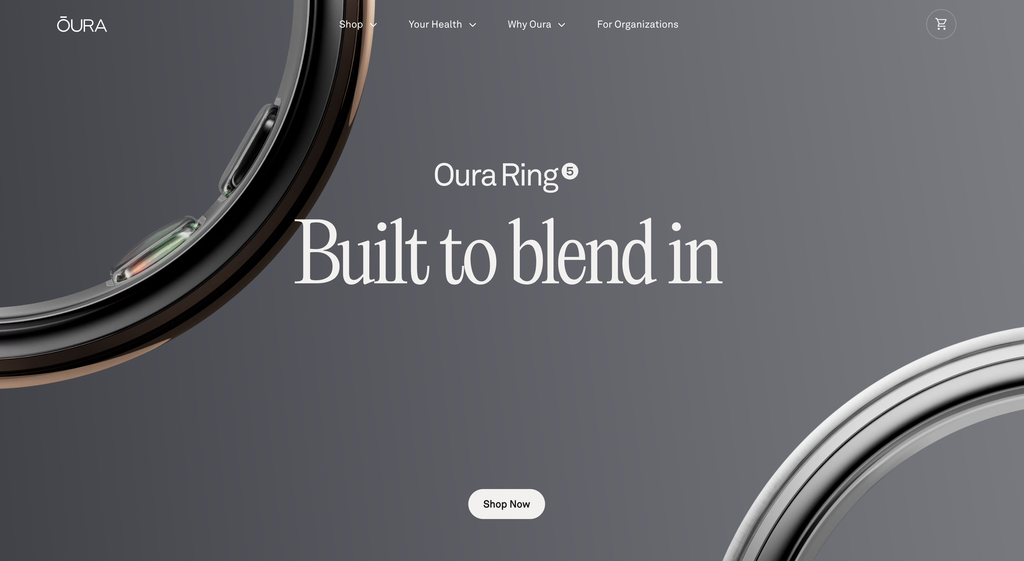
Oura Ring 5 sits on my middle finger. Its optical sensors read heart rate, heart rate variability (HRV), body temperature, and movement through your skin, and it uses those signals to track your light, deep, and REM sleep. Oura reports its sleep staging lines up with clinical sleep studies about 79% of the time. For the best read, Oura recommends the index finger, though the middle and ring fingers work too, and it needs to fit snugly. If it slides or rotates, the readings can be off.
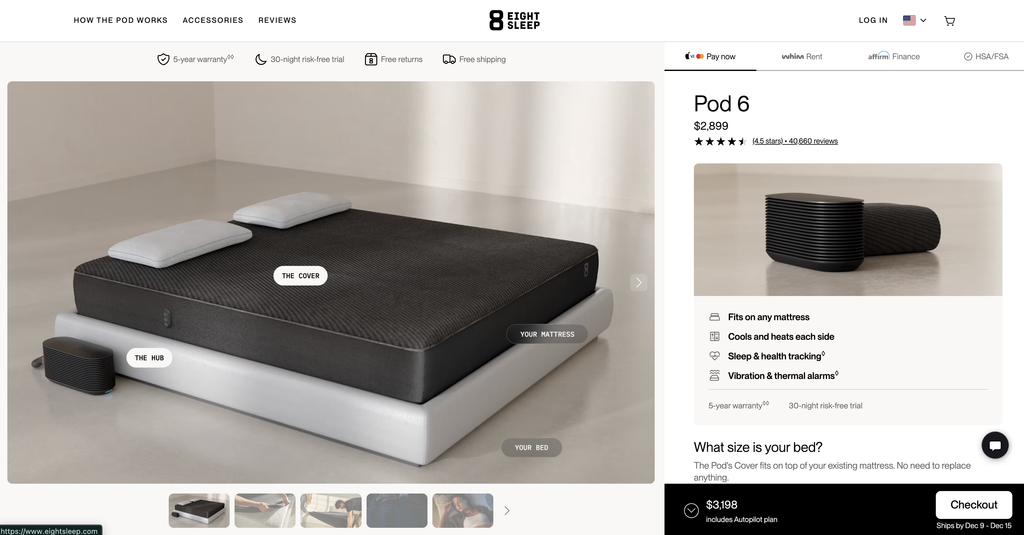
Eight Sleep Pod 6 isn’t a wearable. The biometric sensors are built into the Cover that goes over your existing mattress, so it reads your body while you lie on it. The Pod 6 has 9x more biometric sensors (18 total) in the Cover than the previous generation, and Eight Sleep says it measures heart rate with 99% precision compared to clinical ECGs. It tracks deep, REM, and light sleep, total sleep, HRV, resting heart rate, breathing rate, snoring, and when you get in and out of bed.
My Week of Numbers
Oura averaged a sleep score of 71 for the week. Eight Sleep averaged about 77 across the five nights it recorded, and my Sleep Fitness Score averaged 72 over the full month.
My Oura score stayed between 66 and 77 every night. The Pod 6 moved around more, from 63 up to 88. Two nights it scored me lower than or about even with Oura, and three nights it scored me noticeably higher.
Part of that comes down to how each score is built. Eight Sleep’s Sleep Fitness Score looks at three things: how long you slept, the quality of that sleep (REM, deep sleep, wake episodes, and heart rate trends), and consistency, meaning whether you’re going to bed and waking up on a regular schedule. Oura has its own mix of factors. So a 75 on the Oura app doesn’t mean the same thing as a 75 on the Eight Sleep Pod 6 app, and I wouldn’t line them up number for number.
Where They Agreed
Both devices showed me falling asleep in 10 to 12 minutes, and night after night they were within a couple of minutes of each other. So both were picking up when I settled in and drifted off.
Where They Didn’t
The biggest gaps for me showed up in REM sleep and sleep debt.
REM was the big one. On one night, the two were almost an hour and a half apart. From what I’ve read, REM and light sleep are the hardest stages for any consumer tracker to tell apart without reading brain waves, so this is where every device is guessing the most. My Oura Ring and Pod 6 pick up different signals, and on a couple of nights they came up with very different numbers.
Sleep debt surprised me too. Oura said I was over 9 hours behind, and Eight Sleep said about 3.5. Since sleep debt builds over many nights, if one device logs even 30 minutes less per night than the other, the gap gets big fast. My takeaway is to watch your trends on one device instead of comparing a single number across two.
What Each One Does Best
I use these two for different reasons.
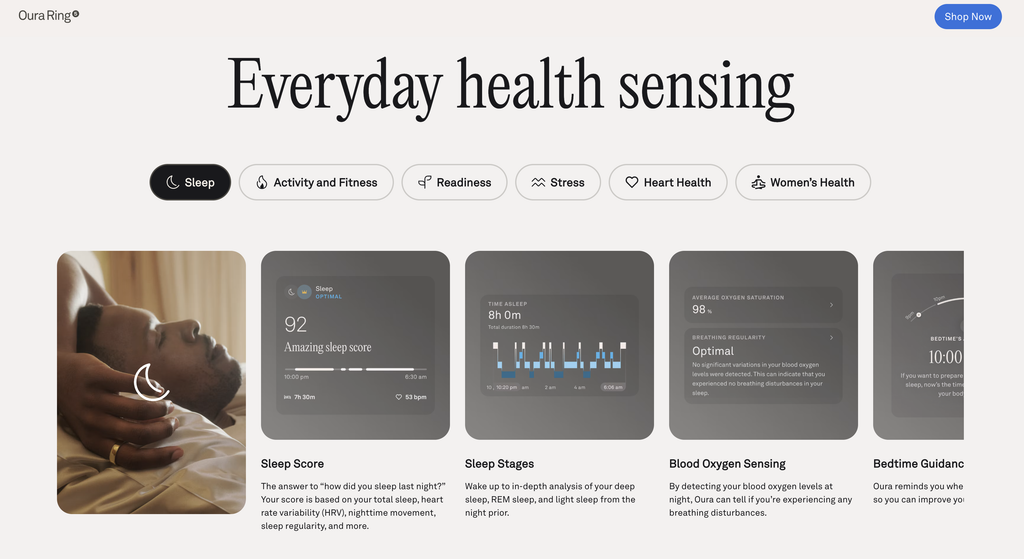
Oura Ring 5 gives me the full 24/7 picture. Because I wear it all day, it tracks my readiness score, HRV trends, recovery, activity, and body temperature changes. I like having a full read on my day.
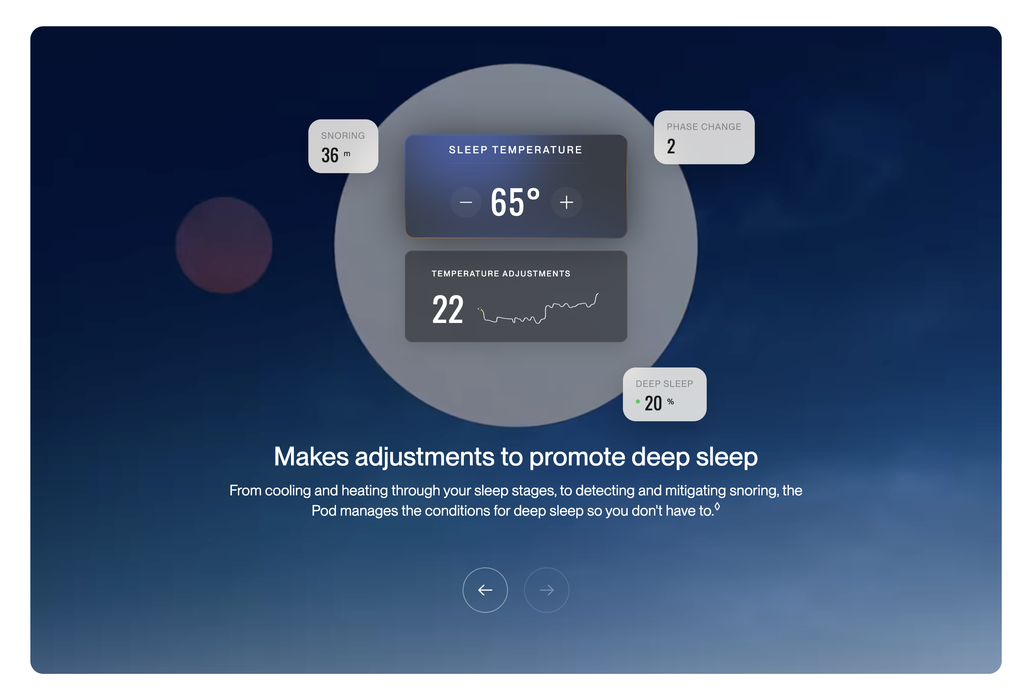
Pod 6 does something with the data. The Pod 6 focuses on my nights, and whatever I did during the day shows up there. A long, active day or a stressful one changes how I sleep, and I can see it in my Pod 6 numbers the next morning. Most sleep trackers tell you how your night went. The Pod 6 uses what it tracks to adjust your night while you’re sleeping. Autopilot adjusts the temperature on each side of the bed, anywhere from 55°F to 110°F, based on your sleep stage, your past preferences, and the room temperature. This has been my favorite part now that it’s starting to get chilly in the mornings.
I also like not having to remember anything at night. The Pod 6 tracks either way, and when you’re traveling, you can set it to Away Mode.
Which One Should You Choose?
Go with the Oura Ring 5 if:
- You want daytime data like activity, stress, and workout recovery
- You’re mostly curious about trends and readiness
- You don’t mind wearing a device to bed
Go with Eight Sleep Pod 6 if:
- You sleep hot, run cold, or deal with night sweats
- You share a bed with someone who likes a different temperature
- You don’t want to wear a device to bed
- You want your sleep data to help improve your sleep while it’s happening
Wrap Up
Neither device is a sleep lab, so take all of this with a grain of salt. Both give you baseline data you can use to improve your sleep, and both are good at showing patterns over time. My advice is to pick one as your main sleep tracker, watch your trends for a few weeks, and notice how you feel compared to what the numbers say.
I like both of them for different reasons. I’ve enjoyed waking up and checking how I slept on both apps, and I do feel like I’m sleeping better. Having data from the Oura Ring and the Eight Sleep Pod 6 has helped me make better decisions about getting a good night’s sleep.